State health official: 989 measles cases reported as outbreak surges in Spartanburg area
March 04, 2026 | 2026 Legislative Meetings, South Carolina
This article was created by AI summarizing key points discussed. AI makes mistakes, so for full details and context, please refer to the video of the full meeting. Please report any errors so we can fix them. Report an error »
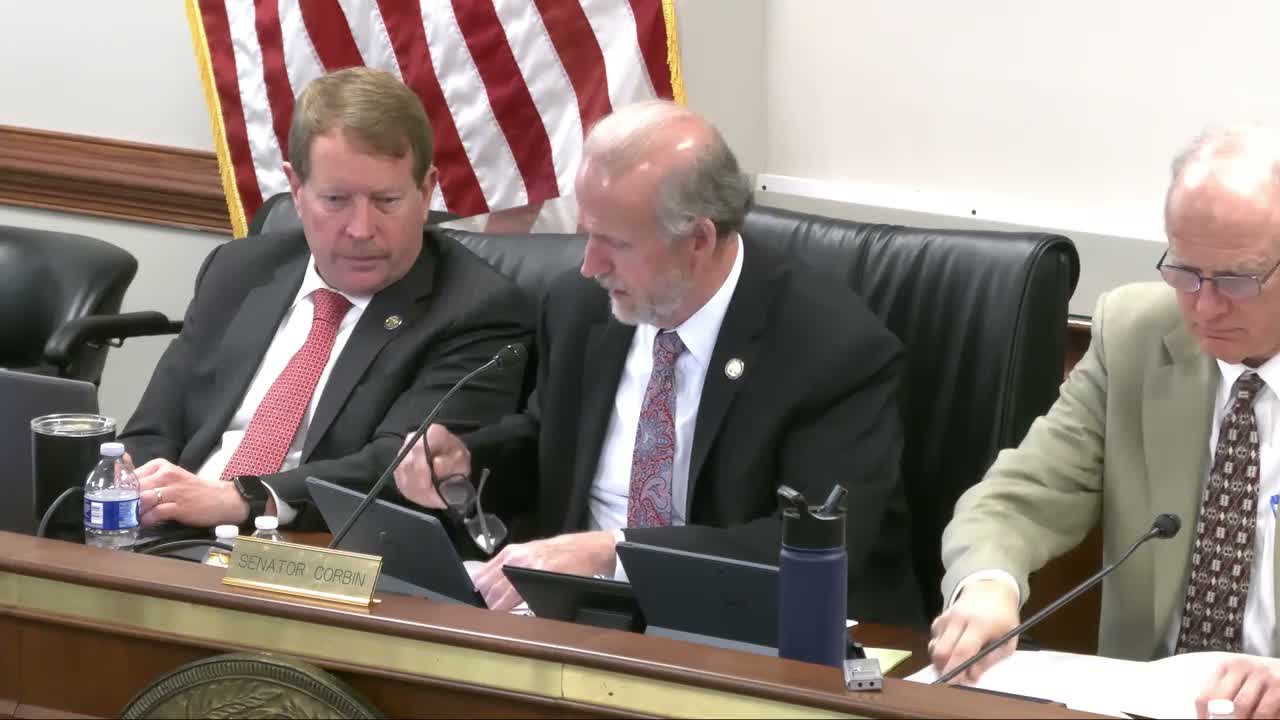
Dr. Linda Bell, South Carolina State Epidemiologist and Incident Commander for the Department of Public Health measles response, told the Senate Medical Affairs subcommittee that the state has recorded 989 measles cases as of March 2, 2026, and that the outbreak is concentrated in Spartanburg County but has spread to adjacent communities and 32 schools.
"This is a disease caused by a highly contagious virus, one of the most contagious viruses that we're aware of," Dr. Bell said during a prepared overview, explaining that measles can cause pneumonia, encephalitis and, rarely, fatal complications years later (subacute sclerosing panencephalitis). She said 95 percent of cases with known vaccination status were unvaccinated and that the department had recorded 21 hospitalizations during the outbreak.
Dr. Bell outlined DPH response measures: activating an incident command structure on Oct. 8, surge staffing (as many as 90 DPH staff supporting investigations), quarantine of more than 2,200 close contacts and efforts to increase vaccination uptake. She said the Centers for Disease Control and Prevention is assisting with modeling, laboratory testing and funding that has enabled free MMR doses in affected areas and temporary staff support.
On testing, Dr. Bell said PCR is the confirmatory test but emphasized that classic clinical presentation plus an epidemiologic link can satisfy case definitions; not every case requires PCR confirmation. She warned that additional surges are possible with spring break travel and urged public education, quarantine and vaccination to protect infants, pregnant women and immunocompromised people who cannot be vaccinated.
What’s next: DPH said success will be achieved when no new cases are identified for 42 days (two incubation periods); the agency reported a recent increase in MMR doses administered statewide and in the Upstate during the outbreak period.
Representative quote: "Of the 968 cases with known vaccination status, 923 or 95 percent of these cases are unvaccinated," Dr. Bell said.
"This is a disease caused by a highly contagious virus, one of the most contagious viruses that we're aware of," Dr. Bell said during a prepared overview, explaining that measles can cause pneumonia, encephalitis and, rarely, fatal complications years later (subacute sclerosing panencephalitis). She said 95 percent of cases with known vaccination status were unvaccinated and that the department had recorded 21 hospitalizations during the outbreak.
Dr. Bell outlined DPH response measures: activating an incident command structure on Oct. 8, surge staffing (as many as 90 DPH staff supporting investigations), quarantine of more than 2,200 close contacts and efforts to increase vaccination uptake. She said the Centers for Disease Control and Prevention is assisting with modeling, laboratory testing and funding that has enabled free MMR doses in affected areas and temporary staff support.
On testing, Dr. Bell said PCR is the confirmatory test but emphasized that classic clinical presentation plus an epidemiologic link can satisfy case definitions; not every case requires PCR confirmation. She warned that additional surges are possible with spring break travel and urged public education, quarantine and vaccination to protect infants, pregnant women and immunocompromised people who cannot be vaccinated.
What’s next: DPH said success will be achieved when no new cases are identified for 42 days (two incubation periods); the agency reported a recent increase in MMR doses administered statewide and in the Upstate during the outbreak period.
Representative quote: "Of the 968 cases with known vaccination status, 923 or 95 percent of these cases are unvaccinated," Dr. Bell said.
Don't Miss a Word: See the Full Meeting!
Go beyond summaries. Unlock every video, transcript, and key insight with a Founder Membership.
✓
Get instant access to full meeting videos
✓
Search and clip any phrase from complete transcripts
✓
Receive AI-powered summaries & custom alerts
✓
Enjoy lifetime, unrestricted access to government data
30-day money-back guarantee
