Port Arthur council clashes over agenda control and removal of mayor from executive-session item
December 06, 2025 | Port Arthur City, Jefferson County, Texas
This article was created by AI summarizing key points discussed. AI makes mistakes, so for full details and context, please refer to the video of the full meeting. Please report any errors so we can fix them. Report an error »
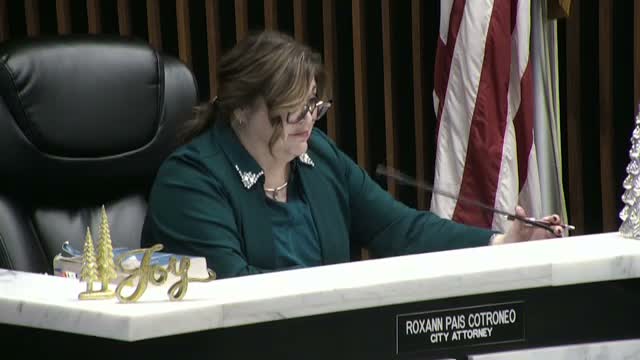
Council members engaged in a heated procedural dispute over whether the mayor could be removed from item 1 on the executive-session agenda, which addressed duties and responsibilities of the mayor and appointees. The exchange included repeated objections, points of order and competing legal interpretations, but the council ultimately voted to enter a closed executive session containing all seven listed items.
Mayor Pro Tem Doucette objected to removing the mayor from the discussion and stressed that any council member has the right to place items on the agenda. The presiding official and others argued that the governing body, as an entity, has authority over whether to discuss items in open or closed session. The city attorney explained that certain topics—such as the value of real property and legal advice—may appropriately be discussed in closed session to protect the city's negotiating position.
The disagreement centered on process rather than a specific policy outcome: council members debated whether they could amend or vote to remove portions of what a colleague had placed on the agenda before entering closed session. No formal vote to remove the mayor from item 1 was recorded; the matter was left unresolved and the council proceeded to take a motion and second to enter closed session.
The procedural dispute and its resolution matter for transparency and governance because they illustrate how the council interprets agenda-setting and the boundaries of closed-session deliberation. The council recorded an aye vote to proceed into closed session and later returned to take several actions, including hiring outside counsel and authorizing the listing of two city tracts.
Mayor Pro Tem Doucette objected to removing the mayor from the discussion and stressed that any council member has the right to place items on the agenda. The presiding official and others argued that the governing body, as an entity, has authority over whether to discuss items in open or closed session. The city attorney explained that certain topics—such as the value of real property and legal advice—may appropriately be discussed in closed session to protect the city's negotiating position.
The disagreement centered on process rather than a specific policy outcome: council members debated whether they could amend or vote to remove portions of what a colleague had placed on the agenda before entering closed session. No formal vote to remove the mayor from item 1 was recorded; the matter was left unresolved and the council proceeded to take a motion and second to enter closed session.
The procedural dispute and its resolution matter for transparency and governance because they illustrate how the council interprets agenda-setting and the boundaries of closed-session deliberation. The council recorded an aye vote to proceed into closed session and later returned to take several actions, including hiring outside counsel and authorizing the listing of two city tracts.
View the Full Meeting & All Its Details
This article offers just a summary. Unlock complete video, transcripts, and insights as a Founder Member.
✓
Watch full, unedited meeting videos
✓
Search every word spoken in unlimited transcripts
✓
AI summaries & real-time alerts (all government levels)
✓
Permanent access to expanding government content
30-day money-back guarantee
