House passes substitute bill changing Working Connections rules amid sharp floor opposition
March 04, 2026 | Legislative Sessions, Washington
This article was created by AI summarizing key points discussed. AI makes mistakes, so for full details and context, please refer to the video of the full meeting. Please report any errors so we can fix them. Report an error »
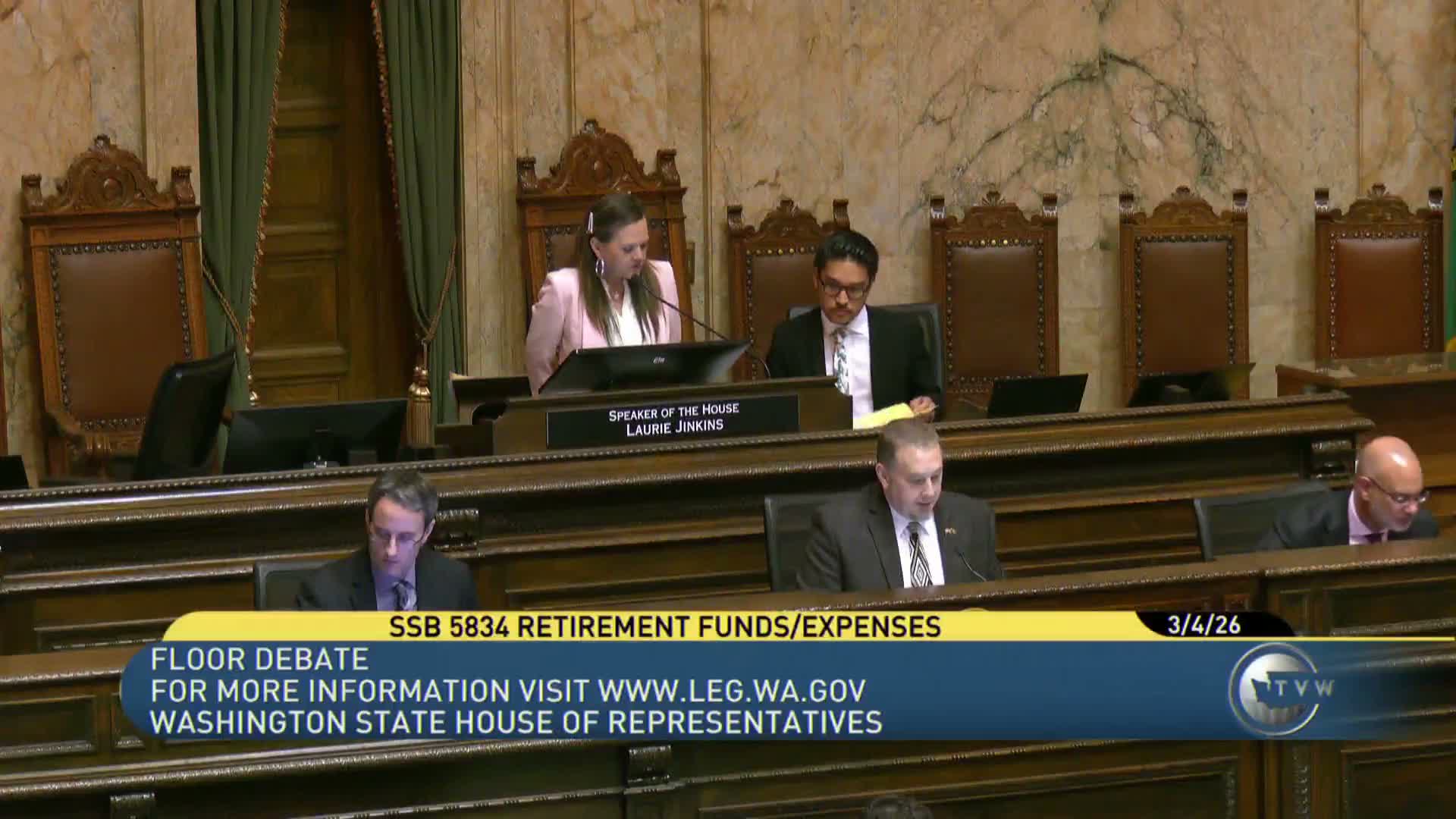
The House passed Substitute House Bill 26 89 on final passage after intense floor debate over its effect on child-care access in rural areas. The clerk recorded 53 yays, 44 nays and 1 excused; the bill was declared passed.
Representative Gregerson, who described the measure as governor-requested budget-balancing legislation, said the bill aligns attendance policy with federal regulations and sets a rate at 75 percent, noting the change was intended to sustain the program within the state's budget. She asked for support, saying the design aims to maintain resources for child care statewide.
Opponents argued the bill would harm providers and families in rural 'child-care deserts.' Representative Couture said the measure "is a cost savings on the backs of an industry" and warned it would hurt counties such as Benton, Walla Walla, Whitman and Clark, which have relied on enhanced rates since 2007 to sustain providers in sparsely populated areas. Representative Dye highlighted Whitman County's student population and the need for child care for university students and health-care workers, warning the county would be unfairly singled out for cuts.
Multiple members described concerns that the bill 'cherry picks' counties and leaves rural providers unable to survive under new reimbursement arrangements. Representative Connors said legislative rebasing to identify true childcare deserts and appropriate rates should be done instead of last-minute cuts.
After remarks, the roll-call machine confirmed passage. Supporters framed the bill as targeted changes to attendance policy and rate-setting designed to reduce unsustainable caseload costs; opponents said the policy trade-offs would worsen access in vulnerable rural communities. The bill now proceeds to the governor for signature or veto consideration.
Representative Gregerson, who described the measure as governor-requested budget-balancing legislation, said the bill aligns attendance policy with federal regulations and sets a rate at 75 percent, noting the change was intended to sustain the program within the state's budget. She asked for support, saying the design aims to maintain resources for child care statewide.
Opponents argued the bill would harm providers and families in rural 'child-care deserts.' Representative Couture said the measure "is a cost savings on the backs of an industry" and warned it would hurt counties such as Benton, Walla Walla, Whitman and Clark, which have relied on enhanced rates since 2007 to sustain providers in sparsely populated areas. Representative Dye highlighted Whitman County's student population and the need for child care for university students and health-care workers, warning the county would be unfairly singled out for cuts.
Multiple members described concerns that the bill 'cherry picks' counties and leaves rural providers unable to survive under new reimbursement arrangements. Representative Connors said legislative rebasing to identify true childcare deserts and appropriate rates should be done instead of last-minute cuts.
After remarks, the roll-call machine confirmed passage. Supporters framed the bill as targeted changes to attendance policy and rate-setting designed to reduce unsustainable caseload costs; opponents said the policy trade-offs would worsen access in vulnerable rural communities. The bill now proceeds to the governor for signature or veto consideration.
View the Full Meeting & All Its Details
This article offers just a summary. Unlock complete video, transcripts, and insights as a Founder Member.
✓
Watch full, unedited meeting videos
✓
Search every word spoken in unlimited transcripts
✓
AI summaries & real-time alerts (all government levels)
✓
Permanent access to expanding government content
30-day money-back guarantee
