Bill to limit release of victims’ private phone data advances after bipartisan negotiations
March 04, 2026 | 2026 Utah Legislature, Utah Legislature, Utah Legislative Branch, Utah
This article was created by AI summarizing key points discussed. AI makes mistakes, so for full details and context, please refer to the video of the full meeting. Please report any errors so we can fix them. Report an error »
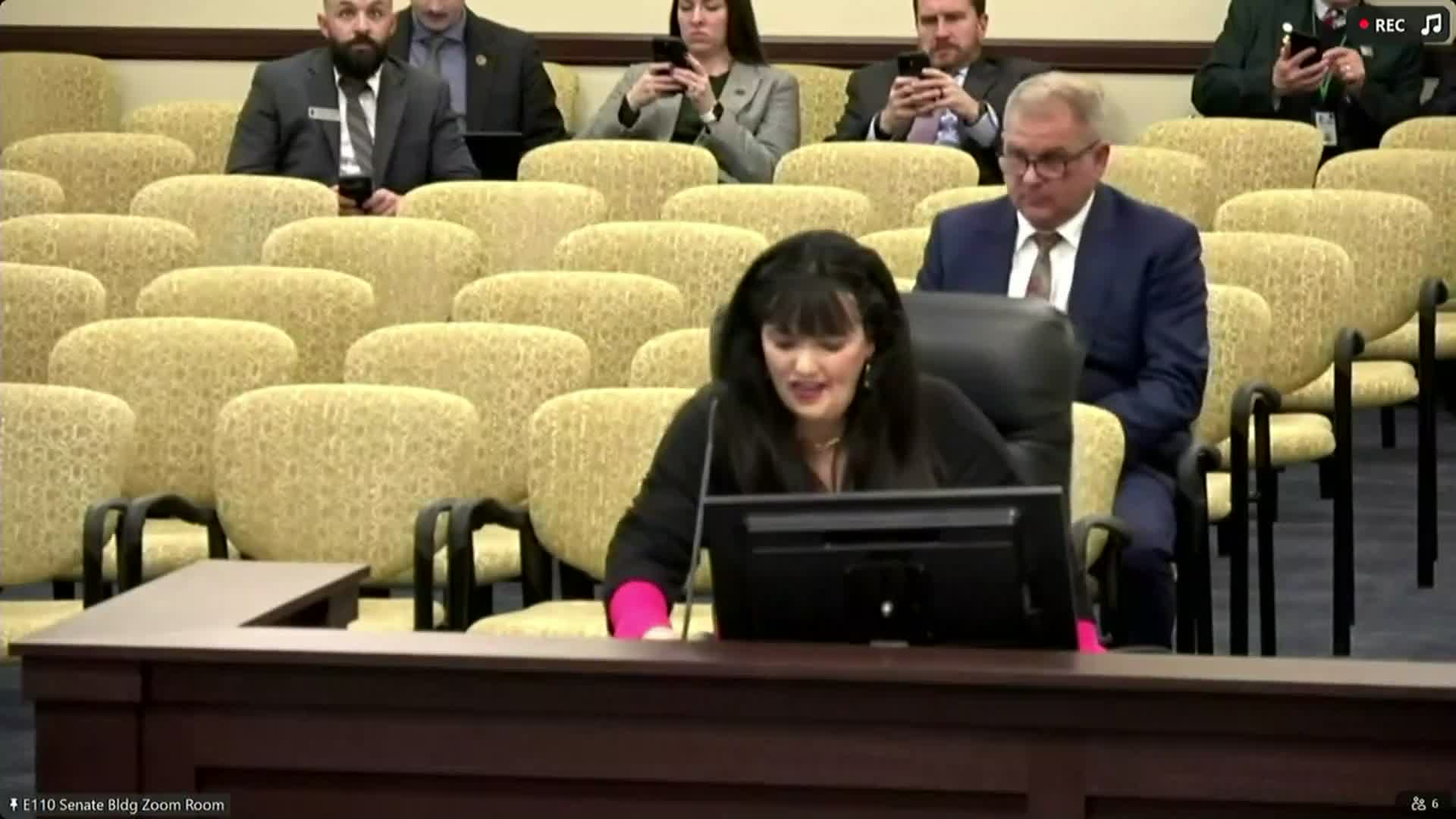
Senators and representatives in a legislative committee advanced SB290, the victim and witness privacy amendments, after sponsor Senator Baldry described a negotiated approach to limit how investigators handle sensitive electronic data.
The bill would require law enforcement and prosecutors to separate directly related evidence from nonpublic victim and witness data — such as intimate images and private communications — so that defense counsel continue to receive all evidence required under rule 16 while unrelated private material is protected. "Victims who come forward to report should not have to give unrestricted access to their entire private lives to law enforcement, attorneys and the person who harmed them," Senator Baldry said during the presentation.
In the committee’s Q&A, Representative Cutler asked how agencies would avoid either withholding relevant material or exposing unnecessary private data. Carl Holland, Executive Director of the Statewide Association of Prosecutors, said investigators would initially identify likely evidence and sequester it for disclosure; nonpublic data would be held under stricter controls, and defense counsel could request additional review or view material under protective order or in controlled facilities. "They'll get the data, they'll go through the data and they'll find the data that is directly related to a crime," Holland said, describing options for controlled review and judicial review where disputes arise.
Stakeholders from multiple perspectives urged the committee to advance the bill. Stuart Young, criminal deputy attorney general, said the measure resembles federal practices for handling large devices; Steve Burton of the Defense Attorney Association and Nate Mudder, representing law enforcement interests, described it as a negotiated middle ground balancing privacy and defense obligations.
Representative Jack moved a favorable recommendation to pass the third substitute of SB290; the committee approved the motion by voice vote and the bill was advanced to the next stage.
The committee did not record a roll call in the transcript; sponsor and stakeholders said the text reflects bipartisan negotiation and preserves rule 16 obligations while adding written policy requirements and procedures for segregating sensitive data.
The bill would require law enforcement and prosecutors to separate directly related evidence from nonpublic victim and witness data — such as intimate images and private communications — so that defense counsel continue to receive all evidence required under rule 16 while unrelated private material is protected. "Victims who come forward to report should not have to give unrestricted access to their entire private lives to law enforcement, attorneys and the person who harmed them," Senator Baldry said during the presentation.
In the committee’s Q&A, Representative Cutler asked how agencies would avoid either withholding relevant material or exposing unnecessary private data. Carl Holland, Executive Director of the Statewide Association of Prosecutors, said investigators would initially identify likely evidence and sequester it for disclosure; nonpublic data would be held under stricter controls, and defense counsel could request additional review or view material under protective order or in controlled facilities. "They'll get the data, they'll go through the data and they'll find the data that is directly related to a crime," Holland said, describing options for controlled review and judicial review where disputes arise.
Stakeholders from multiple perspectives urged the committee to advance the bill. Stuart Young, criminal deputy attorney general, said the measure resembles federal practices for handling large devices; Steve Burton of the Defense Attorney Association and Nate Mudder, representing law enforcement interests, described it as a negotiated middle ground balancing privacy and defense obligations.
Representative Jack moved a favorable recommendation to pass the third substitute of SB290; the committee approved the motion by voice vote and the bill was advanced to the next stage.
The committee did not record a roll call in the transcript; sponsor and stakeholders said the text reflects bipartisan negotiation and preserves rule 16 obligations while adding written policy requirements and procedures for segregating sensitive data.
Don't Miss a Word: See the Full Meeting!
Go beyond summaries. Unlock every video, transcript, and key insight with a Founder Membership.
✓
Get instant access to full meeting videos
✓
Search and clip any phrase from complete transcripts
✓
Receive AI-powered summaries & custom alerts
✓
Enjoy lifetime, unrestricted access to government data
30-day money-back guarantee
