Utah committee advances three‑path liability plan for driverless vehicles with caps and a sunset
March 04, 2026 | 2026 Utah Legislature, Utah Legislature, Utah Legislative Branch, Utah
This article was created by AI summarizing key points discussed. AI makes mistakes, so for full details and context, please refer to the video of the full meeting. Please report any errors so we can fix them. Report an error »
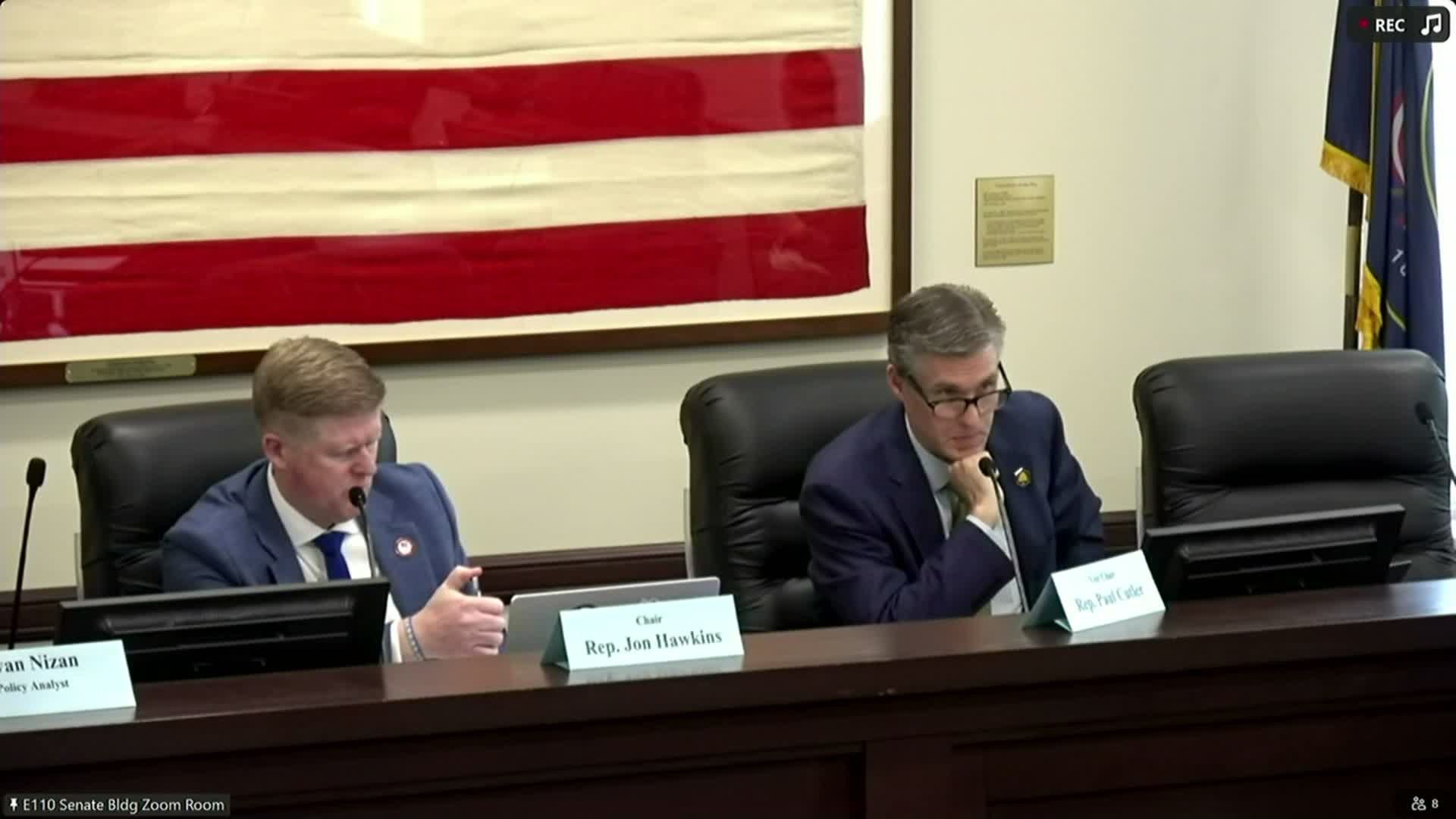
A legislative committee advanced SB292 after sponsor Senator Colmore described a three‑path liability framework intended to encourage deployment of driverless vehicles while preserving avenues for victims to recover.
Under the bill, one streamlined cause of action would allow plaintiffs to prove driverless operation and proximate cause with a cap on damages (the sponsor described a $100,000 cap for that path). A second traditional negligence/product route remains available — with a stated cap on non‑economic damages at $1,000,000 — and a third section clarifies manufacturer/developer liability with a rebuttable presumption of non‑defect for systems meeting applicable federal standards. The measure contains a sunset provision set for 07/01/2030 so the Legislature can review outcomes after initial deployment.
Committee members sought clarification on which damages are capped. Senator Colmore said the $100,000 option is an easier administrative path intended for common motor‑vehicle style settlements; economic (special) damages are not capped and catastrophic claims can proceed under the traditional route or wrongful‑death exceptions. Representative Cutler and others probed hypotheticals about catastrophic injuries to ensure access to full economic recovery.
Industry and trial‑law voices testified on the bill’s tradeoffs. McKay Johnson, representing the Alliance for Automotive Innovation, said the sponsor made the bill workable for manufacturers. Jake Lee of the Utah Association for Justice supported innovation but urged stronger protections, objected to the removal of punitive damages and some manufacturer protections, and asked that the sunset apply more broadly.
The committee adopted the second substitute by voice vote and then voted to favorably recommend the second substitute to the full house; the transcript records Representative Owens voting no on the final committee recommendation.
The committee’s action advances SB292 to further floor consideration and potential amendment.
Under the bill, one streamlined cause of action would allow plaintiffs to prove driverless operation and proximate cause with a cap on damages (the sponsor described a $100,000 cap for that path). A second traditional negligence/product route remains available — with a stated cap on non‑economic damages at $1,000,000 — and a third section clarifies manufacturer/developer liability with a rebuttable presumption of non‑defect for systems meeting applicable federal standards. The measure contains a sunset provision set for 07/01/2030 so the Legislature can review outcomes after initial deployment.
Committee members sought clarification on which damages are capped. Senator Colmore said the $100,000 option is an easier administrative path intended for common motor‑vehicle style settlements; economic (special) damages are not capped and catastrophic claims can proceed under the traditional route or wrongful‑death exceptions. Representative Cutler and others probed hypotheticals about catastrophic injuries to ensure access to full economic recovery.
Industry and trial‑law voices testified on the bill’s tradeoffs. McKay Johnson, representing the Alliance for Automotive Innovation, said the sponsor made the bill workable for manufacturers. Jake Lee of the Utah Association for Justice supported innovation but urged stronger protections, objected to the removal of punitive damages and some manufacturer protections, and asked that the sunset apply more broadly.
The committee adopted the second substitute by voice vote and then voted to favorably recommend the second substitute to the full house; the transcript records Representative Owens voting no on the final committee recommendation.
The committee’s action advances SB292 to further floor consideration and potential amendment.
Don't Miss a Word: See the Full Meeting!
Go beyond summaries. Unlock every video, transcript, and key insight with a Founder Membership.
✓
Get instant access to full meeting videos
✓
Search and clip any phrase from complete transcripts
✓
Receive AI-powered summaries & custom alerts
✓
Enjoy lifetime, unrestricted access to government data
30-day money-back guarantee
