Panel advances bill requiring parental consent for minors’ prescriptions after contentious testimony
March 05, 2026 | 2026 Legislative Meetings, South Carolina
This article was created by AI summarizing key points discussed. AI makes mistakes, so for full details and context, please refer to the video of the full meeting. Please report any errors so we can fix them. Report an error »
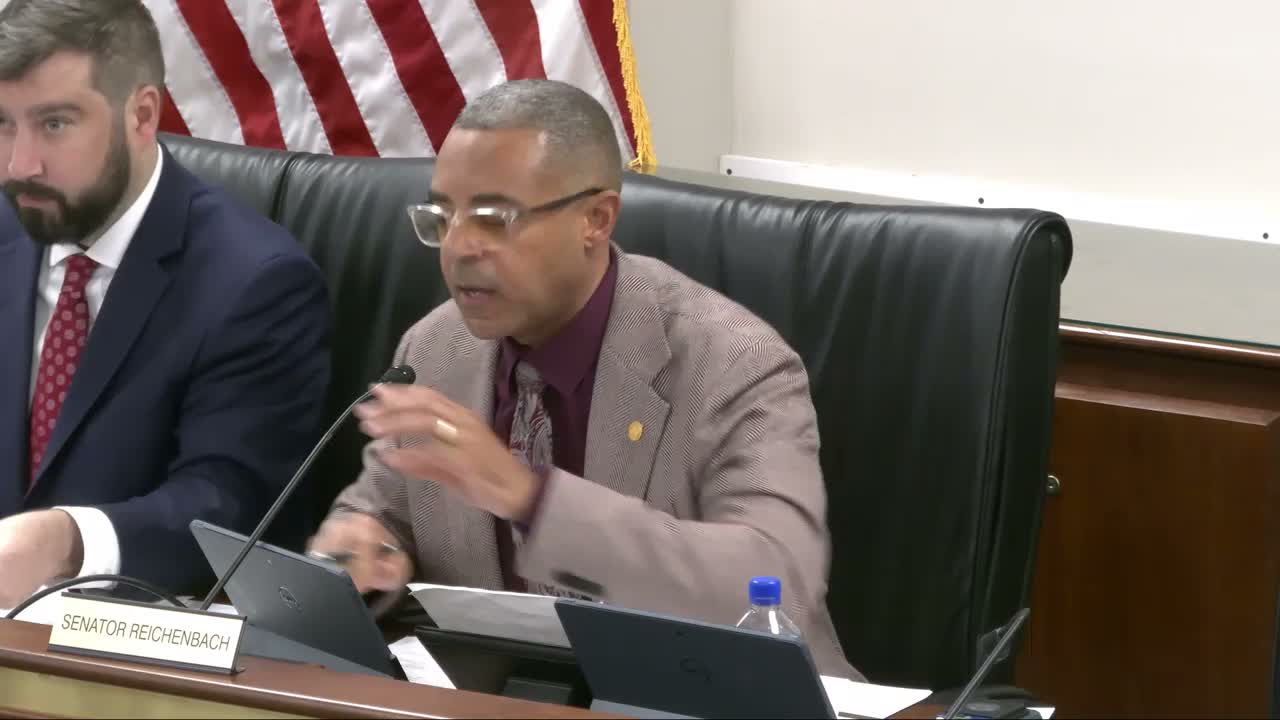
The Child Welfare Subcommittee advanced S.B. 710, a bill that would require the person responsible for the welfare of a minor under 16 to provide prior consent before a medical professional can prescribe medication and would allow that person to review the minor's prescription records.
Philip Ford of AFA Action told the committee the bill “on its face…is described as a change to medical consent laws for minors, but in practice, it will have real harmful, consequences for LGBTQ plus youth, especially, those who are navigating complex health needs.” Ford said the proposal creates a blanket parental-consent requirement that could force vulnerable teens to choose between care and safety.
Dr. Elizabeth Mack, a pediatric critical care physician speaking for the South Carolina chapter of the American Academy of Pediatrics, urged opposition to the bill. She said the state’s current practice allows minors 16 and older to consent to health care and that clinicians try to bring parents and children together whenever possible. “The AAP does support adolescent access to confidential … reproductive healthcare because evidence shows that when confidentiality is limited, young people are less likely to seek care,” she said, warning that restricting confidentiality can reduce contraceptive use and increase untreated sexually transmitted infections and adolescent pregnancy.
Committee members probed legal and operational questions, including whether federal law limits state authority on minor consent, how the bill would apply to vaccines and emergency care, and how clinicians should proceed when no guardian is present. Dr. Mack and other witnesses described edge cases — a trafficked child or an infant dropped at a hospital with no responsible adult — where clinicians must act to protect health and safety.
During the hearing, Katie Detilio of REN shared a personal experience to illustrate potential harms: she said she began menstruating at 13 and was prescribed oral contraceptives to control severe bleeding and pain. She told the committee that having a parent able to authorize care made a material difference in her outcome and said a blanket rule could have left her untreated in that situation.
After discussion, a motion for a favorable report on S.B. 710 was moved, seconded and approved by voice vote; the chair announced the bill was “given paper for a report.” The transcript recorded Senator Isaac Devine’s proxy as a recorded ‘nay’ and Senator Clymer as an ‘aye.’
Next steps: The bill was advanced with a favorable report from the subcommittee and will move forward according to the Senate’s committee reporting process.
Philip Ford of AFA Action told the committee the bill “on its face…is described as a change to medical consent laws for minors, but in practice, it will have real harmful, consequences for LGBTQ plus youth, especially, those who are navigating complex health needs.” Ford said the proposal creates a blanket parental-consent requirement that could force vulnerable teens to choose between care and safety.
Dr. Elizabeth Mack, a pediatric critical care physician speaking for the South Carolina chapter of the American Academy of Pediatrics, urged opposition to the bill. She said the state’s current practice allows minors 16 and older to consent to health care and that clinicians try to bring parents and children together whenever possible. “The AAP does support adolescent access to confidential … reproductive healthcare because evidence shows that when confidentiality is limited, young people are less likely to seek care,” she said, warning that restricting confidentiality can reduce contraceptive use and increase untreated sexually transmitted infections and adolescent pregnancy.
Committee members probed legal and operational questions, including whether federal law limits state authority on minor consent, how the bill would apply to vaccines and emergency care, and how clinicians should proceed when no guardian is present. Dr. Mack and other witnesses described edge cases — a trafficked child or an infant dropped at a hospital with no responsible adult — where clinicians must act to protect health and safety.
During the hearing, Katie Detilio of REN shared a personal experience to illustrate potential harms: she said she began menstruating at 13 and was prescribed oral contraceptives to control severe bleeding and pain. She told the committee that having a parent able to authorize care made a material difference in her outcome and said a blanket rule could have left her untreated in that situation.
After discussion, a motion for a favorable report on S.B. 710 was moved, seconded and approved by voice vote; the chair announced the bill was “given paper for a report.” The transcript recorded Senator Isaac Devine’s proxy as a recorded ‘nay’ and Senator Clymer as an ‘aye.’
Next steps: The bill was advanced with a favorable report from the subcommittee and will move forward according to the Senate’s committee reporting process.
Don't Miss a Word: See the Full Meeting!
Go beyond summaries. Unlock every video, transcript, and key insight with a Founder Membership.
✓
Get instant access to full meeting videos
✓
Search and clip any phrase from complete transcripts
✓
Receive AI-powered summaries & custom alerts
✓
Enjoy lifetime, unrestricted access to government data
30-day money-back guarantee
