House passes ALPR privacy bill with statewide guardrails and debate over retention and access
March 05, 2026 | Legislative Sessions, Washington
This article was created by AI summarizing key points discussed. AI makes mistakes, so for full details and context, please refer to the video of the full meeting. Please report any errors so we can fix them. Report an error »
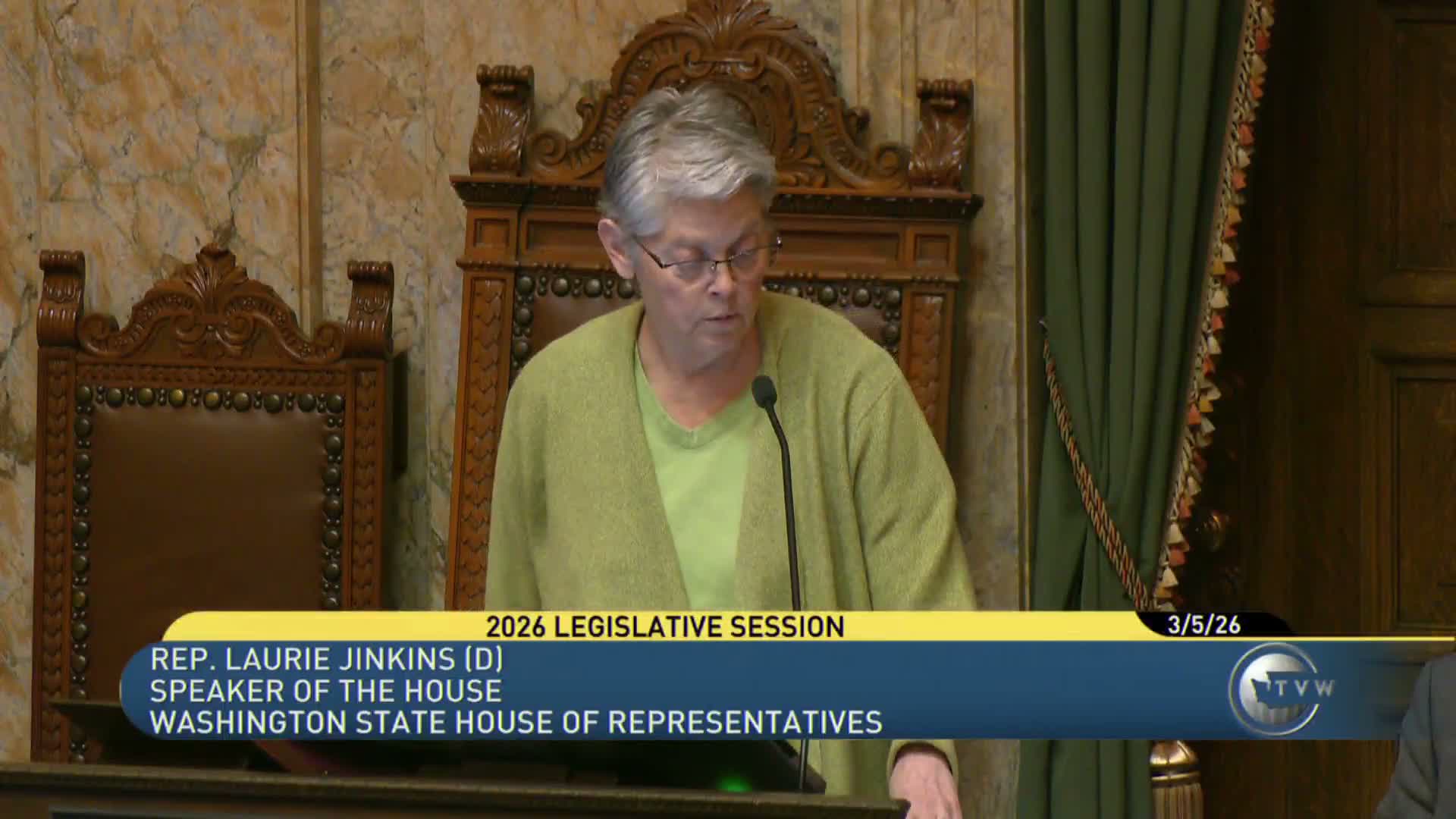
The Washington House on March 7 passed Engrossed Substitute Senate Bill 6002, a measure setting statewide rules for automated license-plate reader (ALPR) data, after extended debate over data retention, access and sharing.
Representative Vandana Salahuddin, the bill’s floor sponsor, said the measure establishes “common sense guardrails that protect residents, protect data, and preserve the public safety uses of our technology,” arguing that local governments and law enforcement still need tools to recover stolen vehicles, locate missing people and investigate violent crimes. "We need guardrails that protect all Washingtonians regardless of their background," she said.
The bill drew both praise and skepticism. Representative Jim Walsh said the measure strikes a “good balance” between privacy and utility, noting the bill included negotiated protections from committee work. Representative Myra Thomas said the safeguards do not fully address the scale of the technology’s collection — ALPR networks scan and store location data on millions of drivers — and urged a no vote.
Representative Duer, speaking in support, described how cities have used ALPRs to solve crimes, recover evidence and assist investigations, saying the systems can help victims and their families. Proponents pointed to examples in which camera data aided prosecutions and arrests.
After debate, the House recorded 84 yays and 10 nays and the measure was declared passed. Members who supported the bill said it preserves law-enforcement access for serious crimes while limiting data sharing and retention; opponents warned that the safeguards do not fully match the power of the technology and could normalize expanded surveillance over time.
The bill as passed directs policy on retention, access and sharing of ALPR data statewide; the transcript did not specify implementation timelines or whether new reporting requirements will be required of local agencies. The bill was declared passed by the chamber; next steps toward the governor’s desk or final enactment were not specified in the transcript.
Representative Vandana Salahuddin, the bill’s floor sponsor, said the measure establishes “common sense guardrails that protect residents, protect data, and preserve the public safety uses of our technology,” arguing that local governments and law enforcement still need tools to recover stolen vehicles, locate missing people and investigate violent crimes. "We need guardrails that protect all Washingtonians regardless of their background," she said.
The bill drew both praise and skepticism. Representative Jim Walsh said the measure strikes a “good balance” between privacy and utility, noting the bill included negotiated protections from committee work. Representative Myra Thomas said the safeguards do not fully address the scale of the technology’s collection — ALPR networks scan and store location data on millions of drivers — and urged a no vote.
Representative Duer, speaking in support, described how cities have used ALPRs to solve crimes, recover evidence and assist investigations, saying the systems can help victims and their families. Proponents pointed to examples in which camera data aided prosecutions and arrests.
After debate, the House recorded 84 yays and 10 nays and the measure was declared passed. Members who supported the bill said it preserves law-enforcement access for serious crimes while limiting data sharing and retention; opponents warned that the safeguards do not fully match the power of the technology and could normalize expanded surveillance over time.
The bill as passed directs policy on retention, access and sharing of ALPR data statewide; the transcript did not specify implementation timelines or whether new reporting requirements will be required of local agencies. The bill was declared passed by the chamber; next steps toward the governor’s desk or final enactment were not specified in the transcript.
View the Full Meeting & All Its Details
This article offers just a summary. Unlock complete video, transcripts, and insights as a Founder Member.
✓
Watch full, unedited meeting videos
✓
Search every word spoken in unlimited transcripts
✓
AI summaries & real-time alerts (all government levels)
✓
Permanent access to expanding government content
30-day money-back guarantee
