Virginia Senate advances dozens of measures, adopts conference reports and places blocks for conference on March 6 session
March 06, 2026 | 2026 Legislature VA, Virginia
This article was created by AI summarizing key points discussed. AI makes mistakes, so for full details and context, please refer to the video of the full meeting. Please report any errors so we can fix them. Report an error »
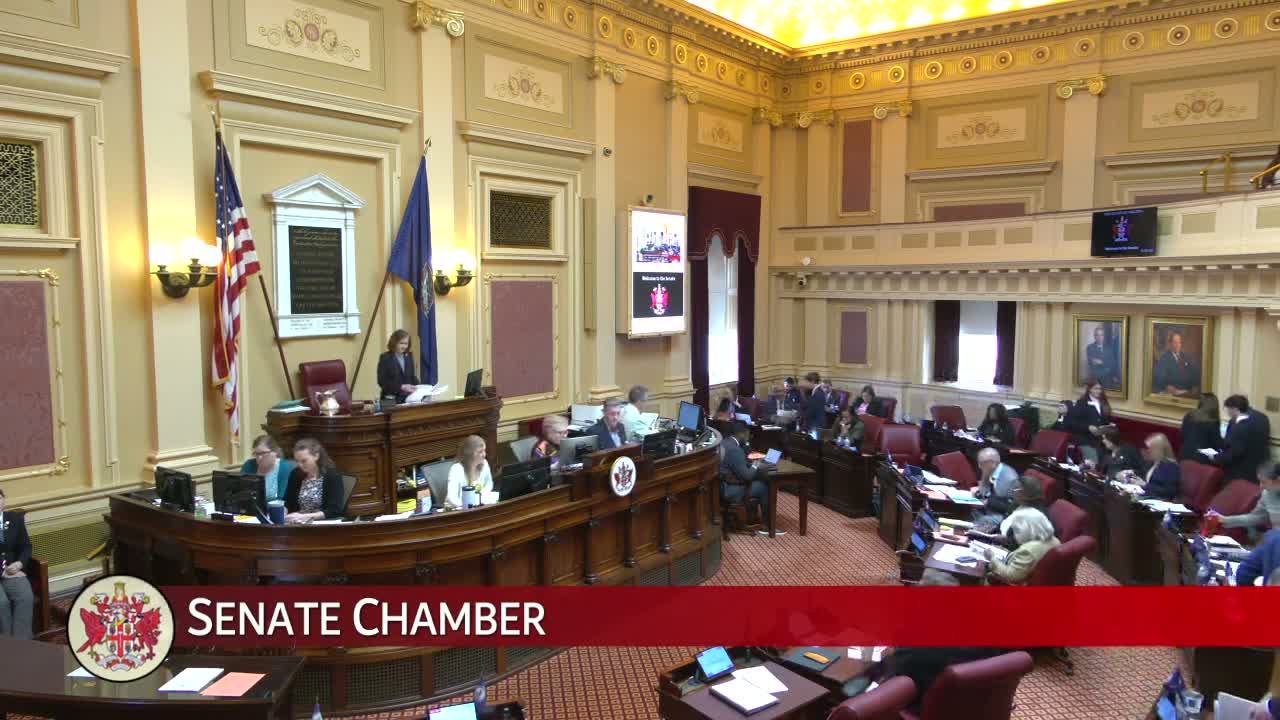
The Virginia Senate convened in Richmond on March 6, 2026, and spent the bulk of the day taking recorded votes to adopt conference committee reports and to concur—or not—with House substitutes and amendments on a large number of bills.
The session opened with ceremonial remarks, an invocation by Dr. Sushil Jain and the Pledge of Allegiance before the Senate moved to legislative business. The clerk called the calendar and the chamber considered a sequence of conference committee reports and motions to concur with House action.
On the calendar, the Senate adopted the conference committee report on House Bill 125 after debate and a roll-call vote (Ayes 24, Noes 16). The chamber also adopted the conference committee report for Senate Bill 28, the bill addressing the definition of domestic workers, by a recorded vote (Ayes 22, Noes 18). Earlier in the morning the Senate waived the reading of the journal for March 5, 2026 (Ayes 35, Noes 4).
Floor procedure on House Bill 19 included an initial motion that failed to recede from the Senate substitute (Ayes 18, Noes 22). The prevailing side moved to reconsider the vote; after reconsideration the Senate receded from its amendment to House Bill 19 (Ayes 22, Noes 18), allowing further alignment with the House version.
The Senate agreed to place a block of unfinished House bills (including House Bills 75, 110, 318, 319, 505, 667, 836, 1385, 1441, 1524 and 1525) into a group to insist and request committees of conference; that motion carried unanimously (Ayes 40, Noes 0). The clerk then read a long series of additional bills and the chamber handled them one after another, often with short floor explanations from the sponsoring senators followed by recorded votes.
Among the other votes taken or motions resolved on March 6:
- The Senate concurred with the House amendment to Senate Bill 18 (change clarifying that certain juvenile delinquency petitions for children under age 11 must be dismissed and expunged) (Ayes 23, Noes 17). Speaker explanation: the amendment was requested by the Office of the Executive Secretary.
- The Senate concurred with the House amendment to Senate Bill 25 (Ayes 21, Noes 19), a difference limited to an appropriations phrasing placed by the House.
- The Senate concurred with the House substitute to Senate Bill 34, addressing guardianship and conservatorship and retaining voting rights under specified circumstances (Ayes 24, Noes 16).
- The Senate concurred with the House substitute to Senate Bill 62, relating to modification of sentences for marijuana-related offenses (Ayes 21, Noes 19).
- The Senate concurred with the House substitute to Senate Bill 189, a consumer debt collection transparency bill, after the sponsor said the House’s substitute corrected a drafting error and added a clarifying definition of consumer debt (Ayes 37, Noes 3).
- The Senate concurred with a House substitute on an expungement-related bill (Senate Bill 230), following sponsor explanation that the House had removed a costly testing provision and clarified multiple procedural items; the sponsor said the version had no fiscal impact as a result (Ayes 26, Noes 14).
Several other bills were placed on the uncontested calendar or moved through second- and third-reading procedural steps, and many uncontested house bills were set to go by for the day or advanced as appropriate.
During one light moment on the floor, the presiding officer noted the attention to drafting during debate, saying, “Commas are important, senator,” after a senator described a comma-driven difference between chambers. The remark underscored the often highly technical nature of the day’s amendments and substitute language.
The Senate closed the session with scheduling announcements, including moved judicial interviews, committee meeting notices and caucus scheduling, and approved an adjournment until 12 noon Monday.
Votes recorded on the floor and the clerk’s announced tallies are the formal outcomes of the motions and conference reports listed above. Where the House and Senate versions differed, senators frequently moved to accept the House wording or to send bills to conference as a path to alignment.
The session opened with ceremonial remarks, an invocation by Dr. Sushil Jain and the Pledge of Allegiance before the Senate moved to legislative business. The clerk called the calendar and the chamber considered a sequence of conference committee reports and motions to concur with House action.
On the calendar, the Senate adopted the conference committee report on House Bill 125 after debate and a roll-call vote (Ayes 24, Noes 16). The chamber also adopted the conference committee report for Senate Bill 28, the bill addressing the definition of domestic workers, by a recorded vote (Ayes 22, Noes 18). Earlier in the morning the Senate waived the reading of the journal for March 5, 2026 (Ayes 35, Noes 4).
Floor procedure on House Bill 19 included an initial motion that failed to recede from the Senate substitute (Ayes 18, Noes 22). The prevailing side moved to reconsider the vote; after reconsideration the Senate receded from its amendment to House Bill 19 (Ayes 22, Noes 18), allowing further alignment with the House version.
The Senate agreed to place a block of unfinished House bills (including House Bills 75, 110, 318, 319, 505, 667, 836, 1385, 1441, 1524 and 1525) into a group to insist and request committees of conference; that motion carried unanimously (Ayes 40, Noes 0). The clerk then read a long series of additional bills and the chamber handled them one after another, often with short floor explanations from the sponsoring senators followed by recorded votes.
Among the other votes taken or motions resolved on March 6:
- The Senate concurred with the House amendment to Senate Bill 18 (change clarifying that certain juvenile delinquency petitions for children under age 11 must be dismissed and expunged) (Ayes 23, Noes 17). Speaker explanation: the amendment was requested by the Office of the Executive Secretary.
- The Senate concurred with the House amendment to Senate Bill 25 (Ayes 21, Noes 19), a difference limited to an appropriations phrasing placed by the House.
- The Senate concurred with the House substitute to Senate Bill 34, addressing guardianship and conservatorship and retaining voting rights under specified circumstances (Ayes 24, Noes 16).
- The Senate concurred with the House substitute to Senate Bill 62, relating to modification of sentences for marijuana-related offenses (Ayes 21, Noes 19).
- The Senate concurred with the House substitute to Senate Bill 189, a consumer debt collection transparency bill, after the sponsor said the House’s substitute corrected a drafting error and added a clarifying definition of consumer debt (Ayes 37, Noes 3).
- The Senate concurred with a House substitute on an expungement-related bill (Senate Bill 230), following sponsor explanation that the House had removed a costly testing provision and clarified multiple procedural items; the sponsor said the version had no fiscal impact as a result (Ayes 26, Noes 14).
Several other bills were placed on the uncontested calendar or moved through second- and third-reading procedural steps, and many uncontested house bills were set to go by for the day or advanced as appropriate.
During one light moment on the floor, the presiding officer noted the attention to drafting during debate, saying, “Commas are important, senator,” after a senator described a comma-driven difference between chambers. The remark underscored the often highly technical nature of the day’s amendments and substitute language.
The Senate closed the session with scheduling announcements, including moved judicial interviews, committee meeting notices and caucus scheduling, and approved an adjournment until 12 noon Monday.
Votes recorded on the floor and the clerk’s announced tallies are the formal outcomes of the motions and conference reports listed above. Where the House and Senate versions differed, senators frequently moved to accept the House wording or to send bills to conference as a path to alignment.
Don't Miss a Word: See the Full Meeting!
Go beyond summaries. Unlock every video, transcript, and key insight with a Founder Membership.
✓
Get instant access to full meeting videos
✓
Search and clip any phrase from complete transcripts
✓
Receive AI-powered summaries & custom alerts
✓
Enjoy lifetime, unrestricted access to government data
30-day money-back guarantee
