Washington County commissioners table 'rule of law' resolution after heated debate over immigration wording
March 04, 2026 | Washington County, Oregon
This article was created by AI summarizing key points discussed. AI makes mistakes, so for full details and context, please refer to the video of the full meeting. Please report any errors so we can fix them. Report an error »
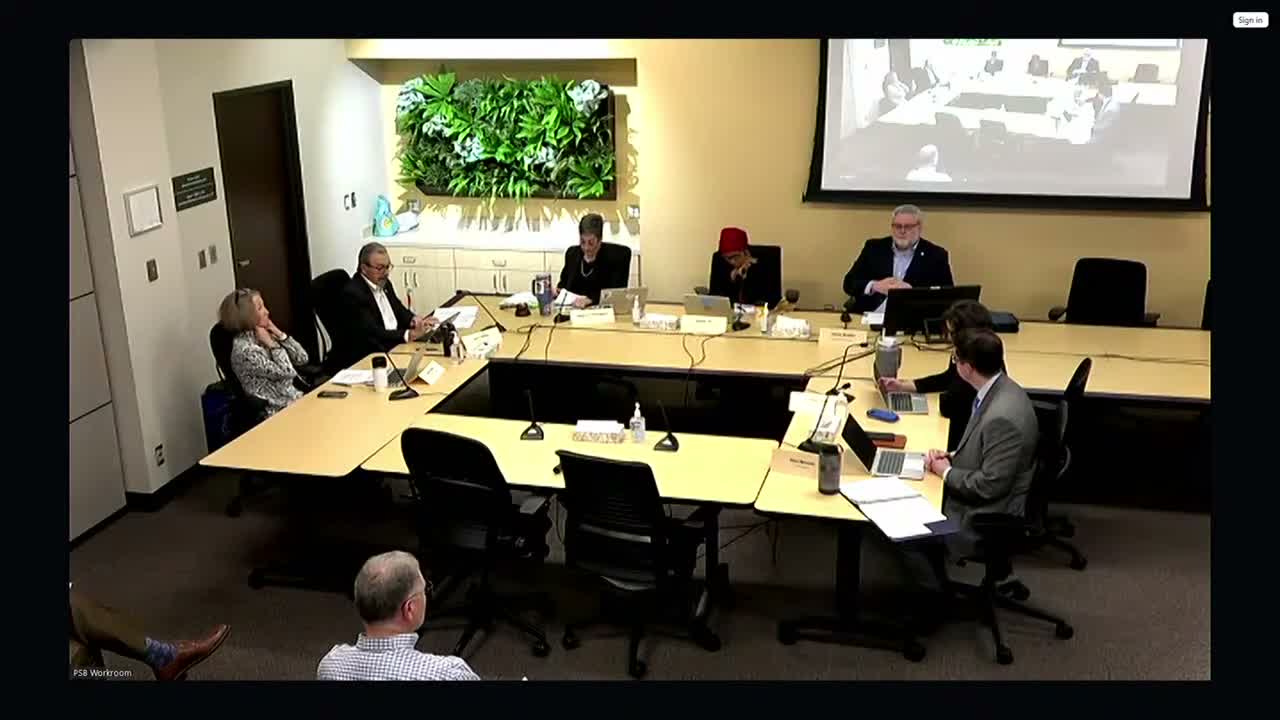
The Washington County Board of Commissioners on March 3 postponed consideration of a proposed "rule of law" resolution after commissioners debated amendments that would reference immigrant communities and allow the board to "use its institutional voice" to oppose actions it or the community views as unconstitutional.
Chair Catherine Harrington said the draft — which the board reviewed at a prior work session — included three amendments and had been revised to include a referral to the attorney general. Harrington said she was "concerned" about language that could invite the board to make constitutional determinations better left to the courts and asked for clearer limits so the board would not be expected to decide what is or is not constitutional.
One amendment the board discussed, presented as Amendment 2 and edited by County Council staff, would insert a paragraph saying the board, "as the executive body of Washington County, has a responsibility to model adherence to the constitutions of the United States and the State of Oregon," and — in "appropriate circumstances" — to "use its institutional voice to oppose unconstitutional actions that affect county residents." County Council advised that inserting the qualifier "inappropriate circumstances" was intended to narrow the board's discretion.
Another proposed change — Amendment 1 — would alter language that originally read "the board has observed" to say instead "the community has observed" instances where federal immigration officers "have been denying immigrants their Fourth Amendment rights through unauthorized searches and seizures" and where protesters "have been denied First Amendment rights through excessive use of force." The commissioner who sponsored the amendment said she wanted the draft to "signal to the community that we are here for our immigrant communities" and emphasized the language was symbolic rather than legally binding.
Opponents of Amendment 1 argued that including community observations in a long-standing resolution could imply conclusions that are the domain of courts and that the board should avoid inserting potentially contested factual findings into an evergreen policy. Several commissioners said they had seen the proposed edits only shortly before the meeting and asked for tracked-change and clean versions in writing so they could review the final wording.
By consensus the board agreed to table consideration of the resolution and take the item up at its March 17 business meeting. Chair Harrington and other commissioners asked that any proposed amendments be submitted in writing at least three business days before that meeting so members and County Council can review redlines. The board also paused the work session so members could attend a 10:00 a.m. Washington County Housing Authority Board of Directors meeting and said the work session would reconvene no later than 3:00 p.m.
Clerk Clark Hodges had earlier confirmed public-comment logistics: six people had signed up for the first public-comment period (two minutes each), with five expected to comment on the resolution; the board agreed to take seven speakers up front and shorten later five-minute slots as needed.
Next steps: the board will circulate County Council's tracked and clean drafts of Amendment 2 and any other written amendments before the March 17 meeting; no formal vote was taken on the resolution on March 3.
Chair Catherine Harrington said the draft — which the board reviewed at a prior work session — included three amendments and had been revised to include a referral to the attorney general. Harrington said she was "concerned" about language that could invite the board to make constitutional determinations better left to the courts and asked for clearer limits so the board would not be expected to decide what is or is not constitutional.
One amendment the board discussed, presented as Amendment 2 and edited by County Council staff, would insert a paragraph saying the board, "as the executive body of Washington County, has a responsibility to model adherence to the constitutions of the United States and the State of Oregon," and — in "appropriate circumstances" — to "use its institutional voice to oppose unconstitutional actions that affect county residents." County Council advised that inserting the qualifier "inappropriate circumstances" was intended to narrow the board's discretion.
Another proposed change — Amendment 1 — would alter language that originally read "the board has observed" to say instead "the community has observed" instances where federal immigration officers "have been denying immigrants their Fourth Amendment rights through unauthorized searches and seizures" and where protesters "have been denied First Amendment rights through excessive use of force." The commissioner who sponsored the amendment said she wanted the draft to "signal to the community that we are here for our immigrant communities" and emphasized the language was symbolic rather than legally binding.
Opponents of Amendment 1 argued that including community observations in a long-standing resolution could imply conclusions that are the domain of courts and that the board should avoid inserting potentially contested factual findings into an evergreen policy. Several commissioners said they had seen the proposed edits only shortly before the meeting and asked for tracked-change and clean versions in writing so they could review the final wording.
By consensus the board agreed to table consideration of the resolution and take the item up at its March 17 business meeting. Chair Harrington and other commissioners asked that any proposed amendments be submitted in writing at least three business days before that meeting so members and County Council can review redlines. The board also paused the work session so members could attend a 10:00 a.m. Washington County Housing Authority Board of Directors meeting and said the work session would reconvene no later than 3:00 p.m.
Clerk Clark Hodges had earlier confirmed public-comment logistics: six people had signed up for the first public-comment period (two minutes each), with five expected to comment on the resolution; the board agreed to take seven speakers up front and shorten later five-minute slots as needed.
Next steps: the board will circulate County Council's tracked and clean drafts of Amendment 2 and any other written amendments before the March 17 meeting; no formal vote was taken on the resolution on March 3.
View the Full Meeting & All Its Details
This article offers just a summary. Unlock complete video, transcripts, and insights as a Founder Member.
✓
Watch full, unedited meeting videos
✓
Search every word spoken in unlimited transcripts
✓
AI summaries & real-time alerts (all government levels)
✓
Permanent access to expanding government content
30-day money-back guarantee
