After reconsideration the Senate passes data-center water transparency bill
March 05, 2026 | 2026 Utah Legislature, Utah Legislature, Utah Legislative Branch, Utah
This article was created by AI summarizing key points discussed. AI makes mistakes, so for full details and context, please refer to the video of the full meeting. Please report any errors so we can fix them. Report an error »
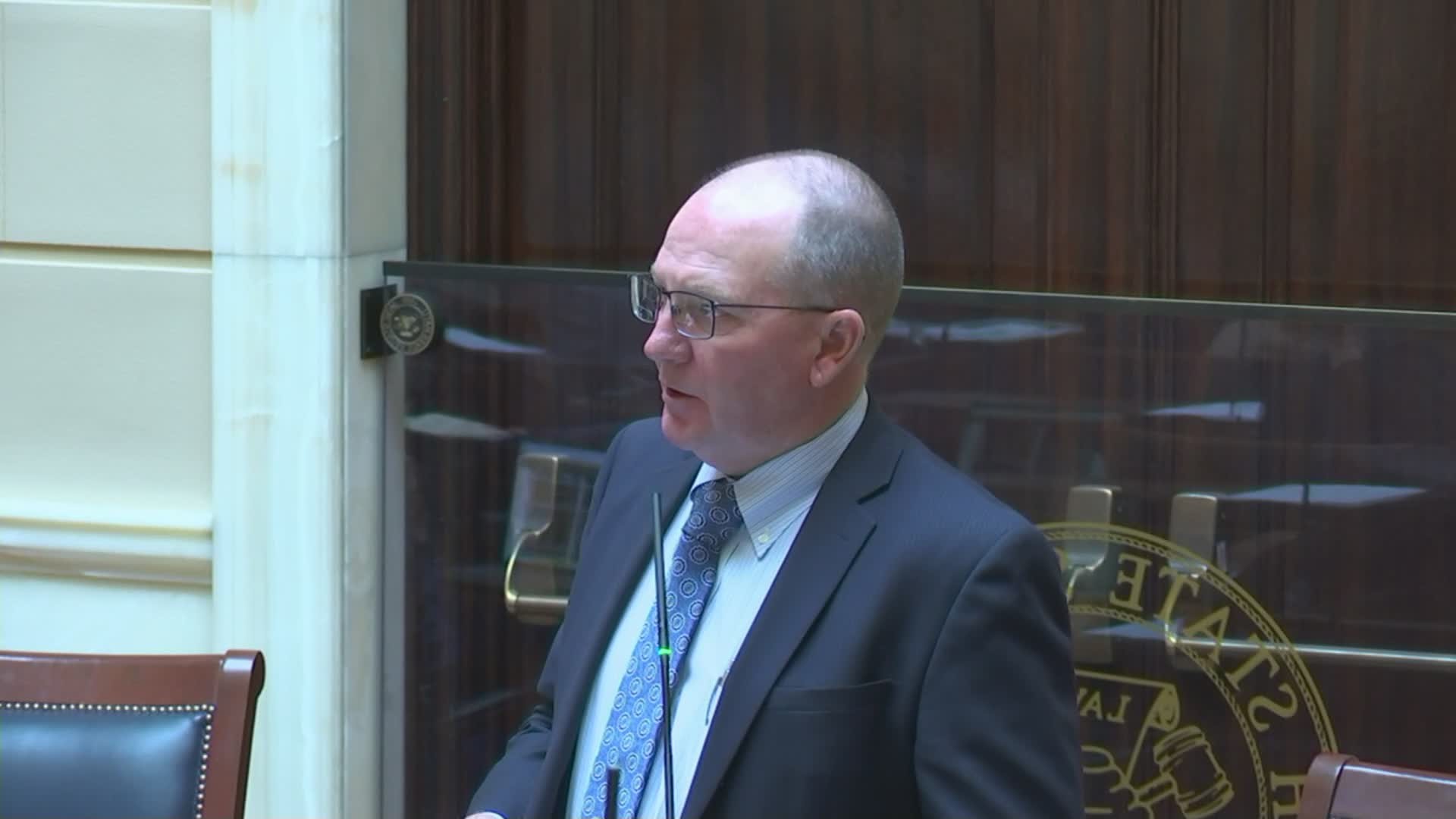
The Utah Senate reconsidered and passed House Bill 76 on transparency for large data-center water use after an earlier defeat.
Sponsor Senator Sandel argued the bill provides public clarity about water use by large data centers and would reassure communities that incoming facilities are not excessive water users. "This bill tries to help us and the public understand the water consumption that data centers may or may not use," he said in his presentation, explaining the bill applies only to large centers (10,000 square feet or more) and requires pre-construction communication with local water providers and annual public reporting to the division of water rights.
Opponents said the bill risked singling out one industry. Senator Brammer warned lawmakers they typically avoid imposing unique reporting requirements on a single industry, arguing, "We don't do this for medical device producers… We don't do this for universities… We don't do this for golf courses." Other senators raised concerns about duplicating reporting already available through other channels and about the potential for public misunderstanding of water-unit measures.
The bill was initially considered and failed in a floor vote earlier in the day (13 yeas to 15 nays). After proponents moved to reconsider, sponsors clarified the bill’s public-transparency intention and emphasized it would compile and present data in an accessible format rather than create wholly new, duplicative reporting burdens. Following reconsideration, the Senate passed the third substitute under suspension of the rules, 19 yeas to 5 nays; the bill will return to the House for further consideration.
What proponents say: Sandel and others said HB 76 would calm public anxieties and make relevant water-use information easier to find in one place, noting that many data centers already pursue efficiency measures.
What opponents said: Some colleagues feared the law would single out data centers for special treatment and could increase public confusion if the reporting were not well contextualized.
Next steps: Passage in the Senate sends the measure back to the House; any changes made in that chamber or in a conference would be part of later procedural steps.
Sponsor Senator Sandel argued the bill provides public clarity about water use by large data centers and would reassure communities that incoming facilities are not excessive water users. "This bill tries to help us and the public understand the water consumption that data centers may or may not use," he said in his presentation, explaining the bill applies only to large centers (10,000 square feet or more) and requires pre-construction communication with local water providers and annual public reporting to the division of water rights.
Opponents said the bill risked singling out one industry. Senator Brammer warned lawmakers they typically avoid imposing unique reporting requirements on a single industry, arguing, "We don't do this for medical device producers… We don't do this for universities… We don't do this for golf courses." Other senators raised concerns about duplicating reporting already available through other channels and about the potential for public misunderstanding of water-unit measures.
The bill was initially considered and failed in a floor vote earlier in the day (13 yeas to 15 nays). After proponents moved to reconsider, sponsors clarified the bill’s public-transparency intention and emphasized it would compile and present data in an accessible format rather than create wholly new, duplicative reporting burdens. Following reconsideration, the Senate passed the third substitute under suspension of the rules, 19 yeas to 5 nays; the bill will return to the House for further consideration.
What proponents say: Sandel and others said HB 76 would calm public anxieties and make relevant water-use information easier to find in one place, noting that many data centers already pursue efficiency measures.
What opponents said: Some colleagues feared the law would single out data centers for special treatment and could increase public confusion if the reporting were not well contextualized.
Next steps: Passage in the Senate sends the measure back to the House; any changes made in that chamber or in a conference would be part of later procedural steps.
Don't Miss a Word: See the Full Meeting!
Go beyond summaries. Unlock every video, transcript, and key insight with a Founder Membership.
✓
Get instant access to full meeting videos
✓
Search and clip any phrase from complete transcripts
✓
Receive AI-powered summaries & custom alerts
✓
Enjoy lifetime, unrestricted access to government data
30-day money-back guarantee
