Miami Lakes advisory committee finalizes council report after Tallahassee outreach and data review
March 06, 2026 | Miami Lakes, Miami-Dade County, Florida
This article was created by AI summarizing key points discussed. AI makes mistakes, so for full details and context, please refer to the video of the full meeting. Please report any errors so we can fix them. Report an error »
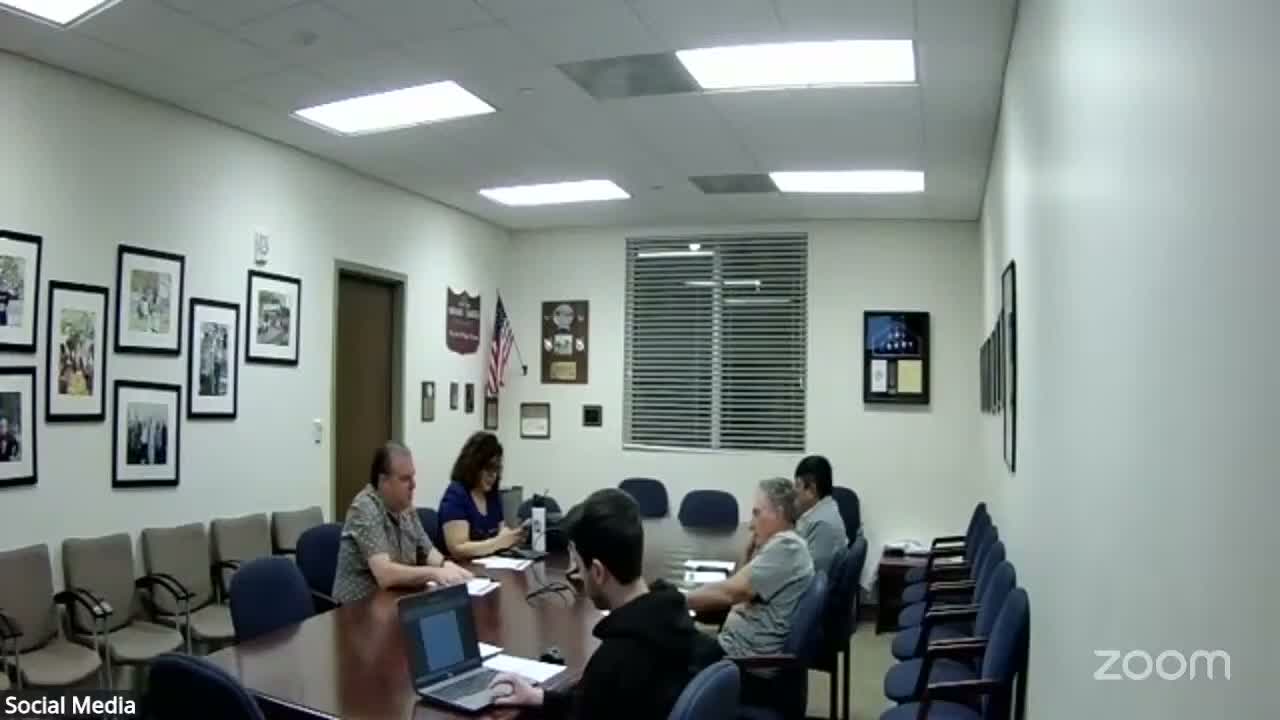
The Miami Lakes Blasting Advisory Committee agreed to submit its annual report to the town council after a meeting in which members reviewed lobbying contacts made in Tallahassee, examined a complaints dataset compiled for work with state officials, and sketched a plan for a student STEM project.
Chair (speaker 1) said she drafted the report and walked the committee through membership, budget items and outreach activity. "I paid to volunteer," the Chair said, describing an unreimbursed tax payment on materials purchased for a Miami Lakes Chamber event. Members disagreed about line‑item details — one member recalled the marketing expense as about $300 while another remembered $400 — and asked for source documents to confirm amounts.
The Chair summarized a recent Tallahassee trip that included meetings arranged both through lobbyists and by canvassing offices directly. She described sessions with state offices and a meeting with a limestone industry lobbyist, and reported the lobbyist's assessment that "the damage reported is exaggerated." Committee members countered that pilot seismograph readings collected by the group have sometimes been higher than the official reports, citing pilot readings of about 0.7 versus official values near 0.3.
Committee members emphasized the need to document data sources in the report. One member noted the primary dataset used for the Tallahassee briefing covers complaints through October and is therefore several months delayed; the group agreed to add a short, dated summary of the dataset to the report so councillors and staff can see what the numbers represent.
Beyond lobbying and data, members discussed a proposed high‑school STEM project to quantify how vibration waves affect structures. The Chair said the committee would seek a sponsorship for awards and pilot the project within Miami Lakes schools, beginning with honors or AP science classes and coordinating through principals and science department heads.
The committee also reviewed outreach tactics used to mobilize public input. The Chair described a website that pre‑populated group emails and said more than 10,000 emails went out in one campaign; members reported some offices confirmed receipt via mail‑filter rules. The Chair also said a state workshop presentation she gave had images and a video removed from the session at the time (the recording later reappeared online), and members recommended contingency plans — posters and offline backups — for future state presentations.
On procedural matters the group reconciled date ranges for the annual report (members discussed January‑to‑January verses a narrower window tied to the town calendar) and confirmed additions — attendance details, July Fourth participation and marketing items — to better reflect committee activity. At the meeting's close members indicated their support for submitting the document to council and ended with a voice affirmation of that plan.
Next steps identified by the committee include: confirming exact amounts and receipts for budget line items, adding explicit dataset references and dated marketing items to the report, developing a simple plan and sponsor approach for the STEM project, and delivering the finalized report to the town council in March (timing to be confirmed by staff).
Chair (speaker 1) said she drafted the report and walked the committee through membership, budget items and outreach activity. "I paid to volunteer," the Chair said, describing an unreimbursed tax payment on materials purchased for a Miami Lakes Chamber event. Members disagreed about line‑item details — one member recalled the marketing expense as about $300 while another remembered $400 — and asked for source documents to confirm amounts.
The Chair summarized a recent Tallahassee trip that included meetings arranged both through lobbyists and by canvassing offices directly. She described sessions with state offices and a meeting with a limestone industry lobbyist, and reported the lobbyist's assessment that "the damage reported is exaggerated." Committee members countered that pilot seismograph readings collected by the group have sometimes been higher than the official reports, citing pilot readings of about 0.7 versus official values near 0.3.
Committee members emphasized the need to document data sources in the report. One member noted the primary dataset used for the Tallahassee briefing covers complaints through October and is therefore several months delayed; the group agreed to add a short, dated summary of the dataset to the report so councillors and staff can see what the numbers represent.
Beyond lobbying and data, members discussed a proposed high‑school STEM project to quantify how vibration waves affect structures. The Chair said the committee would seek a sponsorship for awards and pilot the project within Miami Lakes schools, beginning with honors or AP science classes and coordinating through principals and science department heads.
The committee also reviewed outreach tactics used to mobilize public input. The Chair described a website that pre‑populated group emails and said more than 10,000 emails went out in one campaign; members reported some offices confirmed receipt via mail‑filter rules. The Chair also said a state workshop presentation she gave had images and a video removed from the session at the time (the recording later reappeared online), and members recommended contingency plans — posters and offline backups — for future state presentations.
On procedural matters the group reconciled date ranges for the annual report (members discussed January‑to‑January verses a narrower window tied to the town calendar) and confirmed additions — attendance details, July Fourth participation and marketing items — to better reflect committee activity. At the meeting's close members indicated their support for submitting the document to council and ended with a voice affirmation of that plan.
Next steps identified by the committee include: confirming exact amounts and receipts for budget line items, adding explicit dataset references and dated marketing items to the report, developing a simple plan and sponsor approach for the STEM project, and delivering the finalized report to the town council in March (timing to be confirmed by staff).
View the Full Meeting & All Its Details
This article offers just a summary. Unlock complete video, transcripts, and insights as a Founder Member.
✓
Watch full, unedited meeting videos
✓
Search every word spoken in unlimited transcripts
✓
AI summaries & real-time alerts (all government levels)
✓
Permanent access to expanding government content
30-day money-back guarantee
