Montgomery County zoning compliance officer reviews staged enforcement process as board elects officers
March 06, 2026 | Montgomery County, Virginia
This article was created by AI summarizing key points discussed. AI makes mistakes, so for full details and context, please refer to the video of the full meeting. Please report any errors so we can fix them. Report an error »
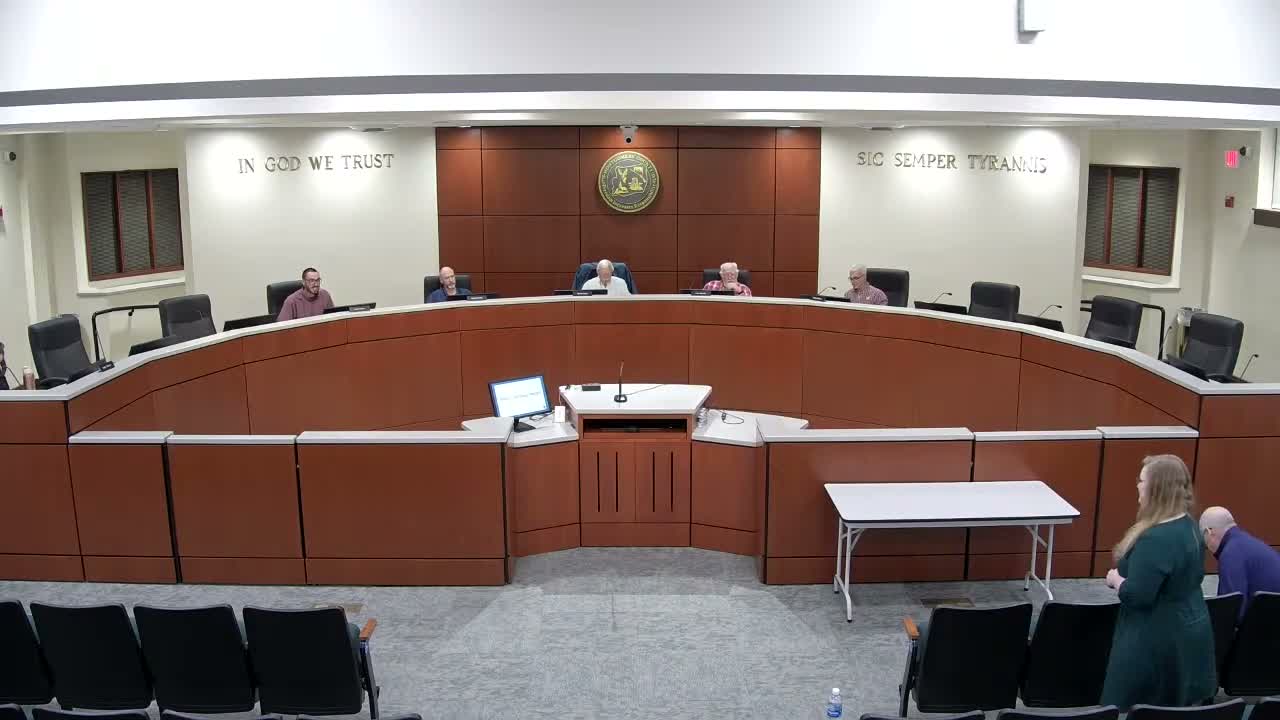
The Montgomery County Board of Zoning Appeals met March 5, elected new officers, approved minutes and received a zoning code enforcement briefing from Laura K. Rogers, the county's zoning compliance officer.
Rogers, who said she joined the county after 11 years in law enforcement, told the board that Montgomery County Code 10-52 authorizes her to assist the zoning administrator and that her office's primary aim is voluntary compliance. "My name is Laura K. Rogers. I am the zoning compliance officer," she said, adding that she is certified through the Virginia Association of Zoning Officials.
Why it matters: The presentation laid out how the county handles property-related complaints that affect neighbors and public safety, including unpermitted construction, inoperable vehicles, junkyards, setback violations and unpermitted short-term rentals. Rogers emphasized the county's stepwise process designed to encourage compliance before formal penalties are imposed.
Rogers described the county's staged enforcement sequence: intake and logging of complaints, a broadly used "letter of inquiry" aimed at voluntary compliance, a first violation notice, a final violation notice, criminal summonses and then court if compliance is not achieved. "We first start with a zoning complaint. We then move to what we call a letter of inquiry," she said. She added that the letter-of-inquiry step is sometimes handled in person when county staff and the complainant can engage directly.
Rogers provided caseload figures and timing context: "As of when I started in August 2024, I've had 85," she said, and reported she currently has 38 active cases and has closed 47 cases since starting. She also described a separate complaint queue she estimated at about 27 pending items and warned that some cases can take several months or longer when engineers or surveyors are needed.
On the most serious enforcement step, Rogers described filing a criminal complaint with a magistrate that can lead to a class 2 misdemeanor summons and a court date about 30 days later. "If compliance is fully reached prior to us going to court, we can ask the judge and the court to dismiss the case," she said, and noted that the county attorney represents the county in court.
A committee member asked why the county pursues criminal rather than civil enforcement. Rogers and the county attorney replied that the county code currently authorizes criminal enforcement under the cited section; the attorney noted that a code change could allow civil remedies but that criminal prosecution requires the county to meet the higher "beyond a reasonable doubt" burden of proof in court.
Rogers also walked the board through operational details: how the county documents contact through a zoning-violation timeline, the use of site inspection photos and aerial GIS images in notices, and plans to migrate the complaint form into the OpenGov permitting system. She said the office will send a standard case-closure letter when a matter is resolved and will link residents to other county resources when needed.
Board members raised concerns about neighbor disputes and anonymous complaints in rural areas. Rogers said most investigations are driven by citizen complaints, some anonymous, and staff will document repeated or apparently vexatious complainants and consult the county attorney when warranted. She reiterated that staff cannot enter private property without permission and will work from public vantage points or ask complainants for access if needed.
The board also discussed common vehicle- and junkyard-related violations. Rogers cited the county code provision for inoperable vehicles (referenced in the discussion as 104.113), explained that agricultural and residential properties may have one inoperable vehicle without violation, and said multiple untagged or stacked vehicles can trigger automobile-graveyard or junkyard violations depending on zoning and use.
Votes and procedural items: the board elected officers for chair and vice chair (voice votes recorded as in favor), approved the May 1, 2025 minutes on a motion by Mike Riley with a second from Steve Spradlin, and later moved to adjourn.
The meeting closed after members thanked staff for the presentation; the board did not take other substantive actions during the session.
Rogers, who said she joined the county after 11 years in law enforcement, told the board that Montgomery County Code 10-52 authorizes her to assist the zoning administrator and that her office's primary aim is voluntary compliance. "My name is Laura K. Rogers. I am the zoning compliance officer," she said, adding that she is certified through the Virginia Association of Zoning Officials.
Why it matters: The presentation laid out how the county handles property-related complaints that affect neighbors and public safety, including unpermitted construction, inoperable vehicles, junkyards, setback violations and unpermitted short-term rentals. Rogers emphasized the county's stepwise process designed to encourage compliance before formal penalties are imposed.
Rogers described the county's staged enforcement sequence: intake and logging of complaints, a broadly used "letter of inquiry" aimed at voluntary compliance, a first violation notice, a final violation notice, criminal summonses and then court if compliance is not achieved. "We first start with a zoning complaint. We then move to what we call a letter of inquiry," she said. She added that the letter-of-inquiry step is sometimes handled in person when county staff and the complainant can engage directly.
Rogers provided caseload figures and timing context: "As of when I started in August 2024, I've had 85," she said, and reported she currently has 38 active cases and has closed 47 cases since starting. She also described a separate complaint queue she estimated at about 27 pending items and warned that some cases can take several months or longer when engineers or surveyors are needed.
On the most serious enforcement step, Rogers described filing a criminal complaint with a magistrate that can lead to a class 2 misdemeanor summons and a court date about 30 days later. "If compliance is fully reached prior to us going to court, we can ask the judge and the court to dismiss the case," she said, and noted that the county attorney represents the county in court.
A committee member asked why the county pursues criminal rather than civil enforcement. Rogers and the county attorney replied that the county code currently authorizes criminal enforcement under the cited section; the attorney noted that a code change could allow civil remedies but that criminal prosecution requires the county to meet the higher "beyond a reasonable doubt" burden of proof in court.
Rogers also walked the board through operational details: how the county documents contact through a zoning-violation timeline, the use of site inspection photos and aerial GIS images in notices, and plans to migrate the complaint form into the OpenGov permitting system. She said the office will send a standard case-closure letter when a matter is resolved and will link residents to other county resources when needed.
Board members raised concerns about neighbor disputes and anonymous complaints in rural areas. Rogers said most investigations are driven by citizen complaints, some anonymous, and staff will document repeated or apparently vexatious complainants and consult the county attorney when warranted. She reiterated that staff cannot enter private property without permission and will work from public vantage points or ask complainants for access if needed.
The board also discussed common vehicle- and junkyard-related violations. Rogers cited the county code provision for inoperable vehicles (referenced in the discussion as 104.113), explained that agricultural and residential properties may have one inoperable vehicle without violation, and said multiple untagged or stacked vehicles can trigger automobile-graveyard or junkyard violations depending on zoning and use.
Votes and procedural items: the board elected officers for chair and vice chair (voice votes recorded as in favor), approved the May 1, 2025 minutes on a motion by Mike Riley with a second from Steve Spradlin, and later moved to adjourn.
The meeting closed after members thanked staff for the presentation; the board did not take other substantive actions during the session.
View the Full Meeting & All Its Details
This article offers just a summary. Unlock complete video, transcripts, and insights as a Founder Member.
✓
Watch full, unedited meeting videos
✓
Search every word spoken in unlimited transcripts
✓
AI summaries & real-time alerts (all government levels)
✓
Permanent access to expanding government content
30-day money-back guarantee
