Senate passes e‑bike safety bill after sharp debate over youth licensing and training
March 04, 2026 | 2026 Utah Legislature, Utah Legislature, Utah Legislative Branch, Utah
This article was created by AI summarizing key points discussed. AI makes mistakes, so for full details and context, please refer to the video of the full meeting. Please report any errors so we can fix them. Report an error »
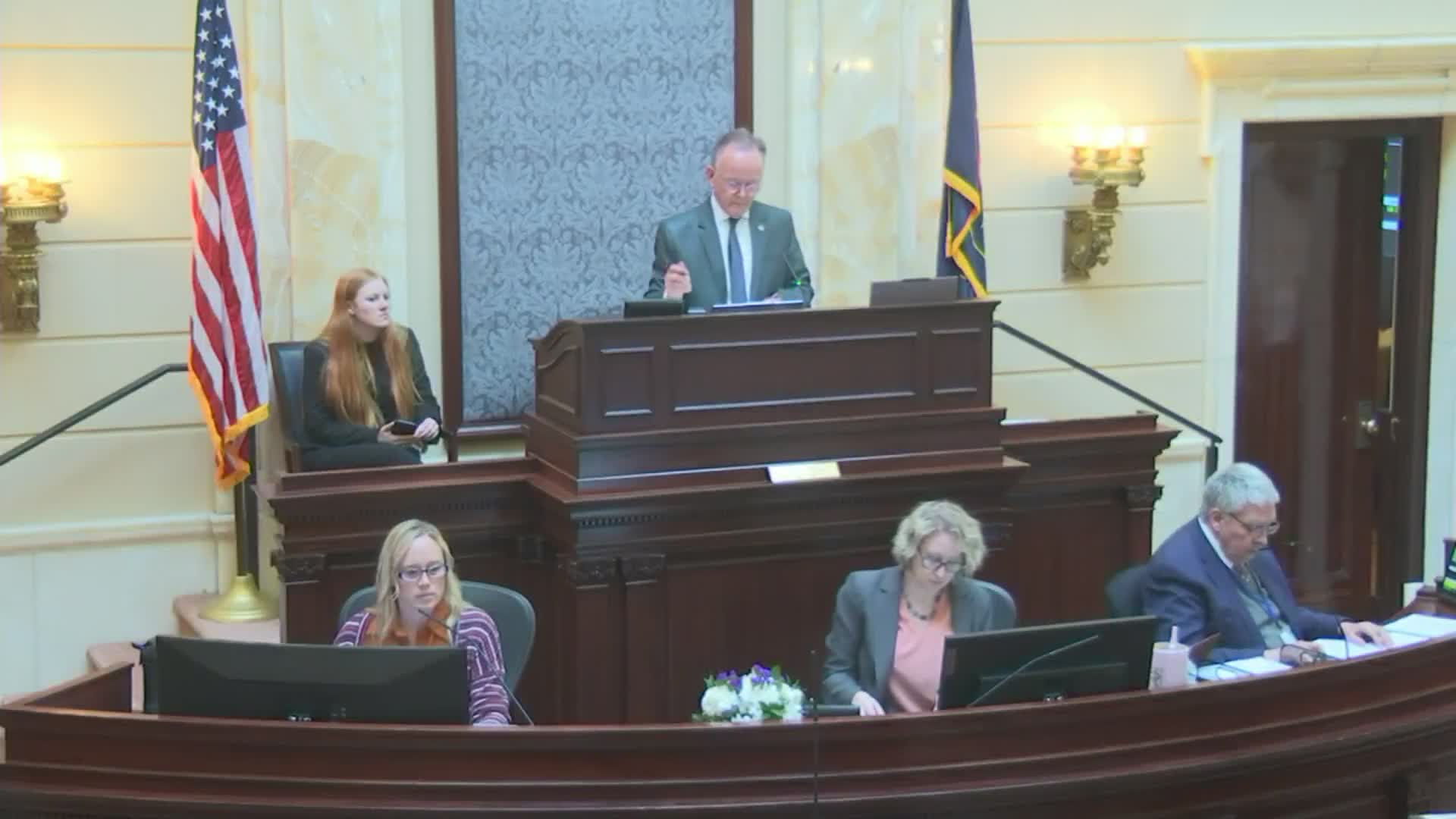
The Utah Senate passed third-substitute House Bill 381 on a roll-call after extended debate, approving new rules for the use of electric-assist bikes and related personal electric vehicles by minors.
Sponsor Senator Weiler, who presented the bill, said it strikes a balance between safety and access by expanding supervised-use options and creating a short online safety course so some youth may ride unsupervised after training. “The only driver's license needed under this bill is for a motorcycle. This bill does not require a driver's license for an e bike,” Weiler said, stressing the measure was aimed at training, not licensing children as motorists.
Supporters including Senator Plumb and Senator McCall said the bill addresses a growing safety problem: emergency departments and community caregivers have reported increasing injuries among youth riding powerful devices. Senator Plumb thanked sponsors for the bill’s protective elements, saying the changes “will be protective of our kids.” Senator McCall described seeing dangerous use of high‑power devices and urged rules targeting the fastest, most hazardous types of e‑bikes.
Opponents warned the bill could either create undue burdens or fail to enforce existing rules. Senator Fillmore argued the proposal could be perceived as requiring a driver's license to ride a motorized bicycle and cautioned against heavy-handed rules, while Senator Brammer called licensing children “coddling” and said he opposed licensing as a mechanism for recreational risk-taking.
The bill establishes a tiered approach: lower-power e‑bikes retain fewer restrictions; higher-power devices face clearer safety training and retailer disclosure requirements. Under the substitute, a short online safety course or an in-person school program can satisfy the training requirement for certain unsupervised use. The sponsor said law enforcement will continue to cite dangerous behavior under existing statutes.
The vote on the third substitute was recorded in the transcript as 18 yea, 10 nay, and 1 absent; the bill will be returned to the House for its consideration.
What happens next: The House will receive the Senate’s substituted version for its signature and any further action. Implementation details — including how the training will be delivered and enforced — will be worked out in administrative rules and by local law enforcement and school partners.
Sponsor Senator Weiler, who presented the bill, said it strikes a balance between safety and access by expanding supervised-use options and creating a short online safety course so some youth may ride unsupervised after training. “The only driver's license needed under this bill is for a motorcycle. This bill does not require a driver's license for an e bike,” Weiler said, stressing the measure was aimed at training, not licensing children as motorists.
Supporters including Senator Plumb and Senator McCall said the bill addresses a growing safety problem: emergency departments and community caregivers have reported increasing injuries among youth riding powerful devices. Senator Plumb thanked sponsors for the bill’s protective elements, saying the changes “will be protective of our kids.” Senator McCall described seeing dangerous use of high‑power devices and urged rules targeting the fastest, most hazardous types of e‑bikes.
Opponents warned the bill could either create undue burdens or fail to enforce existing rules. Senator Fillmore argued the proposal could be perceived as requiring a driver's license to ride a motorized bicycle and cautioned against heavy-handed rules, while Senator Brammer called licensing children “coddling” and said he opposed licensing as a mechanism for recreational risk-taking.
The bill establishes a tiered approach: lower-power e‑bikes retain fewer restrictions; higher-power devices face clearer safety training and retailer disclosure requirements. Under the substitute, a short online safety course or an in-person school program can satisfy the training requirement for certain unsupervised use. The sponsor said law enforcement will continue to cite dangerous behavior under existing statutes.
The vote on the third substitute was recorded in the transcript as 18 yea, 10 nay, and 1 absent; the bill will be returned to the House for its consideration.
What happens next: The House will receive the Senate’s substituted version for its signature and any further action. Implementation details — including how the training will be delivered and enforced — will be worked out in administrative rules and by local law enforcement and school partners.
View the Full Meeting & All Its Details
This article offers just a summary. Unlock complete video, transcripts, and insights as a Founder Member.
✓
Watch full, unedited meeting videos
✓
Search every word spoken in unlimited transcripts
✓
AI summaries & real-time alerts (all government levels)
✓
Permanent access to expanding government content
30-day money-back guarantee
