Hours of testimony at House hearing as Massachusetts lawmakers consider 'Protect Act' to curb courthouse ICE arrests
March 04, 2026 | 2026 Legislature MA, Massachusetts
This article was created by AI summarizing key points discussed. AI makes mistakes, so for full details and context, please refer to the video of the full meeting. Please report any errors so we can fix them. Report an error »
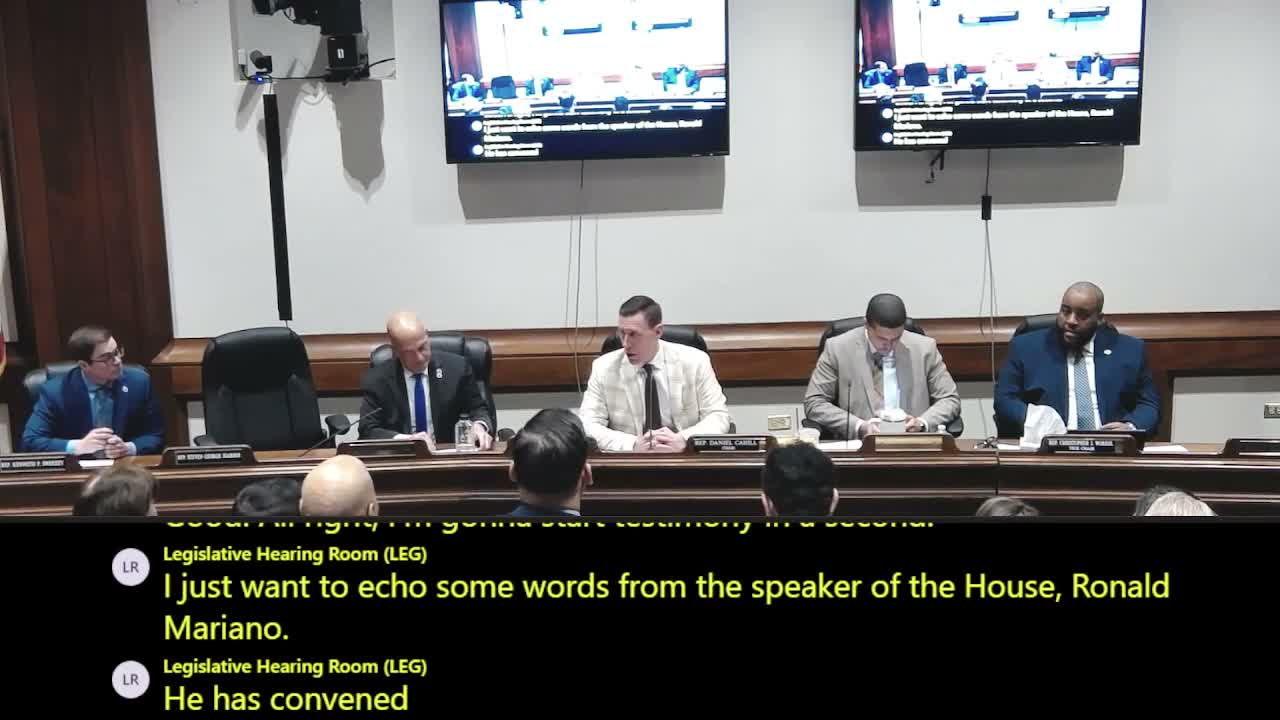
The House Committee on Public Safety and Homeland Security convened a lengthy hearing on Feb. 27 to consider H.5158, the Protect Act, a bill developed by the Massachusetts Black and Latino Legislative Caucus that would restrict state and local cooperation with civil immigration enforcement and prohibit civil immigration arrests in and around courthouses without a judicial warrant.
Supporters framed the bill as a practical, legally defensible response to a spike in civil immigration arrests that has chilled access to courts, schools and health care. "This bill is the product of almost a year of deliberate work," said Representative Andy Vargas, chair of the Black and Latino Legislative Caucus, who told the committee the caucus developed the bill after convening a dedicated immigration task force and engaging advocates, court personnel and local leaders. Vargas said the legislation centers three priorities: protecting constitutional rights, preserving the judicial system, and safeguarding immigrant families and communities. He also cited a courthouse-arrest statistic for 2025 that the transcript records as "6.14" and characterized the number in context as a substantial increase in courthouse enforcement.
The Attorney General's Office, represented by Chief Deputy AG Abby Taylor and Deputy Chief Lisa Sears, told the committee the office has been "deeply alarmed" by federal enforcement tactics and supports measures that are legally sound. Taylor emphasized the Lund decision, a Massachusetts court ruling that prohibits honoring civil immigration detainers, and said the AG's office would help craft guidance and enforcement mechanisms. "Prohibiting civil arrests in our courthouses has made a meaningful difference" in other jurisdictions, Taylor said, and the office would work with the legislature on details and public-notice materials.
Community leaders, municipal officials and service providers gave extensive testimony about local impacts. Chelsea city manager Fidel Moltes and community organizers described hundreds of students leaving schools, small businesses losing customers, and families too afraid to report crimes or seek services. Multiple witnesses described individual courtroom and courthouse incidents in which people were taken into federal custody and transferred out of state, sometimes only to learn of their loved ones' locations after much delay.
Legal advocates and public defenders said courthouse arrests have direct, measurable effects on access to justice. Jan Klein of the Committee for Public Counsel Services urged the committee to bar civil arrests at courthouses without judicial warrants, saying transfers of detainees out of state frequently make it "impossible for defense counsel to secure their appearance for state court proceedings" and leave criminal cases unresolved.
Representatives of law enforcement—state and municipal chiefs, union leaders and sheriffs—told the committee they largely do not perform immigration enforcement and often adhere to Lund, but raised operational and safety concerns about the bill's safe-space proposals. Police leaders asked for clarity on expectations when federal agents are present and requested indemnification language for officers who might intervene to protect public safety. "We are not the immigration police," one chief said, while urging that statutes make clear law enforcement would not be expected to arrest or facilitate ICE operations.
Sheriffs and county officials supported restrictions on deputizing local staff for federal immigration work and described the differences between intergovernmental jail contracts and operational cooperation. Plymouth County Sheriff Kevin McDonald described services provided to detainees at his jail and warned of problems created when detainees are moved out of state, including difficulties for counsel and for completing state court processes. Several sheriffs said they do not operate 287(g)-style agreements and urged clear legislative language to prevent local agencies from being used to carry out federal civil enforcement.
Health-care providers and educators urged the committee to explicitly protect hospitals, schools and libraries as sensitive locations. Physicians and pediatricians said they are seeing missed appointments and worsening health because families fear leaving home or attending court; school officials described declines in enrollment and disruptions to classrooms. Union representatives and labor leaders called for a full ban on 287(g)-style agreements and for funding for legal services.
Advocacy groups pressed the committee for stronger measures than those currently drafted in H.5158: complete bans on 287(g)-style agreements without carveouts, prohibition on information-sharing with federal immigration authorities (including via fusion centers or joint task forces), and extension of protections to sheriffs in correctional roles. Several witnesses asked the committee to add explicit prohibitions on arrests at schools, hospitals and places of worship absent judicial warrants and to mandate universal, accessible virtual participation for court proceedings.
What changed in the hearing: supporters presented abundant testimony — from elected officials to survivors and municipal leaders — documenting courthouse arrests and community harms; the Attorney General's Office expressed willingness to help draft legally grounded language; sheriffs signaled support for protecting courthouses while warning about operational consequences of blanket restrictions; and police leaders sought indemnification and implementation guidance to avoid split-second hesitation in the field.
The committee did not vote on the bill at this session. After more than six hours of testimony and questioning, members moved to adjourn the hearing; the chair called the voice vote and "the ayes have it." The legislature's next steps could include working-group drafting with the Attorney General's Office, amendments to cover sheriffs and correctional agreements, and further hearings on narrowed or expanded language. Advocates asked the committee to act quickly; law enforcement asked for clear statutory language, indemnification provisions and training to implement any new restrictions.
Representative Vargas and other supporters urged the committee to report the bill favorably and to add provisions that would close perceived loopholes on 287(g) contracts and information-sharing; law enforcement and sheriffs urged precision and clarity to protect public safety and line officers.
The committee adjourned without a final committee vote on H.5158. The chair said the record remains open for written materials and that staff will accept follow-up language and documents from legislators and stakeholders.
Supporters framed the bill as a practical, legally defensible response to a spike in civil immigration arrests that has chilled access to courts, schools and health care. "This bill is the product of almost a year of deliberate work," said Representative Andy Vargas, chair of the Black and Latino Legislative Caucus, who told the committee the caucus developed the bill after convening a dedicated immigration task force and engaging advocates, court personnel and local leaders. Vargas said the legislation centers three priorities: protecting constitutional rights, preserving the judicial system, and safeguarding immigrant families and communities. He also cited a courthouse-arrest statistic for 2025 that the transcript records as "6.14" and characterized the number in context as a substantial increase in courthouse enforcement.
The Attorney General's Office, represented by Chief Deputy AG Abby Taylor and Deputy Chief Lisa Sears, told the committee the office has been "deeply alarmed" by federal enforcement tactics and supports measures that are legally sound. Taylor emphasized the Lund decision, a Massachusetts court ruling that prohibits honoring civil immigration detainers, and said the AG's office would help craft guidance and enforcement mechanisms. "Prohibiting civil arrests in our courthouses has made a meaningful difference" in other jurisdictions, Taylor said, and the office would work with the legislature on details and public-notice materials.
Community leaders, municipal officials and service providers gave extensive testimony about local impacts. Chelsea city manager Fidel Moltes and community organizers described hundreds of students leaving schools, small businesses losing customers, and families too afraid to report crimes or seek services. Multiple witnesses described individual courtroom and courthouse incidents in which people were taken into federal custody and transferred out of state, sometimes only to learn of their loved ones' locations after much delay.
Legal advocates and public defenders said courthouse arrests have direct, measurable effects on access to justice. Jan Klein of the Committee for Public Counsel Services urged the committee to bar civil arrests at courthouses without judicial warrants, saying transfers of detainees out of state frequently make it "impossible for defense counsel to secure their appearance for state court proceedings" and leave criminal cases unresolved.
Representatives of law enforcement—state and municipal chiefs, union leaders and sheriffs—told the committee they largely do not perform immigration enforcement and often adhere to Lund, but raised operational and safety concerns about the bill's safe-space proposals. Police leaders asked for clarity on expectations when federal agents are present and requested indemnification language for officers who might intervene to protect public safety. "We are not the immigration police," one chief said, while urging that statutes make clear law enforcement would not be expected to arrest or facilitate ICE operations.
Sheriffs and county officials supported restrictions on deputizing local staff for federal immigration work and described the differences between intergovernmental jail contracts and operational cooperation. Plymouth County Sheriff Kevin McDonald described services provided to detainees at his jail and warned of problems created when detainees are moved out of state, including difficulties for counsel and for completing state court processes. Several sheriffs said they do not operate 287(g)-style agreements and urged clear legislative language to prevent local agencies from being used to carry out federal civil enforcement.
Health-care providers and educators urged the committee to explicitly protect hospitals, schools and libraries as sensitive locations. Physicians and pediatricians said they are seeing missed appointments and worsening health because families fear leaving home or attending court; school officials described declines in enrollment and disruptions to classrooms. Union representatives and labor leaders called for a full ban on 287(g)-style agreements and for funding for legal services.
Advocacy groups pressed the committee for stronger measures than those currently drafted in H.5158: complete bans on 287(g)-style agreements without carveouts, prohibition on information-sharing with federal immigration authorities (including via fusion centers or joint task forces), and extension of protections to sheriffs in correctional roles. Several witnesses asked the committee to add explicit prohibitions on arrests at schools, hospitals and places of worship absent judicial warrants and to mandate universal, accessible virtual participation for court proceedings.
What changed in the hearing: supporters presented abundant testimony — from elected officials to survivors and municipal leaders — documenting courthouse arrests and community harms; the Attorney General's Office expressed willingness to help draft legally grounded language; sheriffs signaled support for protecting courthouses while warning about operational consequences of blanket restrictions; and police leaders sought indemnification and implementation guidance to avoid split-second hesitation in the field.
The committee did not vote on the bill at this session. After more than six hours of testimony and questioning, members moved to adjourn the hearing; the chair called the voice vote and "the ayes have it." The legislature's next steps could include working-group drafting with the Attorney General's Office, amendments to cover sheriffs and correctional agreements, and further hearings on narrowed or expanded language. Advocates asked the committee to act quickly; law enforcement asked for clear statutory language, indemnification provisions and training to implement any new restrictions.
Representative Vargas and other supporters urged the committee to report the bill favorably and to add provisions that would close perceived loopholes on 287(g) contracts and information-sharing; law enforcement and sheriffs urged precision and clarity to protect public safety and line officers.
The committee adjourned without a final committee vote on H.5158. The chair said the record remains open for written materials and that staff will accept follow-up language and documents from legislators and stakeholders.
View the Full Meeting & All Its Details
This article offers just a summary. Unlock complete video, transcripts, and insights as a Founder Member.
✓
Watch full, unedited meeting videos
✓
Search every word spoken in unlimited transcripts
✓
AI summaries & real-time alerts (all government levels)
✓
Permanent access to expanding government content
30-day money-back guarantee
