Representative from Michigan urges overhaul of U.S. public diplomacy, criticizes "wasteful" programs
March 05, 2026 | House Committee on Foreign Affairs, House Committee, House, Legislative, Federal
This article was created by AI summarizing key points discussed. AI makes mistakes, so for full details and context, please refer to the video of the full meeting. Please report any errors so we can fix them. Report an error »
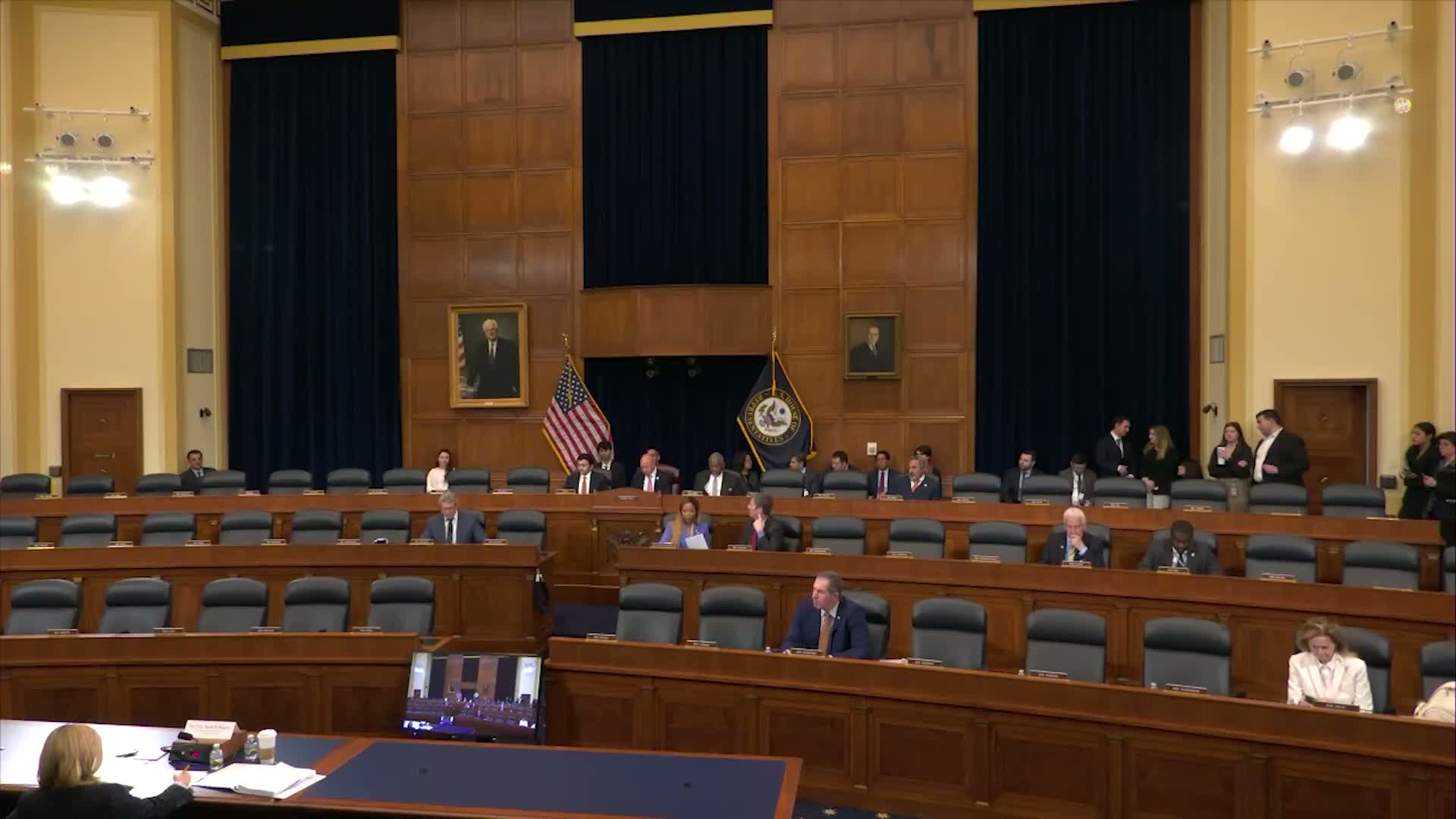
A Representative from Michigan told the House Committee on Foreign Affairs that public diplomacy is a "critical national security tool" and urged Congress to finish reforms to counter foreign disinformation and restore bipartisan credibility.
"Public diplomacy is a critical national security tool with real impact," the representative said, arguing that when done well it persuades people to partner with the United States and that, when done poorly, it undermines U.S. values and wastes taxpayer dollars.
The speaker criticized recent cultural and exchange grants he described as politically driven, citing specific examples and amounts: "$25,000 on transgender opera in Colombia," "$150,000 to build the capacity of intersex leaders in India," "$20,000 for a drag show in Ecuador," and "$72,000 for queering the map of Slovakia," saying such items damage U.S. credibility abroad and do not win hearts and minds.
He also alleged that the Global Engagement Center has spent "roughly $50,000,000 a year" on activities he characterized as facilitating censorship and harmful to U.S. influence.
Why it matters: The representative framed public diplomacy as the vehicle for advancing U.S. values—freedom, liberty and free markets—and said effective messaging is essential to compete with what he described as the Chinese Communist Party's global propaganda and censorship campaign.
Lawmakers have already taken steps, the representative said: "Through last year's state authorization effort and the NDAA, we authorized in law 2 out of 3 key public diplomacy officials. We mandated nonpolitical exchanges. We required a real strategy to counter lies from China and other adversaries with the truth." He urged completing the remaining statutory or organizational changes to create a "true strategic communications hub" in the Bureau of Global Public Affairs.
The representative also argued that sports and large international events help U.S. public diplomacy, pointing to the FIFA World Cup and the 2028 Los Angeles Olympics as opportunities and citing recent U.S. athletic successes.
He closed by thanking Under Secretary Rogers for coordinating briefings and referencing a bipartisan authorization letter to Secretary Rubio, saying he looks forward to the under secretary's recommendations on completing the reforms.
No formal vote or motion was recorded in the remarks presented to the committee; the speaker urged legislative and organizational steps to elevate the Bureau of Global Public Affairs and to finalize the reform measures already begun in recent authorizations.
"Public diplomacy is a critical national security tool with real impact," the representative said, arguing that when done well it persuades people to partner with the United States and that, when done poorly, it undermines U.S. values and wastes taxpayer dollars.
The speaker criticized recent cultural and exchange grants he described as politically driven, citing specific examples and amounts: "$25,000 on transgender opera in Colombia," "$150,000 to build the capacity of intersex leaders in India," "$20,000 for a drag show in Ecuador," and "$72,000 for queering the map of Slovakia," saying such items damage U.S. credibility abroad and do not win hearts and minds.
He also alleged that the Global Engagement Center has spent "roughly $50,000,000 a year" on activities he characterized as facilitating censorship and harmful to U.S. influence.
Why it matters: The representative framed public diplomacy as the vehicle for advancing U.S. values—freedom, liberty and free markets—and said effective messaging is essential to compete with what he described as the Chinese Communist Party's global propaganda and censorship campaign.
Lawmakers have already taken steps, the representative said: "Through last year's state authorization effort and the NDAA, we authorized in law 2 out of 3 key public diplomacy officials. We mandated nonpolitical exchanges. We required a real strategy to counter lies from China and other adversaries with the truth." He urged completing the remaining statutory or organizational changes to create a "true strategic communications hub" in the Bureau of Global Public Affairs.
The representative also argued that sports and large international events help U.S. public diplomacy, pointing to the FIFA World Cup and the 2028 Los Angeles Olympics as opportunities and citing recent U.S. athletic successes.
He closed by thanking Under Secretary Rogers for coordinating briefings and referencing a bipartisan authorization letter to Secretary Rubio, saying he looks forward to the under secretary's recommendations on completing the reforms.
No formal vote or motion was recorded in the remarks presented to the committee; the speaker urged legislative and organizational steps to elevate the Bureau of Global Public Affairs and to finalize the reform measures already begun in recent authorizations.
View the Full Meeting & All Its Details
This article offers just a summary. Unlock complete video, transcripts, and insights as a Founder Member.
✓
Watch full, unedited meeting videos
✓
Search every word spoken in unlimited transcripts
✓
AI summaries & real-time alerts (all government levels)
✓
Permanent access to expanding government content
30-day money-back guarantee
