Task force presses for more data, flags renters' absence from RTE impact measures
March 05, 2026 | Concord Public Schools/Concord-Carlisle Regional District, School Boards, Massachusetts
This article was created by AI summarizing key points discussed. AI makes mistakes, so for full details and context, please refer to the video of the full meeting. Please report any errors so we can fix them. Report an error »
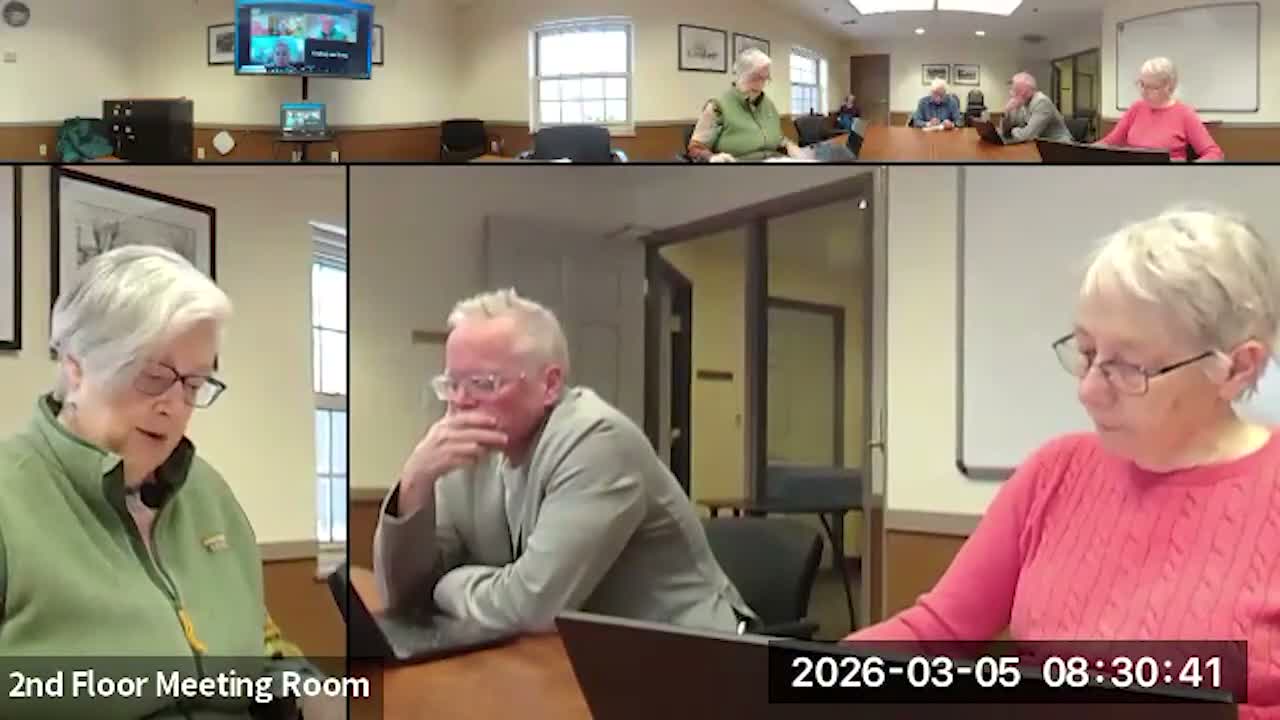
The Concord Tax Relief Evaluation Task Force on March 5 reviewed a consolidated draft report and agreed to fill a missing analysis chapter before finalizing recommendations, the group’s chair said. The chair told members the team aims to quantify the program’s “effectiveness and efficiency” and will finalize the numerical estimates shortly.
The task force underscored limitations in detecting trends from only a year or two of automated data and asked staff to request time-series records from the assessor and related programs (including HucarcoTrust) to see whether demand for tax relief changed after the RTE’s adoption. “That’s what we’re working on,” the chair said after reading an email from a resident asking how many eligible households truly need help versus how many receive assistance they do not need.
Members also debated how to define households “truly in need.” Committee member S3 said the question is “really hard to know” when mixing housing costs and income and noted survey responses showed people across income bands feeling housing-cost constrained. The group discussed candidate income cutoffs for analysis (examples mentioned: under $150,000, roughly 80% AMI, and under $100,000, roughly half AMI) and agreed to present multiple slices with a clear disclaimer about definitional uncertainty.
The task force noted the survey overrepresents homeowners and older residents but underrepresents renters. Chair and others recommended adding a resident-centered effectiveness lens (in addition to the existing owner-based lens) because the RTE was not designed to help renters and, depending on market responses, could indirectly increase rents. “If you say that renters are the constituent, the effectiveness goes down pretty substantially,” a member observed.
Real estate broker Abby, participating remotely, offered to produce charts breaking sales and price changes out by home value and gave a real-time example of midmarket homes drawing multiple over-asking offers, evidence members said will help clarify how market pressures interact with tax-relief impact.
Next steps: staff will finish chapter 5 (survey and analytic text) and circulate a consolidated draft; the group will request additional series data from the assessor and other sources; and they plan to invite the assessor (Meredith) to a future meeting to check numbers before presenting recommendations to the Select Board.
The task force underscored limitations in detecting trends from only a year or two of automated data and asked staff to request time-series records from the assessor and related programs (including HucarcoTrust) to see whether demand for tax relief changed after the RTE’s adoption. “That’s what we’re working on,” the chair said after reading an email from a resident asking how many eligible households truly need help versus how many receive assistance they do not need.
Members also debated how to define households “truly in need.” Committee member S3 said the question is “really hard to know” when mixing housing costs and income and noted survey responses showed people across income bands feeling housing-cost constrained. The group discussed candidate income cutoffs for analysis (examples mentioned: under $150,000, roughly 80% AMI, and under $100,000, roughly half AMI) and agreed to present multiple slices with a clear disclaimer about definitional uncertainty.
The task force noted the survey overrepresents homeowners and older residents but underrepresents renters. Chair and others recommended adding a resident-centered effectiveness lens (in addition to the existing owner-based lens) because the RTE was not designed to help renters and, depending on market responses, could indirectly increase rents. “If you say that renters are the constituent, the effectiveness goes down pretty substantially,” a member observed.
Real estate broker Abby, participating remotely, offered to produce charts breaking sales and price changes out by home value and gave a real-time example of midmarket homes drawing multiple over-asking offers, evidence members said will help clarify how market pressures interact with tax-relief impact.
Next steps: staff will finish chapter 5 (survey and analytic text) and circulate a consolidated draft; the group will request additional series data from the assessor and other sources; and they plan to invite the assessor (Meredith) to a future meeting to check numbers before presenting recommendations to the Select Board.
Don't Miss a Word: See the Full Meeting!
Go beyond summaries. Unlock every video, transcript, and key insight with a Founder Membership.
✓
Get instant access to full meeting videos
✓
Search and clip any phrase from complete transcripts
✓
Receive AI-powered summaries & custom alerts
✓
Enjoy lifetime, unrestricted access to government data
30-day money-back guarantee
