Judiciary committee approves confidentiality changes for facility investigations and suicide review panel; asks revisions to manufactured-housing exemption
March 05, 2026 | 2026 Legislature ME, Maine
This article was created by AI summarizing key points discussed. AI makes mistakes, so for full details and context, please refer to the video of the full meeting. Please report any errors so we can fix them. Report an error »
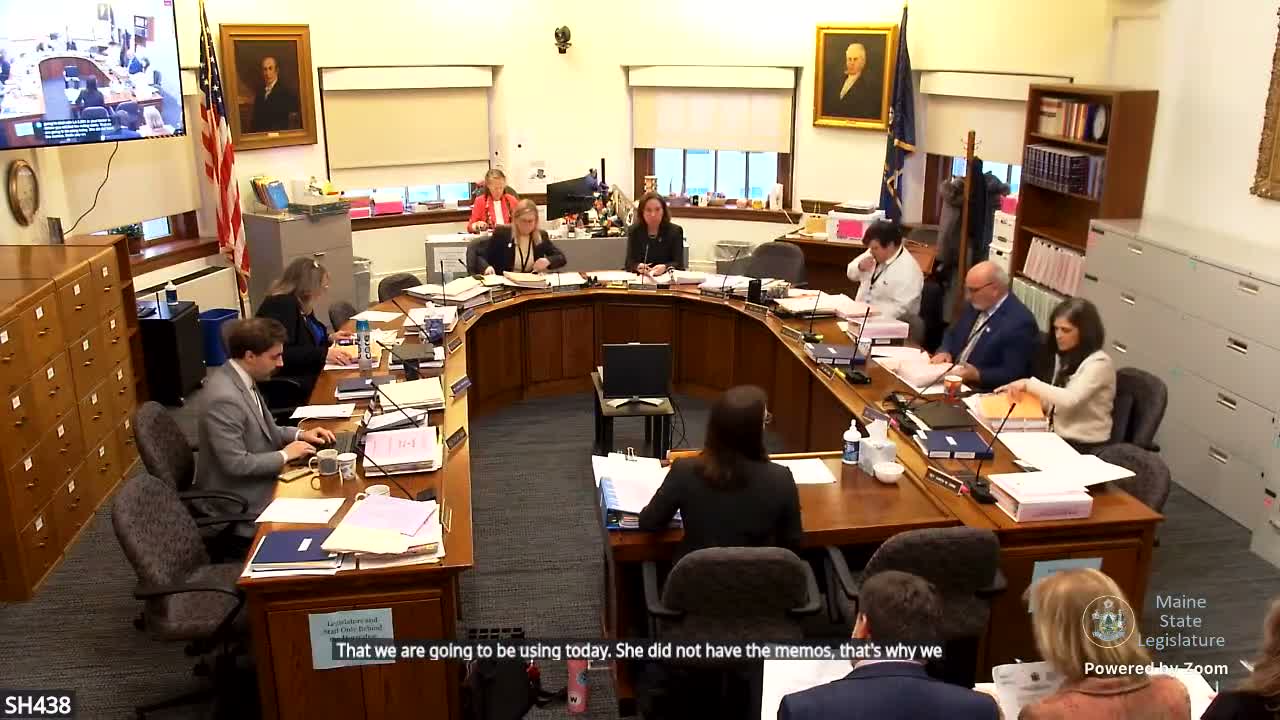
After a break the Judiciary Committee conducted three Freedom of Access Act (FOA) reviews and gave clear guidance to staff.
On LD2001 — a bill that clarifies confidentiality for records the Department of Health and Human Services collects in investigations of facilities for children and adults — the committee concluded that the record set needs to be collected and maintained, that confidentiality through the administrative-appeal process is appropriate to protect victim privacy, and that the proposal is narrowly tailored. The committee voted to approve the proposed public-records exception without change. Department staff told the committee the items at issue are the investigative records and post-investigation materials that must be kept confidential while an administrative appeal proceeds.
Brie Gutierrez (OCFS) explained the distinction between FOA access and discovery in administrative appeals: "Discovery is a different process in those appeals," she said, meaning contested-case procedures and discovery rules provide a route for parties in an appeal to obtain necessary material without public disclosure.
The committee then reviewed LD2108, which establishes a suicide mortality review panel and allows the panel to gather health, medical-examiner and other sensitive records to identify trends and recommend system improvements. The panel’s records would remain confidential to the same extent as they were in the hands of the original provider. Members agreed that the proposal is narrowly tailored, that confidentiality is needed to secure voluntary interviews and to enable the panel’s work, and they approved the exception without change.
On LD2149 — which would impose a transfer assessment fee on the sale of manufactured-housing communities but allow certain purchasers to seek an exemption via a sworn affirmation — the committee identified competitive-business confidentiality as the key concern and asked the bill sponsor to narrow the confidentiality language. Members recommended limiting confidentiality to specifically identified proprietary financial or commercial information (trade-secret-style language) rather than making whole sworn affirmations categorically exempt. The committee voted unanimously to recommend that the committee of jurisdiction rework the language and return with a more narrowly tailored provision.
Staff will prepare and circulate FOA memoranda reflecting the votes.
On LD2001 — a bill that clarifies confidentiality for records the Department of Health and Human Services collects in investigations of facilities for children and adults — the committee concluded that the record set needs to be collected and maintained, that confidentiality through the administrative-appeal process is appropriate to protect victim privacy, and that the proposal is narrowly tailored. The committee voted to approve the proposed public-records exception without change. Department staff told the committee the items at issue are the investigative records and post-investigation materials that must be kept confidential while an administrative appeal proceeds.
Brie Gutierrez (OCFS) explained the distinction between FOA access and discovery in administrative appeals: "Discovery is a different process in those appeals," she said, meaning contested-case procedures and discovery rules provide a route for parties in an appeal to obtain necessary material without public disclosure.
The committee then reviewed LD2108, which establishes a suicide mortality review panel and allows the panel to gather health, medical-examiner and other sensitive records to identify trends and recommend system improvements. The panel’s records would remain confidential to the same extent as they were in the hands of the original provider. Members agreed that the proposal is narrowly tailored, that confidentiality is needed to secure voluntary interviews and to enable the panel’s work, and they approved the exception without change.
On LD2149 — which would impose a transfer assessment fee on the sale of manufactured-housing communities but allow certain purchasers to seek an exemption via a sworn affirmation — the committee identified competitive-business confidentiality as the key concern and asked the bill sponsor to narrow the confidentiality language. Members recommended limiting confidentiality to specifically identified proprietary financial or commercial information (trade-secret-style language) rather than making whole sworn affirmations categorically exempt. The committee voted unanimously to recommend that the committee of jurisdiction rework the language and return with a more narrowly tailored provision.
Staff will prepare and circulate FOA memoranda reflecting the votes.
View the Full Meeting & All Its Details
This article offers just a summary. Unlock complete video, transcripts, and insights as a Founder Member.
✓
Watch full, unedited meeting videos
✓
Search every word spoken in unlimited transcripts
✓
AI summaries & real-time alerts (all government levels)
✓
Permanent access to expanding government content
30-day money-back guarantee
