Committee hears support for LD 299, a proposal to fund a Maine agriculture investment fund from transfer tax revenues
March 05, 2026 | 2026 Legislature ME, Maine
This article was created by AI summarizing key points discussed. AI makes mistakes, so for full details and context, please refer to the video of the full meeting. Please report any errors so we can fix them. Report an error »
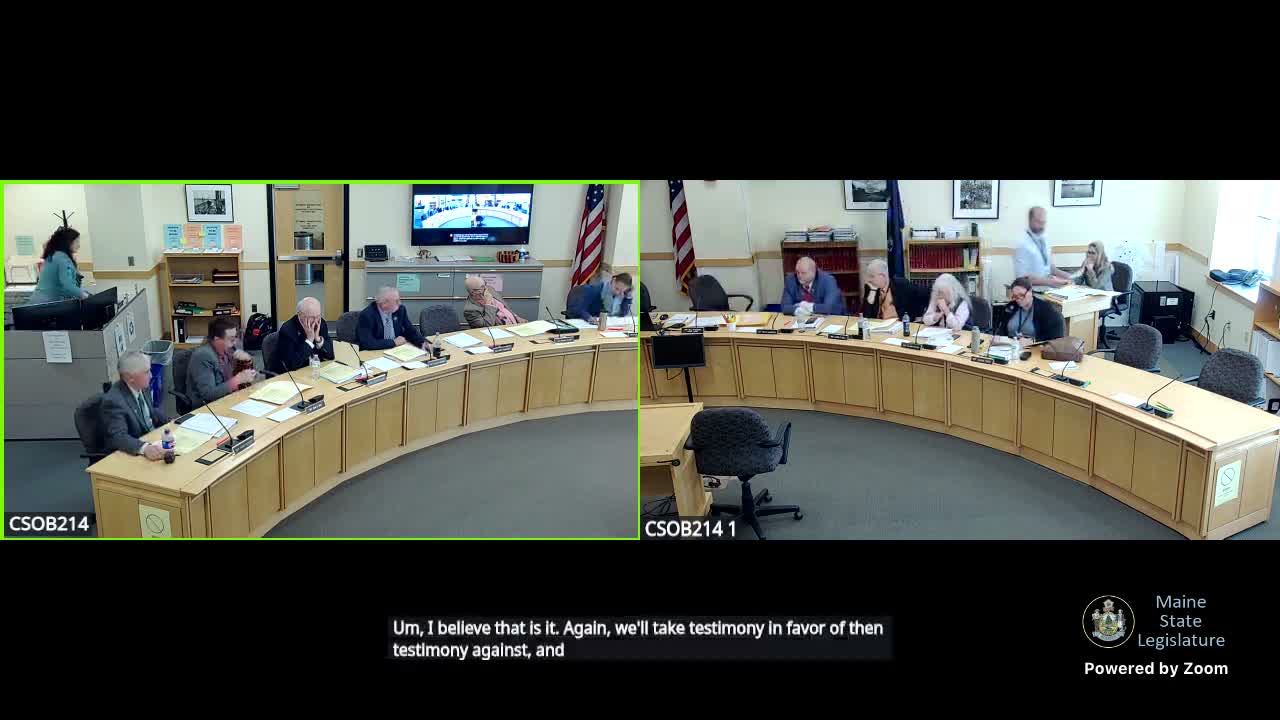
Sen. Rachel Talbot Ross convened a public hearing on LD 299, “An Act to Build a Viable Future for Maine Agriculture,” asking the public and stakeholders to weigh in on a proposal to dedicate part of real estate transfer tax receipts to a new Maine Agriculture, Food and Forest Products Investment Fund (AFPIF).
Representative Pluker, the bill sponsor, told the committee the concept draft would create a recurring funding stream for grants and low-interest revolving loans and would explicitly expand the definition of “producer” to include aquaculture. “By dedicating a portion of real estate transfer tax revenues to the Maine agriculture food and forest forest products investment fund,” Pluker said, “this amendment creates a reliable recurring funding stream that does not depend on the annual budget process.”
Why it matters: Supporters said a sustained, predictable funding source would help small and mid-sized producers access capital to modernize processing and preserve working lands. Several witnesses described unmet demand: Amy Winston of Coastal Enterprises, Inc. said CEI invested more than $10 million in 27 ag businesses last year and referenced the Agriculture Infrastructure Investment Program’s heavy oversubscription, and Seth Craig, a Brunswick grower, said ag-specific funding nearly doubled his operation’s capacity.
Expert testimony and revenue mechanics: Eric Venturini, executive director of the Wild Blueberry Commission of Maine, walked members through revenue flows and a document from Maine Revenue Services, explaining that 10% of the transfer tax comes off the top for municipalities and that LD 299 would target the unallocated portion returning to the general fund. “The intention is that the 50% would come out of that $11–13 million a year,” Venturini said, describing the plan as one that “does not touch the municipality portion.”
Questions and concerns: Several committee members sought specifics about the formula and fiscal outcomes. Senator Black cautioned that she could not support any change that would reduce the county share of the transfer tax: “If it’s coming out of any part of the county, I cannot support that and would fight drastically,” she said, arguing the county portion funds deed offices and local services. Sponsors and witnesses repeatedly said the proposal is meant to affect only the small general-fund bucket, not the 10% municipal share.
Supporters from across agricultural sectors highlighted AFPIF’s potential reach. Shelley McGuire, president of the Agricultural Council of Maine (AgCom), said AgCom gave the bill unanimous support and emphasized the amendment “directs half of the revenue collected through the real estate transfer tax that currently goes back to the general fund” to AFPIF. Representatives of logging contractors and aquaculture interests described capital needs—sometimes hundreds of thousands of dollars for specialized equipment—that they said AFPIF could help meet.
What wasn’t decided: The hearing generated technical questions about the exact monthly calculation and whether 50% of the general-fund portion would always equal $5 million in a fiscal year; witnesses and staff agreed to provide additional revenue tables and clarifications to the committee for the work session.
Next steps: The chair closed the public hearing after witnesses finished and moved the committee into a budget work session where members reviewed report-back language and related budget amendments. The committee requested that staff supply the revenue-breakdown figures and other clarifying material before further action.
Representative Pluker, the bill sponsor, told the committee the concept draft would create a recurring funding stream for grants and low-interest revolving loans and would explicitly expand the definition of “producer” to include aquaculture. “By dedicating a portion of real estate transfer tax revenues to the Maine agriculture food and forest forest products investment fund,” Pluker said, “this amendment creates a reliable recurring funding stream that does not depend on the annual budget process.”
Why it matters: Supporters said a sustained, predictable funding source would help small and mid-sized producers access capital to modernize processing and preserve working lands. Several witnesses described unmet demand: Amy Winston of Coastal Enterprises, Inc. said CEI invested more than $10 million in 27 ag businesses last year and referenced the Agriculture Infrastructure Investment Program’s heavy oversubscription, and Seth Craig, a Brunswick grower, said ag-specific funding nearly doubled his operation’s capacity.
Expert testimony and revenue mechanics: Eric Venturini, executive director of the Wild Blueberry Commission of Maine, walked members through revenue flows and a document from Maine Revenue Services, explaining that 10% of the transfer tax comes off the top for municipalities and that LD 299 would target the unallocated portion returning to the general fund. “The intention is that the 50% would come out of that $11–13 million a year,” Venturini said, describing the plan as one that “does not touch the municipality portion.”
Questions and concerns: Several committee members sought specifics about the formula and fiscal outcomes. Senator Black cautioned that she could not support any change that would reduce the county share of the transfer tax: “If it’s coming out of any part of the county, I cannot support that and would fight drastically,” she said, arguing the county portion funds deed offices and local services. Sponsors and witnesses repeatedly said the proposal is meant to affect only the small general-fund bucket, not the 10% municipal share.
Supporters from across agricultural sectors highlighted AFPIF’s potential reach. Shelley McGuire, president of the Agricultural Council of Maine (AgCom), said AgCom gave the bill unanimous support and emphasized the amendment “directs half of the revenue collected through the real estate transfer tax that currently goes back to the general fund” to AFPIF. Representatives of logging contractors and aquaculture interests described capital needs—sometimes hundreds of thousands of dollars for specialized equipment—that they said AFPIF could help meet.
What wasn’t decided: The hearing generated technical questions about the exact monthly calculation and whether 50% of the general-fund portion would always equal $5 million in a fiscal year; witnesses and staff agreed to provide additional revenue tables and clarifications to the committee for the work session.
Next steps: The chair closed the public hearing after witnesses finished and moved the committee into a budget work session where members reviewed report-back language and related budget amendments. The committee requested that staff supply the revenue-breakdown figures and other clarifying material before further action.
View the Full Meeting & All Its Details
This article offers just a summary. Unlock complete video, transcripts, and insights as a Founder Member.
✓
Watch full, unedited meeting videos
✓
Search every word spoken in unlimited transcripts
✓
AI summaries & real-time alerts (all government levels)
✓
Permanent access to expanding government content
30-day money-back guarantee
