Senate committee adopts package to expand sanitarian training, keeps registered level at bachelor’s degree
March 05, 2026 | 2026 Legislature WV, West Virginia
This article was created by AI summarizing key points discussed. AI makes mistakes, so for full details and context, please refer to the video of the full meeting. Please report any errors so we can fix them. Report an error »
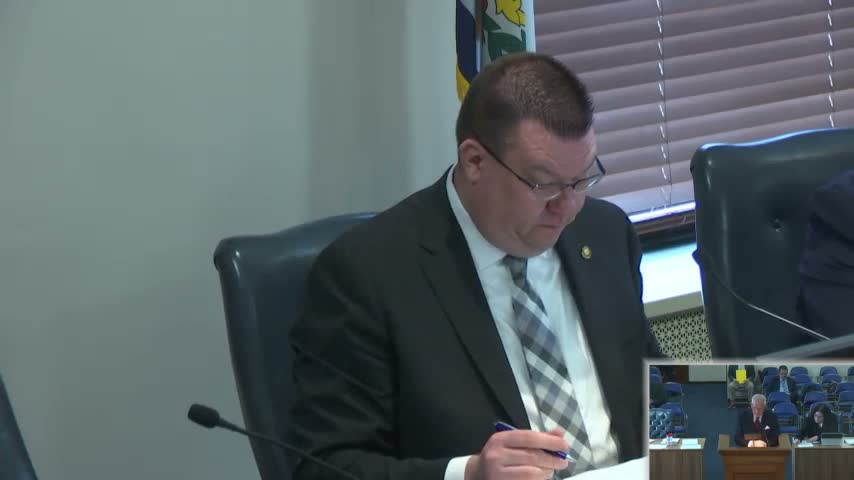
The Senate Committee on Government Organization voted to report House Bill 44-63 to the full Senate after adopting a strike-and-insert amendment that expands the use of online training and permits on‑the‑job training at local health departments when state bureau staff are unavailable.
The bill, explained by counsel, would require online training to be available year‑round and able to be completed within six months of hiring, allow local on‑the‑job training, and direct the Board of Sanitarians to adopt prior universal licensure reforms by May 1. Counsel said the amendment corrects an inadvertent educational-change in the House version and clarifies which educational levels apply to three distinct code sections for sanitarians.
Delegate Wayne Clark, 99th District, the bill’s sponsor, said the intent is to “give people the opportunity to go through community technical college and then get into the line of work,” noting the House passed the bill overwhelmingly. Melanie Plerio, president of Map and Associates representing local health departments, supported the strike-and-insert’s workforce provisions but warned that changing the registered‑sanitarian code entry to an associate could be “misleading” because the national exam to become a registered sanitarian requires a bachelor’s degree.
Vijay Davis, administrator of the Preston County Health Department and president of the West Virginia Association of Local Health Departments, explained the career ladder: entry as a sanitarian‑in‑training (associate level is acceptable), advancement to a certified sanitarian, then to a registered sanitarian only after two years’ experience and passing the national exam. He told the committee, “The national test requires a bachelor's degree to set for that test,” and said keeping the registered level at a bachelor’s degree preserves clarity for professionals seeking national certification.
Senator from Jefferson argued the amendment to lower the registered level to an associate would expand hiring flexibility and cited other fields where lower‑level credentials perform much of the work; proponents said counties already hire and deploy staff effectively under current practices. Opponents countered that the national certification pathway and state personnel classifications make lowering the registered‑level requirement in code potentially misleading to applicants.
After debate the committee rejected the Jefferson amendment on a voice vote and adopted the council’s strike-and-insert; the committee then voted to report HB 44-63 to the full Senate with a recommendation that it pass as amended. The committee did not record roll-call tallies in the transcript; outcomes were announced on voice votes.
The bill’s next step is consideration by the full Senate.
The bill, explained by counsel, would require online training to be available year‑round and able to be completed within six months of hiring, allow local on‑the‑job training, and direct the Board of Sanitarians to adopt prior universal licensure reforms by May 1. Counsel said the amendment corrects an inadvertent educational-change in the House version and clarifies which educational levels apply to three distinct code sections for sanitarians.
Delegate Wayne Clark, 99th District, the bill’s sponsor, said the intent is to “give people the opportunity to go through community technical college and then get into the line of work,” noting the House passed the bill overwhelmingly. Melanie Plerio, president of Map and Associates representing local health departments, supported the strike-and-insert’s workforce provisions but warned that changing the registered‑sanitarian code entry to an associate could be “misleading” because the national exam to become a registered sanitarian requires a bachelor’s degree.
Vijay Davis, administrator of the Preston County Health Department and president of the West Virginia Association of Local Health Departments, explained the career ladder: entry as a sanitarian‑in‑training (associate level is acceptable), advancement to a certified sanitarian, then to a registered sanitarian only after two years’ experience and passing the national exam. He told the committee, “The national test requires a bachelor's degree to set for that test,” and said keeping the registered level at a bachelor’s degree preserves clarity for professionals seeking national certification.
Senator from Jefferson argued the amendment to lower the registered level to an associate would expand hiring flexibility and cited other fields where lower‑level credentials perform much of the work; proponents said counties already hire and deploy staff effectively under current practices. Opponents countered that the national certification pathway and state personnel classifications make lowering the registered‑level requirement in code potentially misleading to applicants.
After debate the committee rejected the Jefferson amendment on a voice vote and adopted the council’s strike-and-insert; the committee then voted to report HB 44-63 to the full Senate with a recommendation that it pass as amended. The committee did not record roll-call tallies in the transcript; outcomes were announced on voice votes.
The bill’s next step is consideration by the full Senate.
Don't Miss a Word: See the Full Meeting!
Go beyond summaries. Unlock every video, transcript, and key insight with a Founder Membership.
✓
Get instant access to full meeting videos
✓
Search and clip any phrase from complete transcripts
✓
Receive AI-powered summaries & custom alerts
✓
Enjoy lifetime, unrestricted access to government data
30-day money-back guarantee
