Parents and staff urge caution on special-education changes after Miller School safety concerns
March 05, 2026 | RSU 40/MSAD 40, School Districts, Maine
This article was created by AI summarizing key points discussed. AI makes mistakes, so for full details and context, please refer to the video of the full meeting. Please report any errors so we can fix them. Report an error »
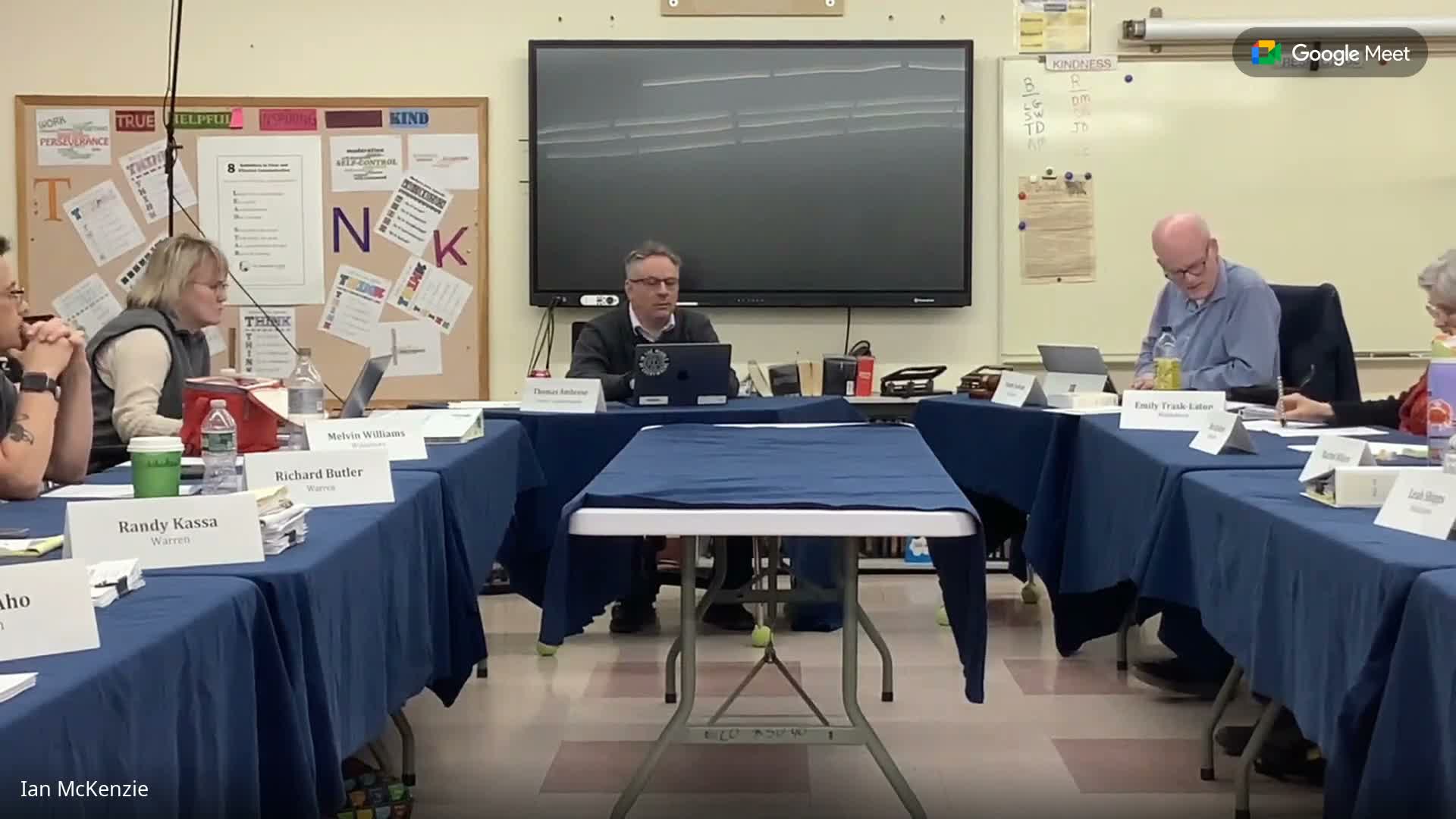
The RSU 40/MSAD 40 school board heard public comment and staff context about changes to special-education programs at Miller School at its March meeting.
Corinne Shorten, who identified herself as a Union resident, long-time substitute in district special-education programs and a parent of a child in the composite program, told the board she opposed recent program changes and urged trustees to "do a lot of listening, like, true listening and information gathering before another erroneous decision is made." She said the district had already seen consequences from earlier changes and asked the board to research thoroughly and engage staff before proceeding with further relocations of programs.
A board speaker introduced remarks attributed to teacher Andrea Reichardt, who explained that while some students in the lead special-education program can have behaviors that escalate, staff use de-escalation strategies and safety-care training and work to keep students and classmates safe. Reichardt invited board members to visit the classroom to see daily practices, saying, "You'll probably walk in and everyone will be sitting down quietly, and you'll be like, what were they talking about?" The board speaker emphasized that the classroom is not "the wild west," but that some incidents require careful staffing and supports.
During the superintendent's report, the district superintendent said leaders had met with Miller staff and other administrators to follow up on the safety concerns raised earlier at a budget meeting and that the district is "working really hard to support" staff, including pursuing additional behavioral-health support such as an incoming social worker. The superintendent invited Julia Levinson, the Miller School principal, to participate in follow-up work; Levinson's letter, read during the chair's report, indicated she intends to retire effective in July after 40 years in education.
Why this matters: changes to how and where special-education services are delivered can affect staffing, classroom composition and the continuity of services for students with behavioral and communication needs. Several speakers at the meeting urged the board to base decisions on classroom-level information and to ensure adequate staffing and behavioral-health supports before making relocations.
Board next steps and context: the board moved a budget/bond presentation to a later meeting (noted in the meeting as November 19) to allow additional preparation. Public commenter Corinne Shorten offered to provide further insight to administrators and trustees. The board did not take a formal vote that night on program relocation; follow-up presentations and staff visits were indicated as part of the district's next steps.
Corinne Shorten, who identified herself as a Union resident, long-time substitute in district special-education programs and a parent of a child in the composite program, told the board she opposed recent program changes and urged trustees to "do a lot of listening, like, true listening and information gathering before another erroneous decision is made." She said the district had already seen consequences from earlier changes and asked the board to research thoroughly and engage staff before proceeding with further relocations of programs.
A board speaker introduced remarks attributed to teacher Andrea Reichardt, who explained that while some students in the lead special-education program can have behaviors that escalate, staff use de-escalation strategies and safety-care training and work to keep students and classmates safe. Reichardt invited board members to visit the classroom to see daily practices, saying, "You'll probably walk in and everyone will be sitting down quietly, and you'll be like, what were they talking about?" The board speaker emphasized that the classroom is not "the wild west," but that some incidents require careful staffing and supports.
During the superintendent's report, the district superintendent said leaders had met with Miller staff and other administrators to follow up on the safety concerns raised earlier at a budget meeting and that the district is "working really hard to support" staff, including pursuing additional behavioral-health support such as an incoming social worker. The superintendent invited Julia Levinson, the Miller School principal, to participate in follow-up work; Levinson's letter, read during the chair's report, indicated she intends to retire effective in July after 40 years in education.
Why this matters: changes to how and where special-education services are delivered can affect staffing, classroom composition and the continuity of services for students with behavioral and communication needs. Several speakers at the meeting urged the board to base decisions on classroom-level information and to ensure adequate staffing and behavioral-health supports before making relocations.
Board next steps and context: the board moved a budget/bond presentation to a later meeting (noted in the meeting as November 19) to allow additional preparation. Public commenter Corinne Shorten offered to provide further insight to administrators and trustees. The board did not take a formal vote that night on program relocation; follow-up presentations and staff visits were indicated as part of the district's next steps.
View the Full Meeting & All Its Details
This article offers just a summary. Unlock complete video, transcripts, and insights as a Founder Member.
✓
Watch full, unedited meeting videos
✓
Search every word spoken in unlimited transcripts
✓
AI summaries & real-time alerts (all government levels)
✓
Permanent access to expanding government content
30-day money-back guarantee
