Fair Chance Housing bill would block blanket denials for applicants with criminal records
March 05, 2026 | Economic Matters Committee, HOUSE OF REPRESENTATIVES, Committees, Legislative, Maryland
This article was created by AI summarizing key points discussed. AI makes mistakes, so for full details and context, please refer to the video of the full meeting. Please report any errors so we can fix them. Report an error »
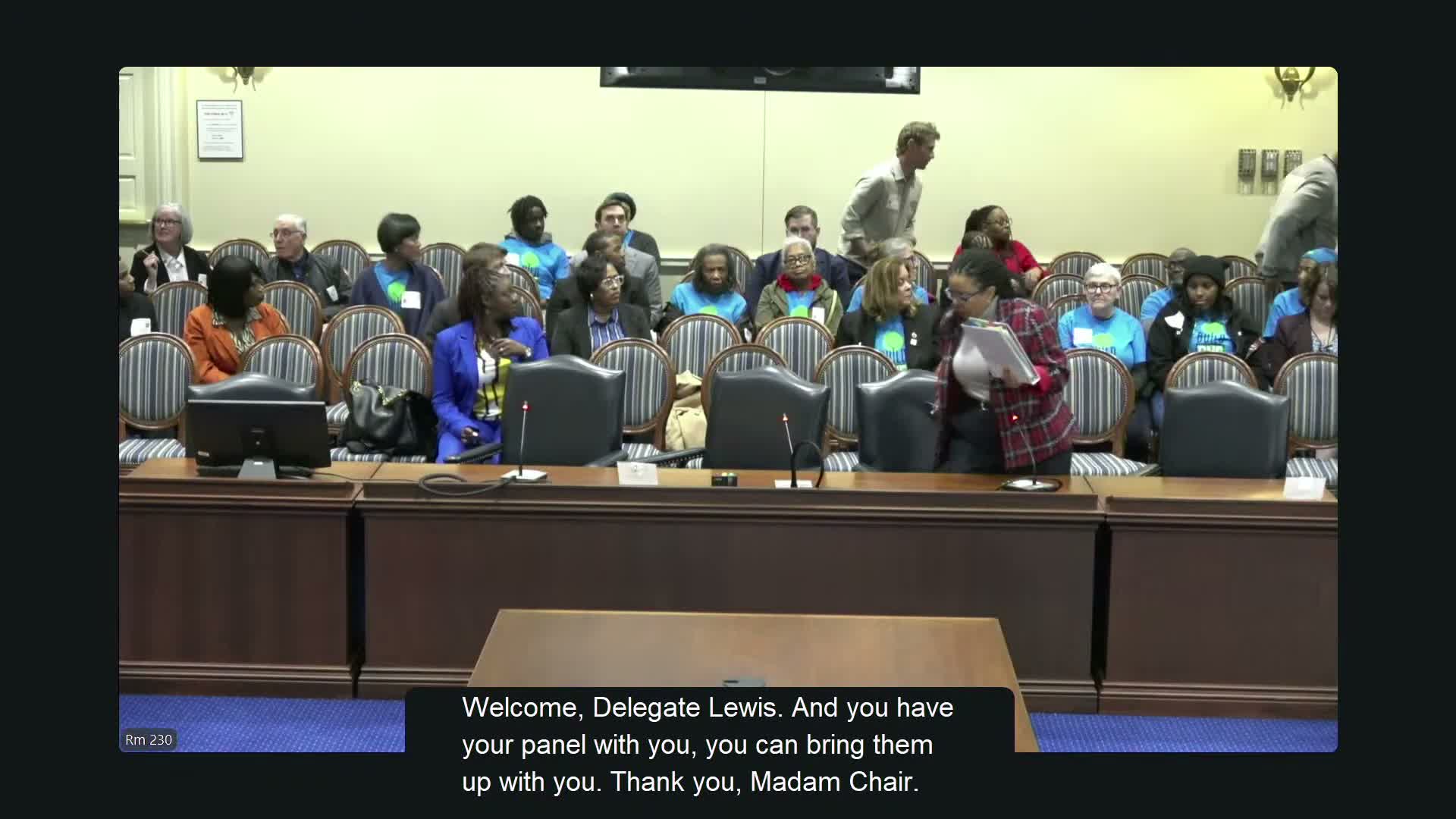
Delegate Robin Lewis presented HB 10-73, the Fair Chance Housing Act, which would prohibit blanket denials of rental applicants based solely on criminal conviction records and require landlords to evaluate applicants on tenancy qualifications first. The bill sets a conditional‑offer process: landlords would evaluate income, rental history and credit, then, if an applicant otherwise qualifies, may review criminal history and weigh defined factors and mitigating evidence before withdrawing an offer. Limited disclosures are required for the most serious offenses and lifetime registrants.
A broad coalition of advocates and reentry groups testified in support, including formerly incarcerated leaders who described repeated denials despite steady employment and local ties. John Bey of the Vera Institute said there is little evidence that blanket exclusions enhance safety and emphasized that stable housing reduces recidivism risk. Developers and some owners also voiced support for second‑chance approaches and pointed to local models in Montgomery and Prince George's counties and Washington, D.C.
Property industry groups (including the Maryland Multihousing Association and apartment owners) said they generally back transparency and individualized assessments but raised operational concerns about timing, vacancy loss and the administrative burden of an extended conditional‑offer and mitigation‑review process. They proposed amendments mirroring Montgomery County's framework with specific look‑back periods and narrower prohibitions.
Committee questions focused on exceptions, enforcement, the proposed public record of violators and the bill's fiscal note for an enforcement database. Sponsors and advocates indicated willingness to refine look‑backs, time limits for the mitigation process and penalty language to avoid unduly criminalizing landlords that make procedural errors. The hearing record shows active negotiation between civil‑rights advocates and industry over implementation details.
A broad coalition of advocates and reentry groups testified in support, including formerly incarcerated leaders who described repeated denials despite steady employment and local ties. John Bey of the Vera Institute said there is little evidence that blanket exclusions enhance safety and emphasized that stable housing reduces recidivism risk. Developers and some owners also voiced support for second‑chance approaches and pointed to local models in Montgomery and Prince George's counties and Washington, D.C.
Property industry groups (including the Maryland Multihousing Association and apartment owners) said they generally back transparency and individualized assessments but raised operational concerns about timing, vacancy loss and the administrative burden of an extended conditional‑offer and mitigation‑review process. They proposed amendments mirroring Montgomery County's framework with specific look‑back periods and narrower prohibitions.
Committee questions focused on exceptions, enforcement, the proposed public record of violators and the bill's fiscal note for an enforcement database. Sponsors and advocates indicated willingness to refine look‑backs, time limits for the mitigation process and penalty language to avoid unduly criminalizing landlords that make procedural errors. The hearing record shows active negotiation between civil‑rights advocates and industry over implementation details.
Don't Miss a Word: See the Full Meeting!
Go beyond summaries. Unlock every video, transcript, and key insight with a Founder Membership.
✓
Get instant access to full meeting videos
✓
Search and clip any phrase from complete transcripts
✓
Receive AI-powered summaries & custom alerts
✓
Enjoy lifetime, unrestricted access to government data
30-day money-back guarantee
