Tennessee lawmakers confirm three judges to state Supreme and appeals courts
March 05, 2026 | 2026 Legislature TN, Tennessee
This article was created by AI summarizing key points discussed. AI makes mistakes, so for full details and context, please refer to the video of the full meeting. Please report any errors so we can fix them. Report an error »
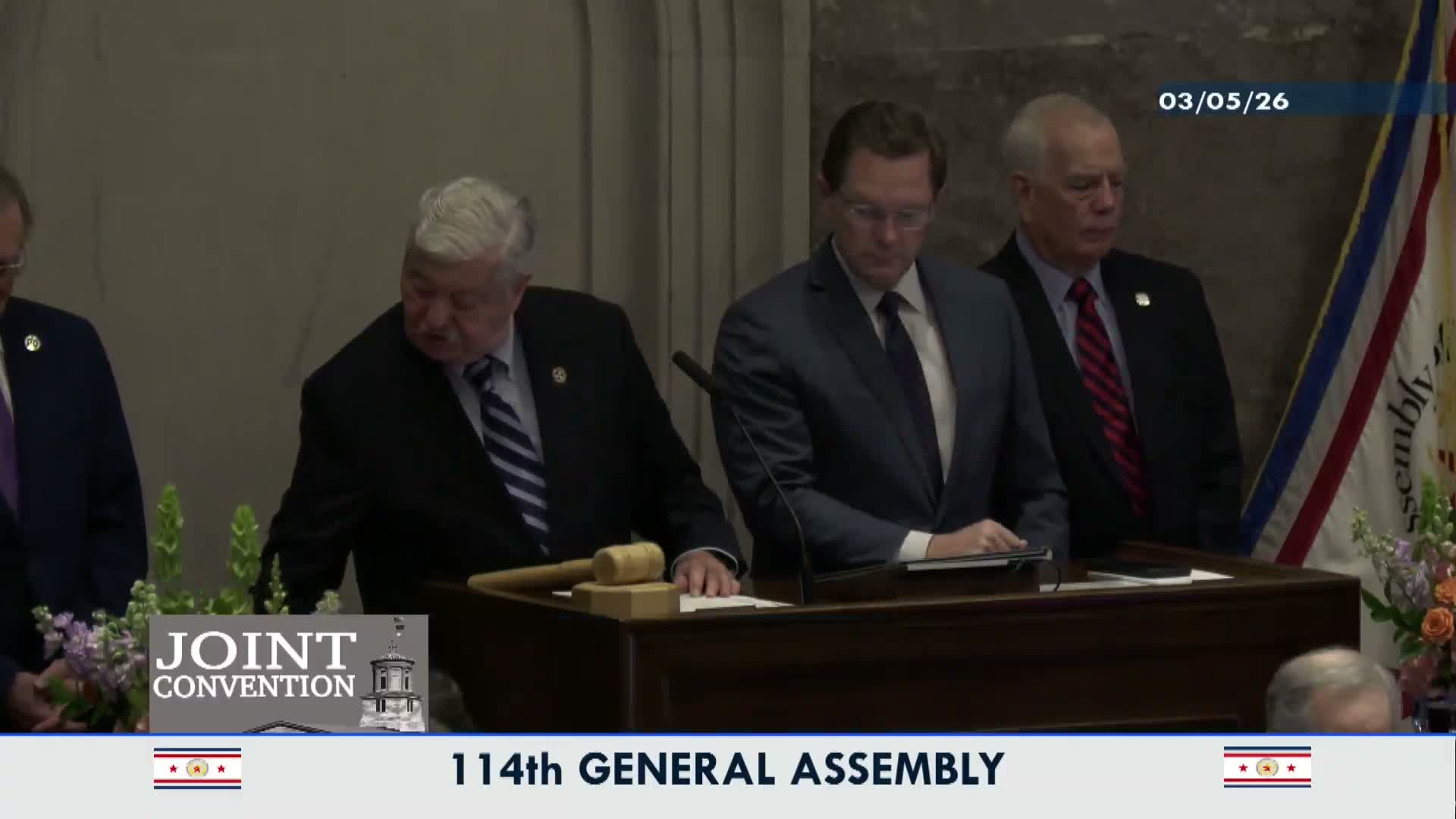
A joint convention of the Tennessee General Assembly on March 5, 2026, confirmed three judicial nominees to the state Supreme Court and Court of Appeals following roll-call votes in both the House and Senate. The session met in the House chamber at 8:00 a.m. CST under authority cited from Article VI, Section 3 of the Tennessee Constitution and Public Acts ch. 528 (2016).
The convention approved Kyle Hixson of Knox County for the Tennessee Supreme Court. Deputy Speaker Zachary moved that the House of Representatives confirm Hixson; Chairman Lafferty seconded. The House clerk recorded the tally as 74 ayes and 4 nays; the House declared it had received the constitutional majority. The Senate later recorded 28 ayes and no nays, and the presiding officer declared that "Judge Kyle Hixson is constitutionally, legally, and duly confirmed to serve as a justice in the Tennessee Supreme Court." The motions and tallies were announced by chamber clerks as part of routine roll-call procedure.
The convention then confirmed Steve Maroney of Madison County to the Tennessee Court of Appeals, Western Section. Representative Williams moved the House confirmation; Representative Martin (Carroll County) seconded. The House clerk recorded 75 ayes, 4 nays, and 3 present-not-voting. The Senate recorded 28 ayes and no nays and the presiding officer declared Maroney duly confirmed to the Court of Appeals, Western Section.
Finally, members considered William E. Phillips II of Hawkins County for the Court of Appeals, Eastern Section. The House moved and seconded the motion to confirm; the clerk announced 78 ayes, no nays, and 8 present-not-voting in the House. In the Senate, the clerk recorded 20 ayes and no nays. The presiding officer declared Phillips confirmed to the Court of Appeals, Eastern Section.
All three confirmations were processed under the same constitutional and statutory framework cited at the start of the convention. The presiding officer closed the joint convention after stating "the purpose for which this joint convention has been called has been accomplished" and the body dissolved.
The proceedings were largely procedural: sponsors moved and colleagues seconded confirmations, clerks called roll and announced tallies, and the presiding officer issued formal declarations of confirmation. The record used the counts reported aloud by clerks; where the public record provided slightly different phrasings during roll call announcements, vote totals above follow the clerk’s tallies as recorded during the session.
The convention approved Kyle Hixson of Knox County for the Tennessee Supreme Court. Deputy Speaker Zachary moved that the House of Representatives confirm Hixson; Chairman Lafferty seconded. The House clerk recorded the tally as 74 ayes and 4 nays; the House declared it had received the constitutional majority. The Senate later recorded 28 ayes and no nays, and the presiding officer declared that "Judge Kyle Hixson is constitutionally, legally, and duly confirmed to serve as a justice in the Tennessee Supreme Court." The motions and tallies were announced by chamber clerks as part of routine roll-call procedure.
The convention then confirmed Steve Maroney of Madison County to the Tennessee Court of Appeals, Western Section. Representative Williams moved the House confirmation; Representative Martin (Carroll County) seconded. The House clerk recorded 75 ayes, 4 nays, and 3 present-not-voting. The Senate recorded 28 ayes and no nays and the presiding officer declared Maroney duly confirmed to the Court of Appeals, Western Section.
Finally, members considered William E. Phillips II of Hawkins County for the Court of Appeals, Eastern Section. The House moved and seconded the motion to confirm; the clerk announced 78 ayes, no nays, and 8 present-not-voting in the House. In the Senate, the clerk recorded 20 ayes and no nays. The presiding officer declared Phillips confirmed to the Court of Appeals, Eastern Section.
All three confirmations were processed under the same constitutional and statutory framework cited at the start of the convention. The presiding officer closed the joint convention after stating "the purpose for which this joint convention has been called has been accomplished" and the body dissolved.
The proceedings were largely procedural: sponsors moved and colleagues seconded confirmations, clerks called roll and announced tallies, and the presiding officer issued formal declarations of confirmation. The record used the counts reported aloud by clerks; where the public record provided slightly different phrasings during roll call announcements, vote totals above follow the clerk’s tallies as recorded during the session.
View the Full Meeting & All Its Details
This article offers just a summary. Unlock complete video, transcripts, and insights as a Founder Member.
✓
Watch full, unedited meeting videos
✓
Search every word spoken in unlimited transcripts
✓
AI summaries & real-time alerts (all government levels)
✓
Permanent access to expanding government content
30-day money-back guarantee
