Senate subcommittee adds reenactment clause after debate over concealed‑carry training certification
March 05, 2026 | 2026 Legislature VA, Virginia
This article was created by AI summarizing key points discussed. AI makes mistakes, so for full details and context, please refer to the video of the full meeting. Please report any errors so we can fix them. Report an error »
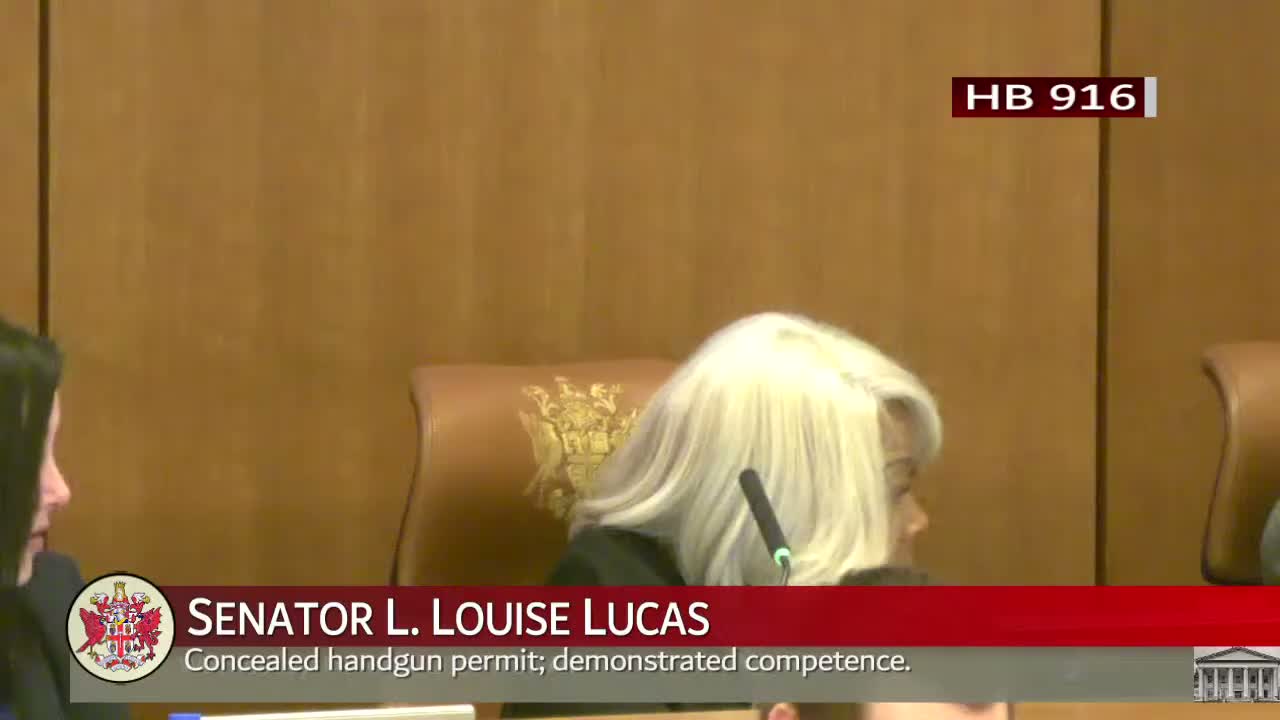
A Senate subcommittee in Richmond narrowly resolved a dispute over House Bill 9‑16 on whether the code should list specific organizations that certify concealed‑carry training.
The chair opened debate after a late referral by the Public Safety Subcommittee. Several senators warned that the version under consideration — which removes named organizations and relies on DCJS (Department of Criminal Justice Services) certification — could have a fiscal or operational effect if DCJS lacks staff to carry out certification. "If there's nobody to certify, there's no program, and it's a de facto ban on getting a concealed weapons permit," one senator said, expressing the committee's concern that the proposed language could unintentionally prevent residents from obtaining permits.
A speaker representing the bill's patron said the reverted language simply removes references to specific private organizations (for example, removing organizational names from the code) and, as presented, "does not have an economic impact." That presenter urged members to reassess the language rather than assume the measure would stop permit issuance.
Members debated three main options: adopt the house‑engrossed language, add a reenactment clause to delay final enactment while the agencies and patron resolve certification logistics, or pass the substitute as drafted. One senator proposed adding a reenactment clause so the bill would not go to the governor's desk immediately and would allow time to confirm whether DCJS or other agencies could perform the certification without new recurring costs.
The committee voted to adopt the concept of adding a reenactment clause and then approved the substitute containing that concept in an electronic roll call. The chair announced that "the substitute will be reported." The committee completed its docket and rose shortly thereafter.
Why it matters: The change matters because it affects how concealed‑carry training is validated in state law and whether the state's administrative capacity is sufficient to implement a move away from listing private certifying organizations in statute. The reenactment clause creates a pause for follow‑up between the patron and agencies to ensure the policy can be implemented without inadvertently preventing permit issuance.
Next steps: The committee reported the substitute with the reenactment concept; any final statutory text, fiscal notes or administrative instructions will be clarified in follow‑up between the bill patron and DCJS as the measure moves through committee reports and later floor consideration.
The chair opened debate after a late referral by the Public Safety Subcommittee. Several senators warned that the version under consideration — which removes named organizations and relies on DCJS (Department of Criminal Justice Services) certification — could have a fiscal or operational effect if DCJS lacks staff to carry out certification. "If there's nobody to certify, there's no program, and it's a de facto ban on getting a concealed weapons permit," one senator said, expressing the committee's concern that the proposed language could unintentionally prevent residents from obtaining permits.
A speaker representing the bill's patron said the reverted language simply removes references to specific private organizations (for example, removing organizational names from the code) and, as presented, "does not have an economic impact." That presenter urged members to reassess the language rather than assume the measure would stop permit issuance.
Members debated three main options: adopt the house‑engrossed language, add a reenactment clause to delay final enactment while the agencies and patron resolve certification logistics, or pass the substitute as drafted. One senator proposed adding a reenactment clause so the bill would not go to the governor's desk immediately and would allow time to confirm whether DCJS or other agencies could perform the certification without new recurring costs.
The committee voted to adopt the concept of adding a reenactment clause and then approved the substitute containing that concept in an electronic roll call. The chair announced that "the substitute will be reported." The committee completed its docket and rose shortly thereafter.
Why it matters: The change matters because it affects how concealed‑carry training is validated in state law and whether the state's administrative capacity is sufficient to implement a move away from listing private certifying organizations in statute. The reenactment clause creates a pause for follow‑up between the patron and agencies to ensure the policy can be implemented without inadvertently preventing permit issuance.
Next steps: The committee reported the substitute with the reenactment concept; any final statutory text, fiscal notes or administrative instructions will be clarified in follow‑up between the bill patron and DCJS as the measure moves through committee reports and later floor consideration.
View the Full Meeting & All Its Details
This article offers just a summary. Unlock complete video, transcripts, and insights as a Founder Member.
✓
Watch full, unedited meeting videos
✓
Search every word spoken in unlimited transcripts
✓
AI summaries & real-time alerts (all government levels)
✓
Permanent access to expanding government content
30-day money-back guarantee
