Senate passes bill allowing small portable "balcony" solar devices amid safety and insurance concerns
March 05, 2026 | 2026 Legislature VA, Virginia
This article was created by AI summarizing key points discussed. AI makes mistakes, so for full details and context, please refer to the video of the full meeting. Please report any errors so we can fix them. Report an error »
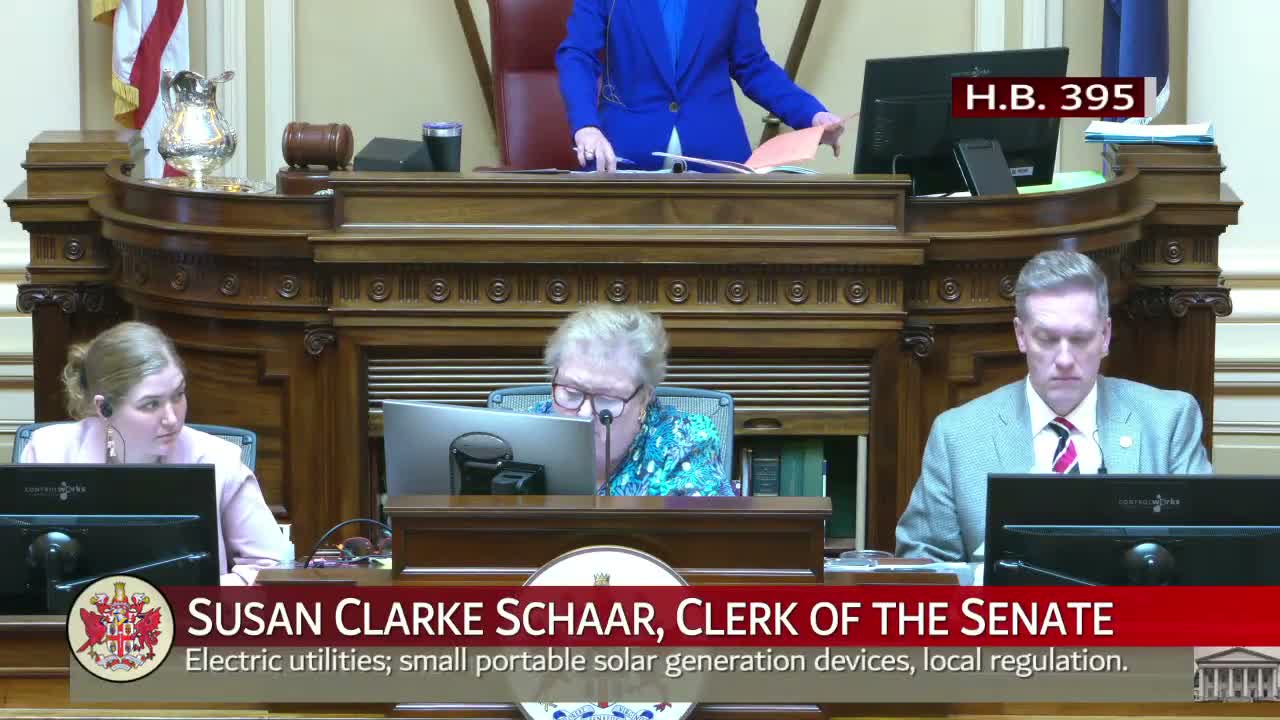
The Virginia Senate passed House Bill 3 95 on March 5, 2026, approving legislation to allow small portable, plug‑in solar devices often called "balcony" panels, with limitations intended to reduce safety risks and preserve landlord prerogatives.
Supporters said the bill balances consumer access with technical safeguards. The senator from Eastern Fairfax, sponsor of the floor substitute, described the safety features and local‑authority provisions, saying, "this is the, the balcony solar bill that some people like to call it." He outlined requirements that devices include back‑feed protection, a maximum receptacle output exempt from product‑listing rules of 391 watts and an overall device output cap of 1,200 watts, and said the legislation includes a work group on building‑code implications.
Opponents and some questioners focused on how the measure affects renters and older buildings. The senior senator from Virginia Beach warned that cheap consumer devices "can buy them off of Amazon for 1000 to $1,500" and argued that the bill could allow tenants to install devices that overwhelm aging wiring. Raising insurance concerns, the senator from Orange said landlords and insurers are "going to have to subrogate" and questioned whether homeowners or renters could reasonably cover large damages if a device caused a fire.
The sponsor responded that the topic had been studied by the commission on electrical utility regulation, that insurers had not raised formal objections during that process, and that landlords who are concerned could require renter's insurance as part of lease agreements. "The insurance companies haven't come on that," the senator from Eastern Fairfax said in reply.
Senators also debated the distinction between maximum panel output and the exempted receptacle output; the sponsor explained that the bill sets a device maximum and a separate, lower threshold that triggers additional building‑alteration rules. After extended questioning and floor amendments, the Senate voted to pass the bill 30–8.
The bill now proceeds to the next steps required under the legislative calendar. No enactment date or immediate implementation timeline was specified on the floor during the March 5 session.
The floor debate included technical questions about meter and ratio‑billing systems for multi‑tenant buildings, landlord notice requirements and a requirement that tenants notify landlords before installation. Senators noted a work group to consult building‑code officials and to evaluate whether code changes are needed before broader adoption.
Supporters said the bill balances consumer access with technical safeguards. The senator from Eastern Fairfax, sponsor of the floor substitute, described the safety features and local‑authority provisions, saying, "this is the, the balcony solar bill that some people like to call it." He outlined requirements that devices include back‑feed protection, a maximum receptacle output exempt from product‑listing rules of 391 watts and an overall device output cap of 1,200 watts, and said the legislation includes a work group on building‑code implications.
Opponents and some questioners focused on how the measure affects renters and older buildings. The senior senator from Virginia Beach warned that cheap consumer devices "can buy them off of Amazon for 1000 to $1,500" and argued that the bill could allow tenants to install devices that overwhelm aging wiring. Raising insurance concerns, the senator from Orange said landlords and insurers are "going to have to subrogate" and questioned whether homeowners or renters could reasonably cover large damages if a device caused a fire.
The sponsor responded that the topic had been studied by the commission on electrical utility regulation, that insurers had not raised formal objections during that process, and that landlords who are concerned could require renter's insurance as part of lease agreements. "The insurance companies haven't come on that," the senator from Eastern Fairfax said in reply.
Senators also debated the distinction between maximum panel output and the exempted receptacle output; the sponsor explained that the bill sets a device maximum and a separate, lower threshold that triggers additional building‑alteration rules. After extended questioning and floor amendments, the Senate voted to pass the bill 30–8.
The bill now proceeds to the next steps required under the legislative calendar. No enactment date or immediate implementation timeline was specified on the floor during the March 5 session.
The floor debate included technical questions about meter and ratio‑billing systems for multi‑tenant buildings, landlord notice requirements and a requirement that tenants notify landlords before installation. Senators noted a work group to consult building‑code officials and to evaluate whether code changes are needed before broader adoption.
Don't Miss a Word: See the Full Meeting!
Go beyond summaries. Unlock every video, transcript, and key insight with a Founder Membership.
✓
Get instant access to full meeting videos
✓
Search and clip any phrase from complete transcripts
✓
Receive AI-powered summaries & custom alerts
✓
Enjoy lifetime, unrestricted access to government data
30-day money-back guarantee
