Mount Vernon utilities commission gives first reading to proposed backflow protection ordinance
March 05, 2026 | Mount Vernon, Knox County, Ohio
This article was created by AI summarizing key points discussed. AI makes mistakes, so for full details and context, please refer to the video of the full meeting. Please report any errors so we can fix them. Report an error »
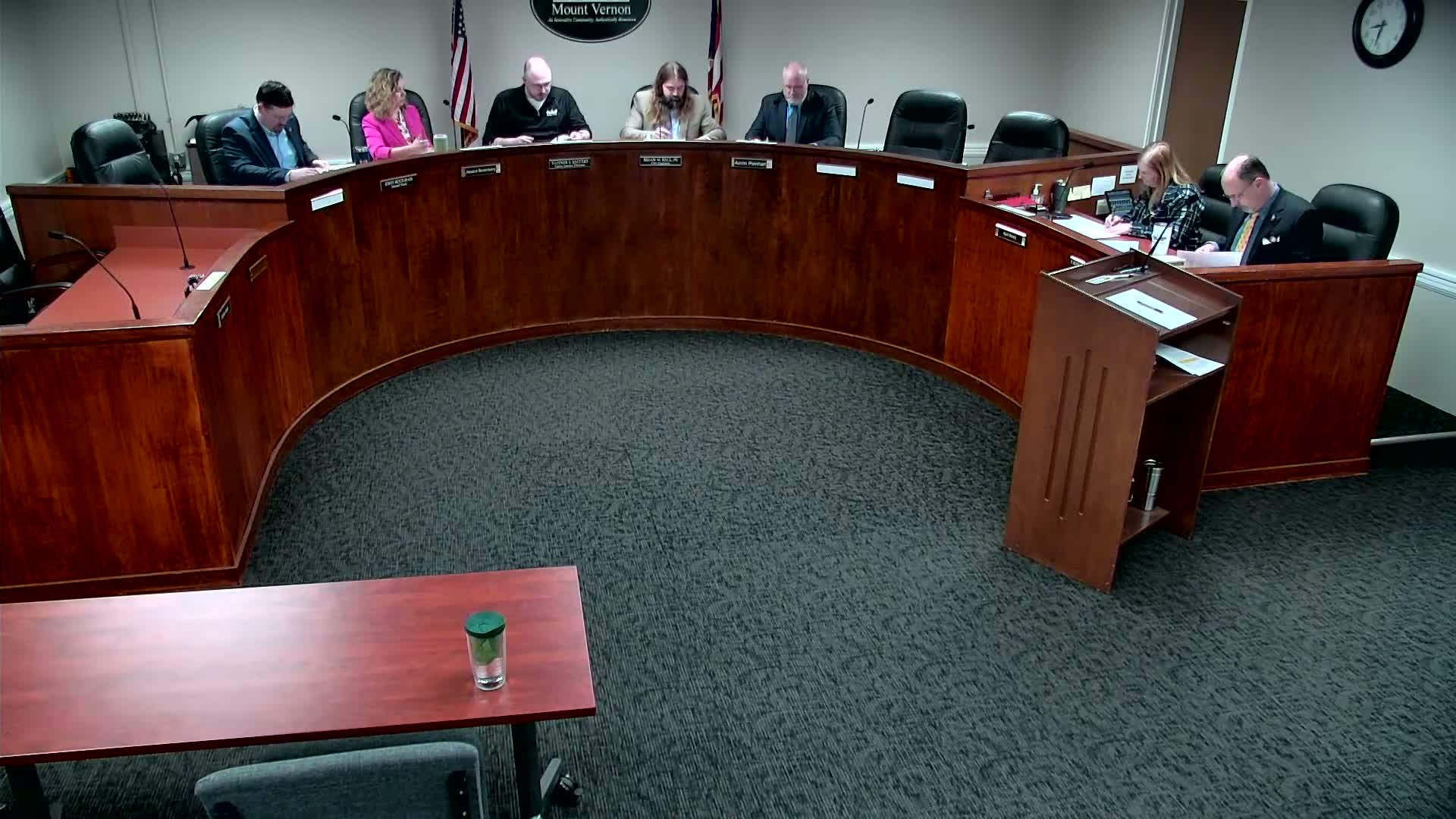
The Mount Vernon Utilities Commission on March 5 gave a first reading to a proposed update of the city's codified ordinances that would require backflow protection devices on private connections to the public water system.
"The utilities commission shall adopt rules concerning installation of backflow protection devices to protect the public water system," the chair read aloud when introducing the draft ordinance, which lays out permit and inspection requirements, a list of approved devices and fines for violations.
Under the draft, an impacted consumer must install an approved device immediately at their own expense and in a location and manner approved by the city inspector; installations would be inspected and tested as required. The ordinance text gives the commission, the city inspector and designees and employees of the city's Water and Wastewater Departments the right to enter properties served by the public water system for inspection purposes. It also directs the commission to conduct surveys and investigations of properties where actual or potential hazards to the supply may exist.
The draft sets permit limits and compliance timelines: permits for installation and use of backflow protection devices would be issued for a maximum period of one year, renewal applications must be submitted at least 30 days before expiration, and customers would have 30 days to repair a defective device before penalties apply. The draft also authorizes fees for permit issuance and for each day a property operates without required protection, and states failure to pay fees could result in termination of water and wastewater services.
A commissioner urged coordination with the fire department on approved devices, saying the department "has some preferences on the fire system and backflows." Staff and other commissioners said additional, more detailed rules and rulemaking would follow if the ordinance is recommended to council.
The chair said the draft ordinance is publicly available on the city's website under Utilities Commission agendas and minutes and invited members of the public to submit questions or suggested changes so the commission can consider them at the next meeting. Commissioners asked colleagues to send suggested edits within three weeks so the item can be placed on the next Utilities Commission agenda and, if appropriate, recommended to council for readings.
No vote on the ordinance was taken; the commission held this as a first reading and next steps will include rulemaking, interagency coordination (the Ohio Environmental Protection Agency was cited in the reading), and a future commission vote before any recommendation to the city council.
"The utilities commission shall adopt rules concerning installation of backflow protection devices to protect the public water system," the chair read aloud when introducing the draft ordinance, which lays out permit and inspection requirements, a list of approved devices and fines for violations.
Under the draft, an impacted consumer must install an approved device immediately at their own expense and in a location and manner approved by the city inspector; installations would be inspected and tested as required. The ordinance text gives the commission, the city inspector and designees and employees of the city's Water and Wastewater Departments the right to enter properties served by the public water system for inspection purposes. It also directs the commission to conduct surveys and investigations of properties where actual or potential hazards to the supply may exist.
The draft sets permit limits and compliance timelines: permits for installation and use of backflow protection devices would be issued for a maximum period of one year, renewal applications must be submitted at least 30 days before expiration, and customers would have 30 days to repair a defective device before penalties apply. The draft also authorizes fees for permit issuance and for each day a property operates without required protection, and states failure to pay fees could result in termination of water and wastewater services.
A commissioner urged coordination with the fire department on approved devices, saying the department "has some preferences on the fire system and backflows." Staff and other commissioners said additional, more detailed rules and rulemaking would follow if the ordinance is recommended to council.
The chair said the draft ordinance is publicly available on the city's website under Utilities Commission agendas and minutes and invited members of the public to submit questions or suggested changes so the commission can consider them at the next meeting. Commissioners asked colleagues to send suggested edits within three weeks so the item can be placed on the next Utilities Commission agenda and, if appropriate, recommended to council for readings.
No vote on the ordinance was taken; the commission held this as a first reading and next steps will include rulemaking, interagency coordination (the Ohio Environmental Protection Agency was cited in the reading), and a future commission vote before any recommendation to the city council.
View the Full Meeting & All Its Details
This article offers just a summary. Unlock complete video, transcripts, and insights as a Founder Member.
✓
Watch full, unedited meeting videos
✓
Search every word spoken in unlimited transcripts
✓
AI summaries & real-time alerts (all government levels)
✓
Permanent access to expanding government content
30-day money-back guarantee
