Auburn officials present $67.7 million FY27 operating budget; health care, special education and transportation drive increases
March 05, 2026 | Auburn Public Schools, School Districts, Maine
This article was created by AI summarizing key points discussed. AI makes mistakes, so for full details and context, please refer to the video of the full meeting. Please report any errors so we can fix them. Report an error »
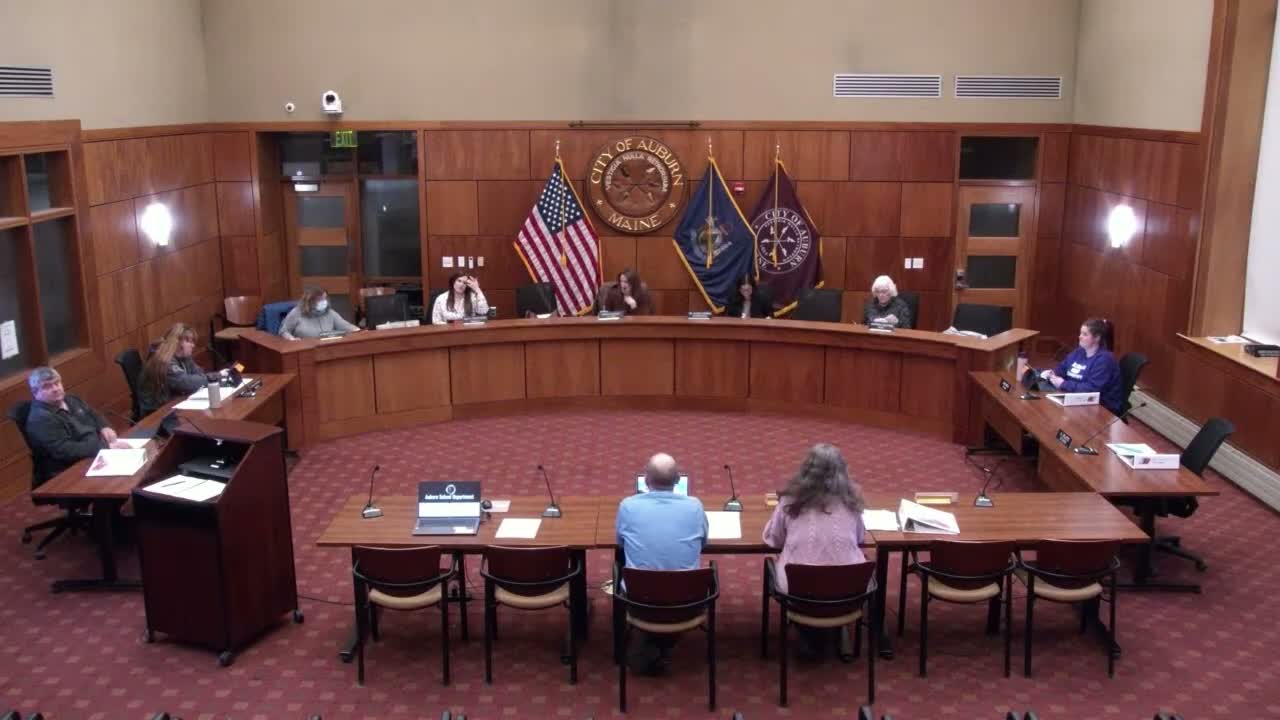
On March 4, 2026, the Auburn School Committee received a presentation of the School Department's proposed fiscal year 2027 operating budget, with Superintendent Sue Doris announcing a total of $67,685,214 — a 4.9% increase over the current year. The committee discussed district-wide revenue assumptions and school-level requests for cost center 1.
Doris said the district identified three primary budget drivers: health insurance (an $885,000 increase, budgeted at about a 12% rise in rates), special education (an increase of roughly $1.4 million, about 9.4%) and transportation (an increase of $553,000, roughly 22%). "The first number that you see there up on the slide is 67,685,214," Doris told the committee as she walked through the packet. She noted health insurance rates had not yet been finalized and the district was hoping the final figures would come in lower than budgeted.
The administration outlined several cost-control approaches: using grant funds to support positions, deferring a planned bus purchase, and employing conservative budgeting practices. As targeted adjustments, the proposal would eliminate three non-instructional positions and discontinue the suspension diversion program. Doris said these steps were intended to preserve "core instructional programs and services." The revenue picture presented showed a state subsidy around $34.7 million (up about 8.2% from the prior year), a city contribution of about $21.5 million (up roughly 3.4%), and a planned use of fund balance of $2.35 million (an increase of 16% and equivalent to the amount used in FY25).
Committee members and school leaders then walked through individual school presentations included in the budget binder. Principals highlighted enrollment projections, program needs and small but impactful equipment requests. For example, the East Auburn presenter said the school projects about 145 students, an average class size near 18, and requested a half set of classroom furniture to complete one room at an estimated cost of about $3,500. Fairview requested an additional photocopier; Park Avenue requested six new cafeteria tables to accommodate a larger student body; Sherwood Heights flagged increased classroom-supply needs and a laminator request; Walton previewed conditions for using a class-reduction position depending on kindergarten enrollments; and Edward Little High School described rising enrollment and career-pathway initiatives.
Staff noted the committee's budget binders contain school-level documents, enrollment data, and Munis printouts. Business manager Amanda Kuchar cautioned that the district's new Munis reports do not combine multi-year ADS data automatically and offered to provide prior-year reports in a compatible format for committee review.
Several members asked about why small schools showed large percent changes in their school budgets; principals explained that modest, one-time equipment purchases (for example, a $3,500 classroom furniture purchase) can produce outsized percentage changes when a school's total budget is relatively small. The committee agreed to revisit cost center 1 at next week's scheduled budget meeting after members had time to review the detailed materials.
The presentation concluded with staff collecting requested missing summaries to be provided next week and an agreement that members should prepare specific questions for follow-up. The school department also highlighted district metrics in the city's annual report, noting nine schools serving roughly 3,300 students and a 97.4% graduation rate.
Next steps: the committee will continue budget review in the scheduled series of budget meetings in March; staff will supply missing school budget summaries and respond to committee questions prior to the next cost center review.
Doris said the district identified three primary budget drivers: health insurance (an $885,000 increase, budgeted at about a 12% rise in rates), special education (an increase of roughly $1.4 million, about 9.4%) and transportation (an increase of $553,000, roughly 22%). "The first number that you see there up on the slide is 67,685,214," Doris told the committee as she walked through the packet. She noted health insurance rates had not yet been finalized and the district was hoping the final figures would come in lower than budgeted.
The administration outlined several cost-control approaches: using grant funds to support positions, deferring a planned bus purchase, and employing conservative budgeting practices. As targeted adjustments, the proposal would eliminate three non-instructional positions and discontinue the suspension diversion program. Doris said these steps were intended to preserve "core instructional programs and services." The revenue picture presented showed a state subsidy around $34.7 million (up about 8.2% from the prior year), a city contribution of about $21.5 million (up roughly 3.4%), and a planned use of fund balance of $2.35 million (an increase of 16% and equivalent to the amount used in FY25).
Committee members and school leaders then walked through individual school presentations included in the budget binder. Principals highlighted enrollment projections, program needs and small but impactful equipment requests. For example, the East Auburn presenter said the school projects about 145 students, an average class size near 18, and requested a half set of classroom furniture to complete one room at an estimated cost of about $3,500. Fairview requested an additional photocopier; Park Avenue requested six new cafeteria tables to accommodate a larger student body; Sherwood Heights flagged increased classroom-supply needs and a laminator request; Walton previewed conditions for using a class-reduction position depending on kindergarten enrollments; and Edward Little High School described rising enrollment and career-pathway initiatives.
Staff noted the committee's budget binders contain school-level documents, enrollment data, and Munis printouts. Business manager Amanda Kuchar cautioned that the district's new Munis reports do not combine multi-year ADS data automatically and offered to provide prior-year reports in a compatible format for committee review.
Several members asked about why small schools showed large percent changes in their school budgets; principals explained that modest, one-time equipment purchases (for example, a $3,500 classroom furniture purchase) can produce outsized percentage changes when a school's total budget is relatively small. The committee agreed to revisit cost center 1 at next week's scheduled budget meeting after members had time to review the detailed materials.
The presentation concluded with staff collecting requested missing summaries to be provided next week and an agreement that members should prepare specific questions for follow-up. The school department also highlighted district metrics in the city's annual report, noting nine schools serving roughly 3,300 students and a 97.4% graduation rate.
Next steps: the committee will continue budget review in the scheduled series of budget meetings in March; staff will supply missing school budget summaries and respond to committee questions prior to the next cost center review.
Don't Miss a Word: See the Full Meeting!
Go beyond summaries. Unlock every video, transcript, and key insight with a Founder Membership.
✓
Get instant access to full meeting videos
✓
Search and clip any phrase from complete transcripts
✓
Receive AI-powered summaries & custom alerts
✓
Enjoy lifetime, unrestricted access to government data
30-day money-back guarantee
