Committee advances bill requiring biannual medical-drill practice at child-care programs and pre-camp drills
March 05, 2026 | Children, House of Representatives, Committees, Legislative, Connecticut
This article was created by AI summarizing key points discussed. AI makes mistakes, so for full details and context, please refer to the video of the full meeting. Please report any errors so we can fix them. Report an error »
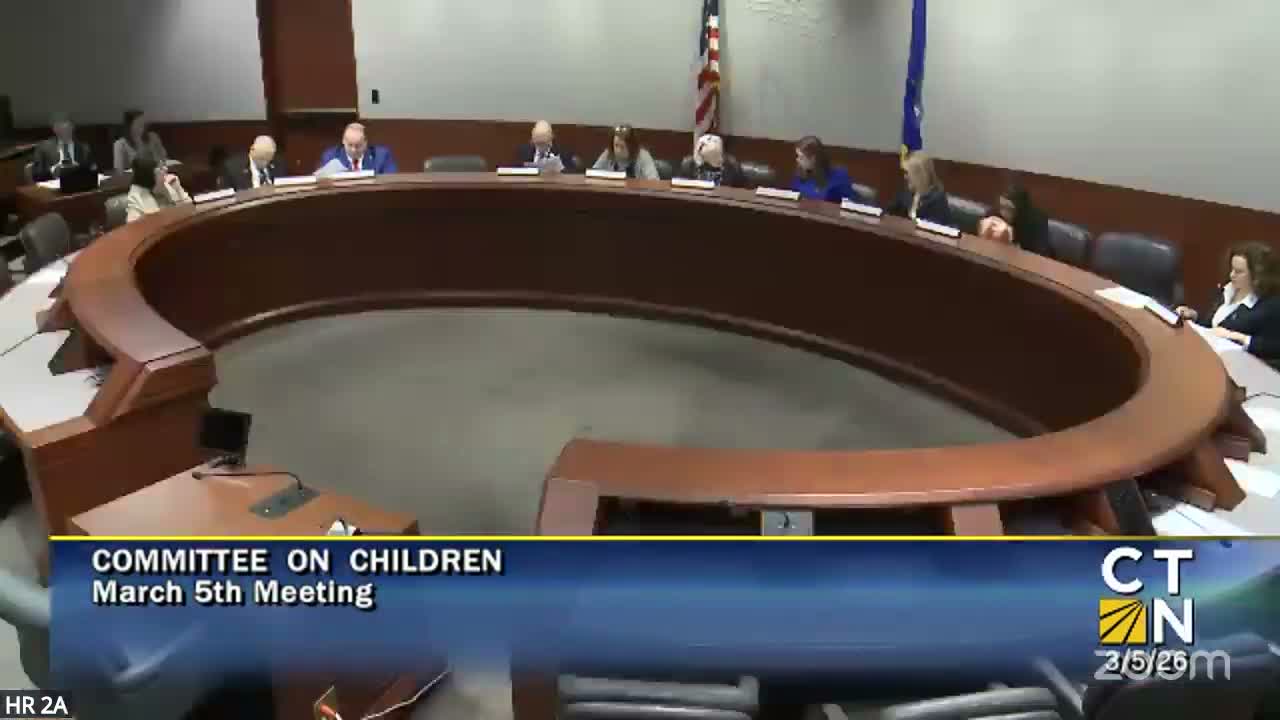
The Children Committee advanced HB 5379 to the floor after Representative Martinez described the measure as a practical, low-cost step to improve safety in child-care settings.
The proposed substitute would require child-care centers, group home child care and family child-care homes to conduct medical emergency drills every six months and require youth camps to conduct medical emergency drills prior to assuming responsibility for campers as a condition of licensure. Martinez cited a recent choking death of a toddler in a neighboring town and said trainers and EMS in New Britain had begun quarterly drills as a model.
Why it matters: Supporters said practicing emergency responses together helps staff coordinate roles in a crisis — calling 911, delivering first aid and using the Heimlich maneuver — rather than relying on one certified individual. The practice is aimed at reducing preventable fatalities in early-childhood settings.
Debate and process: Several members supported the bill’s safety goals while some opposed bringing substitute language forward without a full public hearing for day camps and municipal stakeholders. The sponsor said OEC (Office of Early Childhood) worked on language and that the proposal was designed to be practical and not to impose new costly certification requirements.
Committee action: The committee voted JFS to the floor on HB 5379 (LCO 2547); the clerk recorded multiple yes votes and some members noted they would continue stakeholder engagement as the bill advances.
Next steps: The bill will move to the floor and sponsors said they will continue to consult municipalities, camps and child-care providers as the policy proceeds.
The proposed substitute would require child-care centers, group home child care and family child-care homes to conduct medical emergency drills every six months and require youth camps to conduct medical emergency drills prior to assuming responsibility for campers as a condition of licensure. Martinez cited a recent choking death of a toddler in a neighboring town and said trainers and EMS in New Britain had begun quarterly drills as a model.
Why it matters: Supporters said practicing emergency responses together helps staff coordinate roles in a crisis — calling 911, delivering first aid and using the Heimlich maneuver — rather than relying on one certified individual. The practice is aimed at reducing preventable fatalities in early-childhood settings.
Debate and process: Several members supported the bill’s safety goals while some opposed bringing substitute language forward without a full public hearing for day camps and municipal stakeholders. The sponsor said OEC (Office of Early Childhood) worked on language and that the proposal was designed to be practical and not to impose new costly certification requirements.
Committee action: The committee voted JFS to the floor on HB 5379 (LCO 2547); the clerk recorded multiple yes votes and some members noted they would continue stakeholder engagement as the bill advances.
Next steps: The bill will move to the floor and sponsors said they will continue to consult municipalities, camps and child-care providers as the policy proceeds.
Don't Miss a Word: See the Full Meeting!
Go beyond summaries. Unlock every video, transcript, and key insight with a Founder Membership.
✓
Get instant access to full meeting videos
✓
Search and clip any phrase from complete transcripts
✓
Receive AI-powered summaries & custom alerts
✓
Enjoy lifetime, unrestricted access to government data
30-day money-back guarantee
