Committee weighs successor solar programs, interconnection fixes and plug‑in solar at marathon “solar day” hearing
March 06, 2026 | Energy and Technology, House of Representatives, Committees, Legislative, Connecticut
This article was created by AI summarizing key points discussed. AI makes mistakes, so for full details and context, please refer to the video of the full meeting. Please report any errors so we can fix them. Report an error »
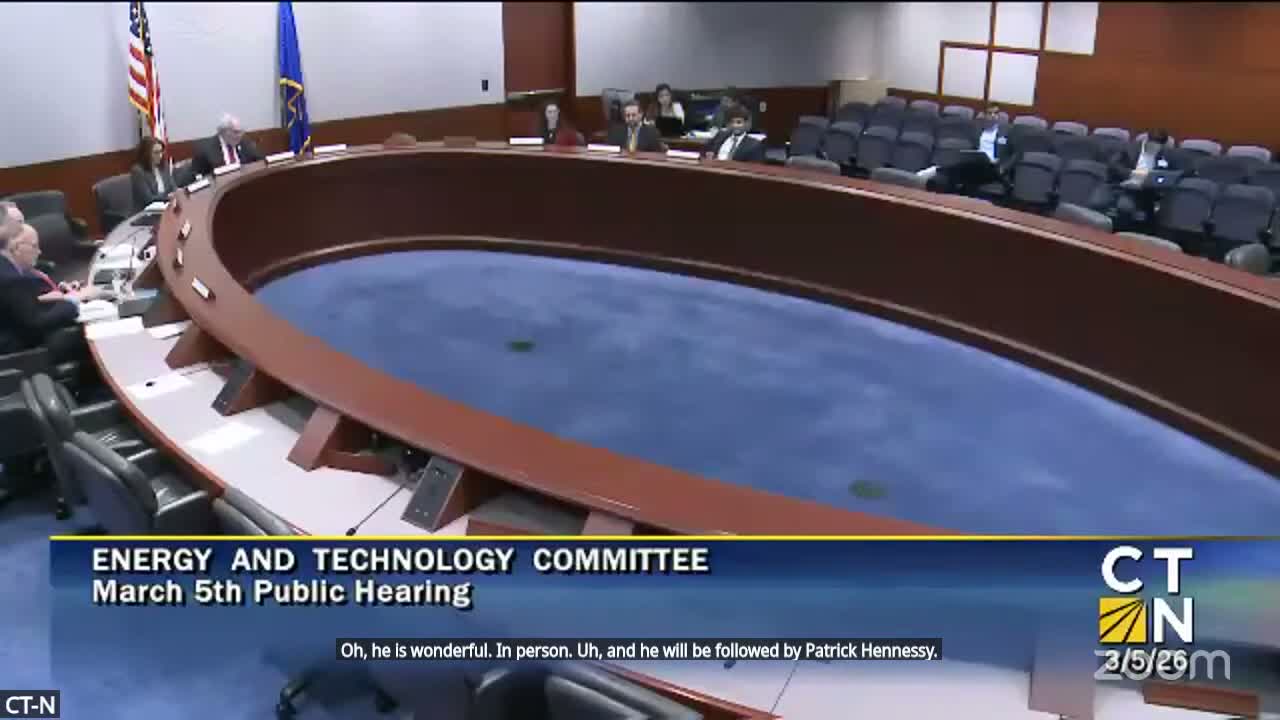
The Energy and Technology Committee spent a full public hearing examining a suite of bills to replace and update Connecticut’s residential, non‑residential and shared‑clean‑energy solar programs and to address related issues including interconnection delays, rural siting, plug‑in (“balcony”) solar and agrivoltaics.
Representative Jonathan Steinberg, the committee chair, opened what he called “solar day,” saying the hearing would give members, agencies and industry a chance to refine successor program design before the current tariffs and programs sunset. The Green Bank, the Department of Energy and Environmental Protection (DEEP), utilities, consumer advocates, municipal officials and farmers all testified.
Brian Garcia, president and CEO of the Connecticut Green Bank, told the committee the Green Bank has mobilized more than $3 billion into the state’s green economy and urged lawmakers to support HB 53‑40’s successor approach. Garcia pushed two priorities: pairing solar with battery storage to increase rate‑payer value and fixing interconnection. He recommended giving PURA and utilities clearer statutory signals — through performance‑based regulation and priority pathways — to move projects that reduce electric rates up the queue. “Solar plus storage is the future of clean energy in Connecticut,” Garcia said, arguing that pairing the technologies would improve benefits for participants and all rate‑payers.
Katie Dykes, DEEP commissioner, spoke briefly about a separate bill on advanced nuclear (HB 53‑36) and described a community‑first grant program intended to give towns the information they need to consider new nuclear technologies. On solar, Dykes praised PURA’s successor study and urged the committee to preserve competition where it can while also ensuring any administrative pricing captures the true value to rate‑payers and system reliability.
Utility and rate‑payer voices pressed different tradeoffs. Andrew Belden of Eversource said the existing distributed‑generation programs have helped but urged stronger cost controls: he presented figures showing behind‑the‑meter program costs grew from under $10 million in 2015 to roughly $100–180 million in 2025, and warned that shifting from competitive solicitations to administrative pricing in other states sometimes raised costs without reliably increasing completed projects. Claire Coleman of the Office of Consumer Counsel emphasized maximizing system value and asked for careful analysis of program budgets, caps and rate impacts.
A dominant theme through the day was interconnection. Developers and installers described large, unpredictable fees and long waits to get projects connected to the distribution grid. Several witnesses gave concrete examples of transformer or distribution‑upgrade cost letters that rose sharply between initial estimates and final bills; testimony asked for more transparent, auditable cost breakdowns and clearer rules on when utilities may require additional design or meter changes. Multiple speakers urged that the successor program include measures to speed the interconnection queue and to align program timelines so growers and installers do not face a disruptive gap when current programs expire.
Municipal officials and residents from East Windsor described what they called an “overconcentration” of ground‑mount solar projects in a single town. First Selectman Jason Bauza and others described noise complaints, fire concerns and loss of farmland and urged the committee and DEEP to strengthen siting safeguards, preserve farmland and ensure communities recoup municipal tax value when large projects are sited locally.
On widening access, several advocates asked lawmakers to adopt two changes now under active discussion: (1) a statewide automated residential permitting option (SolarAPP/Symbium) to reduce permitting time and cancellations, and (2) a narrow authorization for plug‑in, portable solar devices. Witnesses including installers and nonprofit pilots said plug‑in systems — limited in the bill to about 1,200 watts and to UL‑tested, anti‑islanding equipment — could provide low‑cost, rapid access to solar for renters and multifamily residents without roof access, and urged careful safety and metering rules to avoid unexpected billing results for customers without AMI meters.
Agrivoltaics — pairing small, farm‑friendly solar with continued agricultural production — drew robust support from several presenters who said small‑scale projects (farm‑scale arrays designed to retain tractor access and soil function) can provide farmers with supplemental revenue while preserving farmland. Advocates urged program rules to limit project size and require meaningful farm partnerships so agrivoltaics is not a cover for replacing working farmland with arrays.
A number of witnesses also urged continuity between old and new programs so there is no program gap when current authorizations end. Industry groups and installers warned that a six‑month hiatus between the existing residential tariff and a successor tariff could stop installations, cost local contractors and chill investment. Multiple witnesses recommended statutory language allowing PURA to extend current programs until successor tariff implementation is operational to avoid that gap.
What happens next: the committee heard no formal motions or votes in the hearing. Lawmakers said staff would continue to work with the agencies and stakeholders to finalize successor program language, interconnection reforms and pilot designs for plug‑in solar and agrivoltaics. Several witnesses volunteered additional written language and follow‑up data (on program costs, export‑rate modeling and interconnection prices) to inform the drafting process.
Why this matters: Connecticut policymakers face a near‑term choice about whether to extend or reshuffle the state’s major distributed‑generation programs when several federal incentives change. Lawmakers must balance cost control with continuing to deploy solar and storage where they provide system value, while also addressing community impacts from large arrays and ensuring renters and low‑income households can benefit.
The committee said it will hold further mark‑up conversations; staff and stakeholders will return with suggested drafting changes to address interconnection transparency, program timing and several consumer‑protection measures raised during the hearing.
Sources: testimony to the Connecticut Energy and Technology Committee, including Brian Garcia (Connecticut Green Bank), Katie Dykes (DEEP), Andrew Belden (Eversource), representatives from consumer counsel and municipal officials from East Windsor; PURA successor study (referenced in testimony).
Representative Jonathan Steinberg, the committee chair, opened what he called “solar day,” saying the hearing would give members, agencies and industry a chance to refine successor program design before the current tariffs and programs sunset. The Green Bank, the Department of Energy and Environmental Protection (DEEP), utilities, consumer advocates, municipal officials and farmers all testified.
Brian Garcia, president and CEO of the Connecticut Green Bank, told the committee the Green Bank has mobilized more than $3 billion into the state’s green economy and urged lawmakers to support HB 53‑40’s successor approach. Garcia pushed two priorities: pairing solar with battery storage to increase rate‑payer value and fixing interconnection. He recommended giving PURA and utilities clearer statutory signals — through performance‑based regulation and priority pathways — to move projects that reduce electric rates up the queue. “Solar plus storage is the future of clean energy in Connecticut,” Garcia said, arguing that pairing the technologies would improve benefits for participants and all rate‑payers.
Katie Dykes, DEEP commissioner, spoke briefly about a separate bill on advanced nuclear (HB 53‑36) and described a community‑first grant program intended to give towns the information they need to consider new nuclear technologies. On solar, Dykes praised PURA’s successor study and urged the committee to preserve competition where it can while also ensuring any administrative pricing captures the true value to rate‑payers and system reliability.
Utility and rate‑payer voices pressed different tradeoffs. Andrew Belden of Eversource said the existing distributed‑generation programs have helped but urged stronger cost controls: he presented figures showing behind‑the‑meter program costs grew from under $10 million in 2015 to roughly $100–180 million in 2025, and warned that shifting from competitive solicitations to administrative pricing in other states sometimes raised costs without reliably increasing completed projects. Claire Coleman of the Office of Consumer Counsel emphasized maximizing system value and asked for careful analysis of program budgets, caps and rate impacts.
A dominant theme through the day was interconnection. Developers and installers described large, unpredictable fees and long waits to get projects connected to the distribution grid. Several witnesses gave concrete examples of transformer or distribution‑upgrade cost letters that rose sharply between initial estimates and final bills; testimony asked for more transparent, auditable cost breakdowns and clearer rules on when utilities may require additional design or meter changes. Multiple speakers urged that the successor program include measures to speed the interconnection queue and to align program timelines so growers and installers do not face a disruptive gap when current programs expire.
Municipal officials and residents from East Windsor described what they called an “overconcentration” of ground‑mount solar projects in a single town. First Selectman Jason Bauza and others described noise complaints, fire concerns and loss of farmland and urged the committee and DEEP to strengthen siting safeguards, preserve farmland and ensure communities recoup municipal tax value when large projects are sited locally.
On widening access, several advocates asked lawmakers to adopt two changes now under active discussion: (1) a statewide automated residential permitting option (SolarAPP/Symbium) to reduce permitting time and cancellations, and (2) a narrow authorization for plug‑in, portable solar devices. Witnesses including installers and nonprofit pilots said plug‑in systems — limited in the bill to about 1,200 watts and to UL‑tested, anti‑islanding equipment — could provide low‑cost, rapid access to solar for renters and multifamily residents without roof access, and urged careful safety and metering rules to avoid unexpected billing results for customers without AMI meters.
Agrivoltaics — pairing small, farm‑friendly solar with continued agricultural production — drew robust support from several presenters who said small‑scale projects (farm‑scale arrays designed to retain tractor access and soil function) can provide farmers with supplemental revenue while preserving farmland. Advocates urged program rules to limit project size and require meaningful farm partnerships so agrivoltaics is not a cover for replacing working farmland with arrays.
A number of witnesses also urged continuity between old and new programs so there is no program gap when current authorizations end. Industry groups and installers warned that a six‑month hiatus between the existing residential tariff and a successor tariff could stop installations, cost local contractors and chill investment. Multiple witnesses recommended statutory language allowing PURA to extend current programs until successor tariff implementation is operational to avoid that gap.
What happens next: the committee heard no formal motions or votes in the hearing. Lawmakers said staff would continue to work with the agencies and stakeholders to finalize successor program language, interconnection reforms and pilot designs for plug‑in solar and agrivoltaics. Several witnesses volunteered additional written language and follow‑up data (on program costs, export‑rate modeling and interconnection prices) to inform the drafting process.
Why this matters: Connecticut policymakers face a near‑term choice about whether to extend or reshuffle the state’s major distributed‑generation programs when several federal incentives change. Lawmakers must balance cost control with continuing to deploy solar and storage where they provide system value, while also addressing community impacts from large arrays and ensuring renters and low‑income households can benefit.
The committee said it will hold further mark‑up conversations; staff and stakeholders will return with suggested drafting changes to address interconnection transparency, program timing and several consumer‑protection measures raised during the hearing.
Sources: testimony to the Connecticut Energy and Technology Committee, including Brian Garcia (Connecticut Green Bank), Katie Dykes (DEEP), Andrew Belden (Eversource), representatives from consumer counsel and municipal officials from East Windsor; PURA successor study (referenced in testimony).
View the Full Meeting & All Its Details
This article offers just a summary. Unlock complete video, transcripts, and insights as a Founder Member.
✓
Watch full, unedited meeting videos
✓
Search every word spoken in unlimited transcripts
✓
AI summaries & real-time alerts (all government levels)
✓
Permanent access to expanding government content
30-day money-back guarantee
