House approves bill letting either party move constitutional challenges to three‑judge panels, sets $1,500 removal fee
March 05, 2026 | 2026 Utah Legislature, Utah Legislature, Utah Legislative Branch, Utah
This article was created by AI summarizing key points discussed. AI makes mistakes, so for full details and context, please refer to the video of the full meeting. Please report any errors so we can fix them. Report an error »
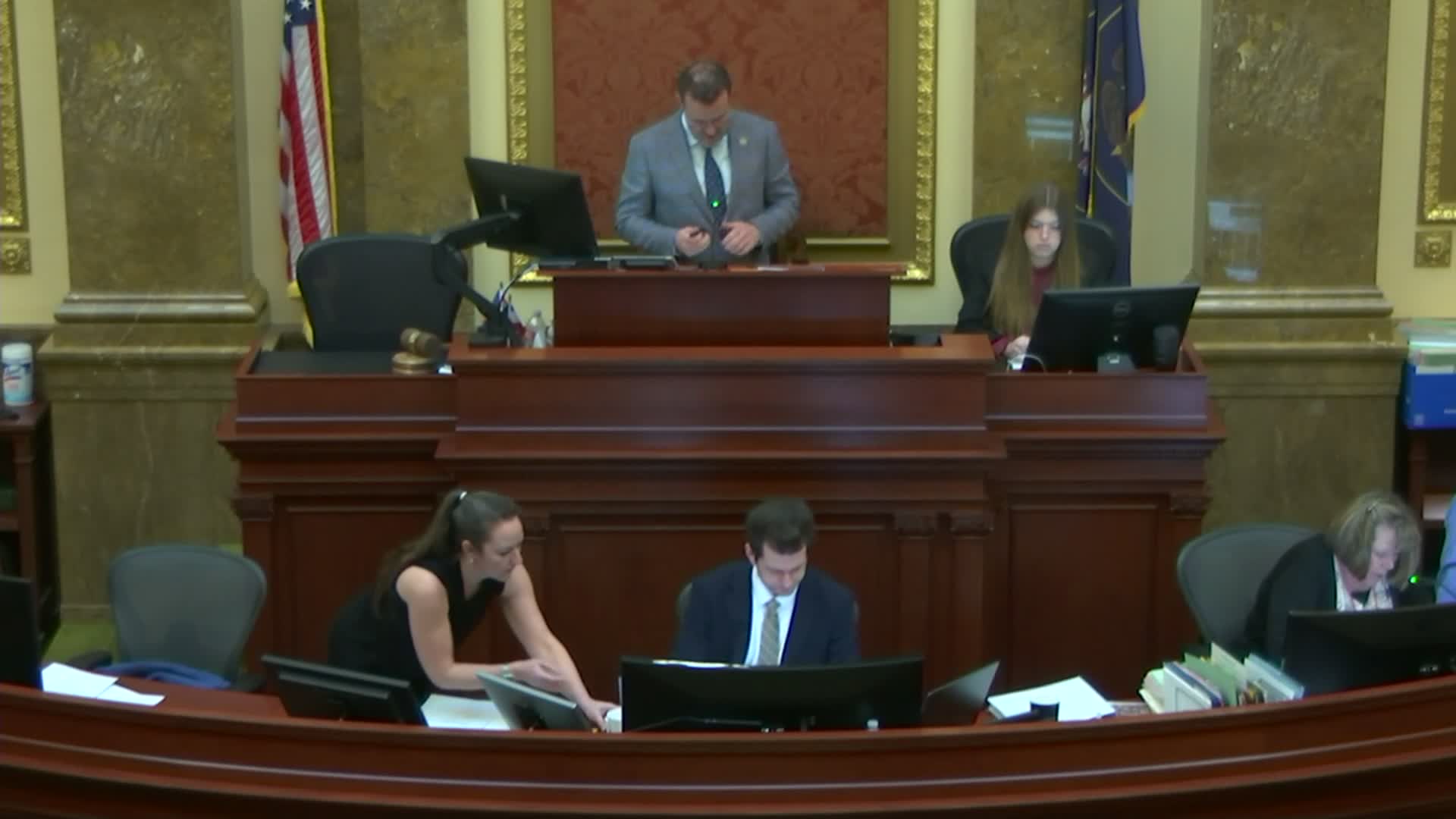
Representative Tasha Tesher, sponsor of the third substitute of House Bill 366, told the Utah House on March 5 that the bill allows either party to remove certain cases to a three‑judge panel when: the case challenges the constitutionality of a state statute or provision of the Utah Constitution; the party seeks declaratory or injunctive relief; and the action is against a state entity or official in their official capacity. Tesher said the change corrects earlier asymmetry that gave only the state the unilateral right of removal and adds objective criteria for eligible cases.
"As we looked at this ... we've decided that it makes sense to allow for the other party the ability to do that as well," Tesher said, arguing the change gives ‘‘more eyes’’ to constitutional questions and better protects the legislative process while cases are on hold.
Representative Andrew Stoddard questioned the bill's fiscal assumptions and objected to a $1,500 filing fee for removal, saying it could erect a barrier to access. "I see the $1,500 filing fee as one," Stoddard said, urging the House not to add undue costs to citizens who wish to challenge laws. Tesher responded that the fee is proportional — roughly triple the usual single‑judge filing fee because three judges will hear the case — and noted existing procedures remain for fee waivers for indigent parties.
The House voted to concur with the Senate amendments and passed the third substitute of HB 366. The clerk reported final passage by a 55–18 vote. The bill will be sent to the Senate for its signature or further action.
What the bill does: it creates a statutory mechanism allowing either plaintiff or defendant to remove qualifying constitutional challenges to a three‑judge review panel, specifies the triggering criteria, and sets a $1,500 removal fee while preserving existing fee‑waiver routes.
Next steps: HB 366 will be transmitted to the Senate for its signature or further action.
"As we looked at this ... we've decided that it makes sense to allow for the other party the ability to do that as well," Tesher said, arguing the change gives ‘‘more eyes’’ to constitutional questions and better protects the legislative process while cases are on hold.
Representative Andrew Stoddard questioned the bill's fiscal assumptions and objected to a $1,500 filing fee for removal, saying it could erect a barrier to access. "I see the $1,500 filing fee as one," Stoddard said, urging the House not to add undue costs to citizens who wish to challenge laws. Tesher responded that the fee is proportional — roughly triple the usual single‑judge filing fee because three judges will hear the case — and noted existing procedures remain for fee waivers for indigent parties.
The House voted to concur with the Senate amendments and passed the third substitute of HB 366. The clerk reported final passage by a 55–18 vote. The bill will be sent to the Senate for its signature or further action.
What the bill does: it creates a statutory mechanism allowing either plaintiff or defendant to remove qualifying constitutional challenges to a three‑judge review panel, specifies the triggering criteria, and sets a $1,500 removal fee while preserving existing fee‑waiver routes.
Next steps: HB 366 will be transmitted to the Senate for its signature or further action.
Don't Miss a Word: See the Full Meeting!
Go beyond summaries. Unlock every video, transcript, and key insight with a Founder Membership.
✓
Get instant access to full meeting videos
✓
Search and clip any phrase from complete transcripts
✓
Receive AI-powered summaries & custom alerts
✓
Enjoy lifetime, unrestricted access to government data
30-day money-back guarantee
