SPD chief outlines directive emphasizing peacekeeping, de‑escalation, documentation and duty to intervene
March 06, 2026 | Seattle, King County, Washington
This article was created by AI summarizing key points discussed. AI makes mistakes, so for full details and context, please refer to the video of the full meeting. Please report any errors so we can fix them. Report an error »
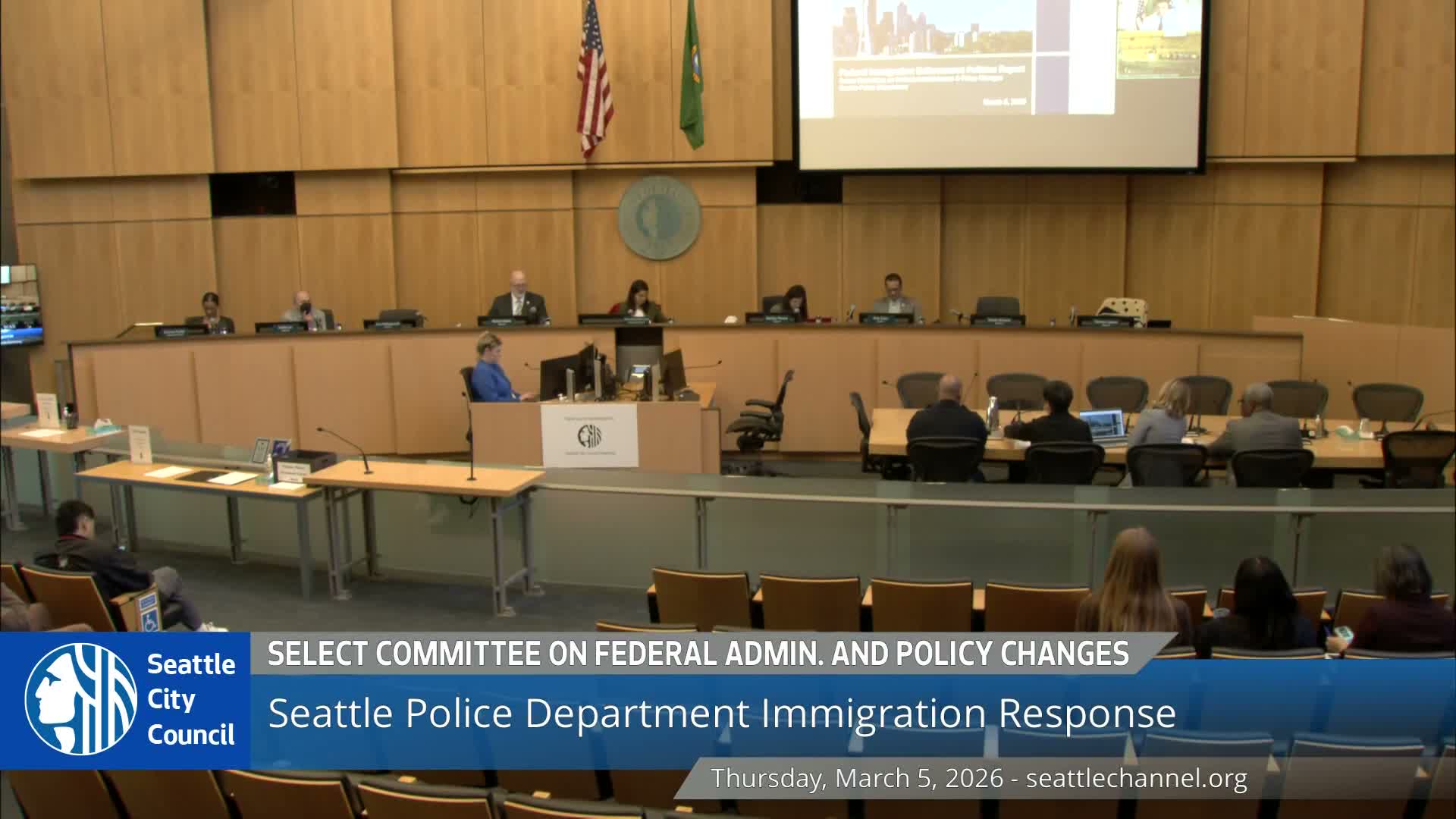
Seattle Police Chief Barnes and department leaders briefed the select committee March 5 on a directive clarifying officer response to federal immigration activity and on steps to convert that directive into a permanent policy.
Chief Barnes opened by acknowledging community anxiety and said the department’s decision-making matrix is grounded in peacekeeping, de-escalation, rendering medical aid and thorough documentation. The chief said the directive — issued in January following national incidents — clarifies that officers responding to calls will ensure scene safety, provide medical aid where needed, and document events with in-car and body-worn camera footage. Patrol supervisors will respond to incidents involving federal agents to provide supervision and continuity.
Lisonbee Holcomb from the mayor’s office highlighted Washington state law RCW 10.93.190 (the peace officer duty to intervene), noting the state statute requires officers to intervene to stop excessive force. Holcomb said the mayor’s directive reiterates the chief’s guidance and that city attorneys remain prepared to pursue legal remedies if federal actions in the city exceed lawful authority.
COO Sarah Smith explained the department is training officers on the directive through email, roll-call briefings and its policy acknowledgment system; the directive will enter a stakeholder review process that includes accountability partners and labor, and the department expects to complete policy work in two to three months unless circumstances require earlier action.
On documentation and evidence, SPD officials told the committee body-worn and in-car camera footage associated with a case is stored on evidence.com and that Public Disclosure Requests (PDRs) follow a strict redaction and review process. Chief Barnes stressed the need to document incidents promptly and thoroughly so footage and reports can support accountability if misconduct occurs.
Council members asked about crowd-management lessons from prior protests, handling reports of impersonation or harassment of vulnerable communities, and the retention and accessibility of camera footage. SPD said footage is held for five days unless preserved as evidence and that the department is meeting with affected communities (for example, Somali day-care providers) to explain policy and response options.
Chief Barnes said SPD will not participate in immigration enforcement operations and that officers assigned to federal task forces are directed back to the department if the task force’s work becomes focused on immigration enforcement. The department also noted the directive was developed with input from local and national peers who have faced similar challenges.
Committee members thanked SPD for the briefing and indicated follow-up questions would be provided to the department in writing.
Chief Barnes opened by acknowledging community anxiety and said the department’s decision-making matrix is grounded in peacekeeping, de-escalation, rendering medical aid and thorough documentation. The chief said the directive — issued in January following national incidents — clarifies that officers responding to calls will ensure scene safety, provide medical aid where needed, and document events with in-car and body-worn camera footage. Patrol supervisors will respond to incidents involving federal agents to provide supervision and continuity.
Lisonbee Holcomb from the mayor’s office highlighted Washington state law RCW 10.93.190 (the peace officer duty to intervene), noting the state statute requires officers to intervene to stop excessive force. Holcomb said the mayor’s directive reiterates the chief’s guidance and that city attorneys remain prepared to pursue legal remedies if federal actions in the city exceed lawful authority.
COO Sarah Smith explained the department is training officers on the directive through email, roll-call briefings and its policy acknowledgment system; the directive will enter a stakeholder review process that includes accountability partners and labor, and the department expects to complete policy work in two to three months unless circumstances require earlier action.
On documentation and evidence, SPD officials told the committee body-worn and in-car camera footage associated with a case is stored on evidence.com and that Public Disclosure Requests (PDRs) follow a strict redaction and review process. Chief Barnes stressed the need to document incidents promptly and thoroughly so footage and reports can support accountability if misconduct occurs.
Council members asked about crowd-management lessons from prior protests, handling reports of impersonation or harassment of vulnerable communities, and the retention and accessibility of camera footage. SPD said footage is held for five days unless preserved as evidence and that the department is meeting with affected communities (for example, Somali day-care providers) to explain policy and response options.
Chief Barnes said SPD will not participate in immigration enforcement operations and that officers assigned to federal task forces are directed back to the department if the task force’s work becomes focused on immigration enforcement. The department also noted the directive was developed with input from local and national peers who have faced similar challenges.
Committee members thanked SPD for the briefing and indicated follow-up questions would be provided to the department in writing.
Don't Miss a Word: See the Full Meeting!
Go beyond summaries. Unlock every video, transcript, and key insight with a Founder Membership.
✓
Get instant access to full meeting videos
✓
Search and clip any phrase from complete transcripts
✓
Receive AI-powered summaries & custom alerts
✓
Enjoy lifetime, unrestricted access to government data
30-day money-back guarantee
