Residents and providers tell Appropriations Committee emergency housing program must be sustained beyond ARPA
March 06, 2026 | Appropriations, House of Representatives, Committees, Legislative, Connecticut
This article was created by AI summarizing key points discussed. AI makes mistakes, so for full details and context, please refer to the video of the full meeting. Please report any errors so we can fix them. Report an error »
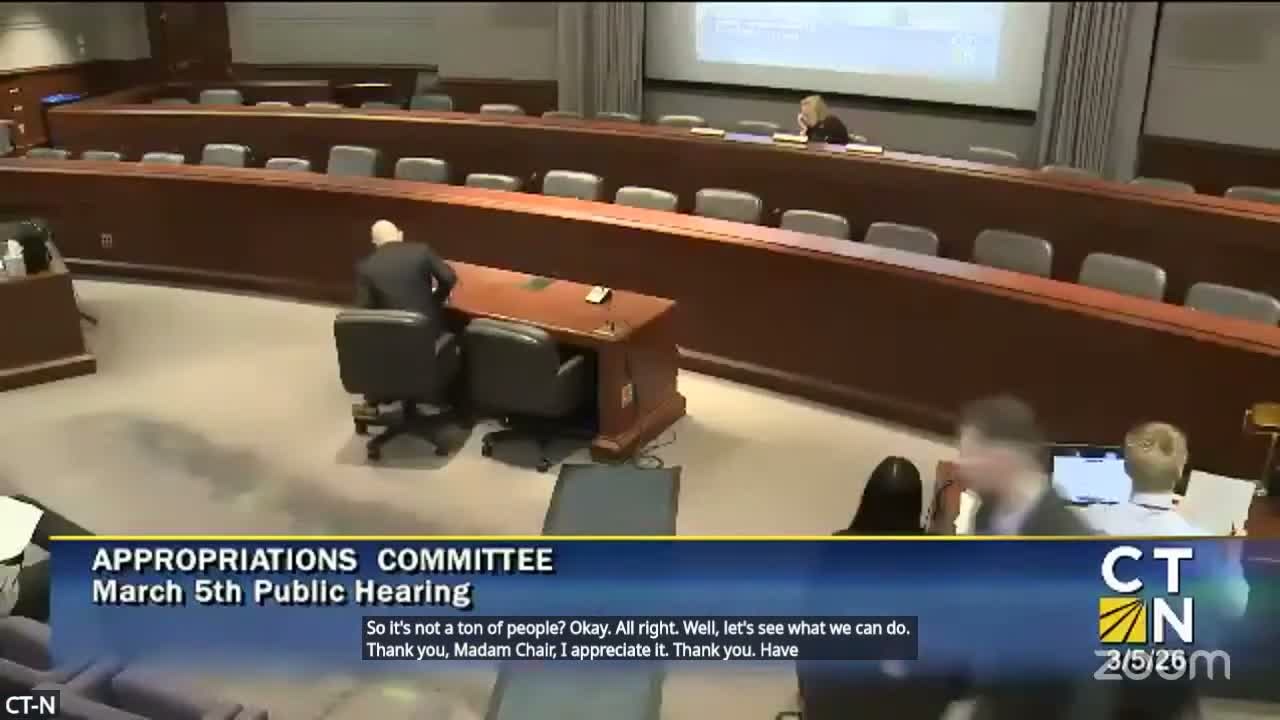
Providers, city officials and program residents told Connecticut’s Appropriations Committee on March 5 that an emergency housing program serving Greater New Haven must be funded in the state budget or risk closing when federal ARPA dollars expire in mid-2026.
James Ferales (introduced by the clerk) told the committee HB 5202 would provide sustainable support for Continuum of Care’s 100-bed non-congregate emergency housing program, citing a requested annual appropriation of $1,500,000. “The cost of allowing this program to disappear will far exceed the cost of sustaining it, in terms of human suffering, hospital stays, public safety and lost progress toward reducing homelessness,” he said.
Multiple agency and city officials described the program’s regional role and changing need. Kelly Fitzgerald, backbone lead for the regional coordinated access network in Greater New Haven, told lawmakers that area providers currently have roughly 500 people on shelter wait lists and that the Continuum site provides 24-hour clinical staffing for people with complex needs. Tirza Kemp, New Haven’s director of community resilience, described the shelter at 270 Foxon as offering immediate placement, case management and coordinated pathways to permanent housing and said funding would prevent shelter overflow and unsheltered homelessness.
Program staff and residents gave first-person accounts of the shelter’s impact. John Lubinick, vice president of emergency and acute services for Continuum, said 45 percent of current residents are 55 or older and many have medical complications; he added that 56 percent have co-occurring mental health and substance-use disorders. Residents described recovery, health stabilization and housing placement progress they credited to the program. "Without that program, I'll be homeless on the street," resident Benjamin Galarza said.
Lawmakers questioned whether the problem is driven primarily by the expiration of ARPA funds or by longer-term housing shortages and affordability issues. Witnesses said the causes are complex — including rising rents, limited housing stock, transportation barriers and constrained supportive housing capacity — and that ARPA provided a bridge whose loss would produce immediate consequences for individuals and regional shelter capacity.
There were no formal votes at the hearing. Committee members indicated they would consider the request as part of the budget process and asked staff for additional data on scale, funding options and program outcomes.
Next steps: committee to review requested funding within the broader budget process and may ask Continuum and state staff for follow-up documentation on costs and outcomes.
James Ferales (introduced by the clerk) told the committee HB 5202 would provide sustainable support for Continuum of Care’s 100-bed non-congregate emergency housing program, citing a requested annual appropriation of $1,500,000. “The cost of allowing this program to disappear will far exceed the cost of sustaining it, in terms of human suffering, hospital stays, public safety and lost progress toward reducing homelessness,” he said.
Multiple agency and city officials described the program’s regional role and changing need. Kelly Fitzgerald, backbone lead for the regional coordinated access network in Greater New Haven, told lawmakers that area providers currently have roughly 500 people on shelter wait lists and that the Continuum site provides 24-hour clinical staffing for people with complex needs. Tirza Kemp, New Haven’s director of community resilience, described the shelter at 270 Foxon as offering immediate placement, case management and coordinated pathways to permanent housing and said funding would prevent shelter overflow and unsheltered homelessness.
Program staff and residents gave first-person accounts of the shelter’s impact. John Lubinick, vice president of emergency and acute services for Continuum, said 45 percent of current residents are 55 or older and many have medical complications; he added that 56 percent have co-occurring mental health and substance-use disorders. Residents described recovery, health stabilization and housing placement progress they credited to the program. "Without that program, I'll be homeless on the street," resident Benjamin Galarza said.
Lawmakers questioned whether the problem is driven primarily by the expiration of ARPA funds or by longer-term housing shortages and affordability issues. Witnesses said the causes are complex — including rising rents, limited housing stock, transportation barriers and constrained supportive housing capacity — and that ARPA provided a bridge whose loss would produce immediate consequences for individuals and regional shelter capacity.
There were no formal votes at the hearing. Committee members indicated they would consider the request as part of the budget process and asked staff for additional data on scale, funding options and program outcomes.
Next steps: committee to review requested funding within the broader budget process and may ask Continuum and state staff for follow-up documentation on costs and outcomes.
View the Full Meeting & All Its Details
This article offers just a summary. Unlock complete video, transcripts, and insights as a Founder Member.
✓
Watch full, unedited meeting videos
✓
Search every word spoken in unlimited transcripts
✓
AI summaries & real-time alerts (all government levels)
✓
Permanent access to expanding government content
30-day money-back guarantee
