Cheyenne firefighters’ union presses for market alignment as council disputes peer comparisons
March 06, 2026 | Cheyenne, Laramie County, Wyoming
This article was created by AI summarizing key points discussed. AI makes mistakes, so for full details and context, please refer to the video of the full meeting. Please report any errors so we can fix them. Report an error »
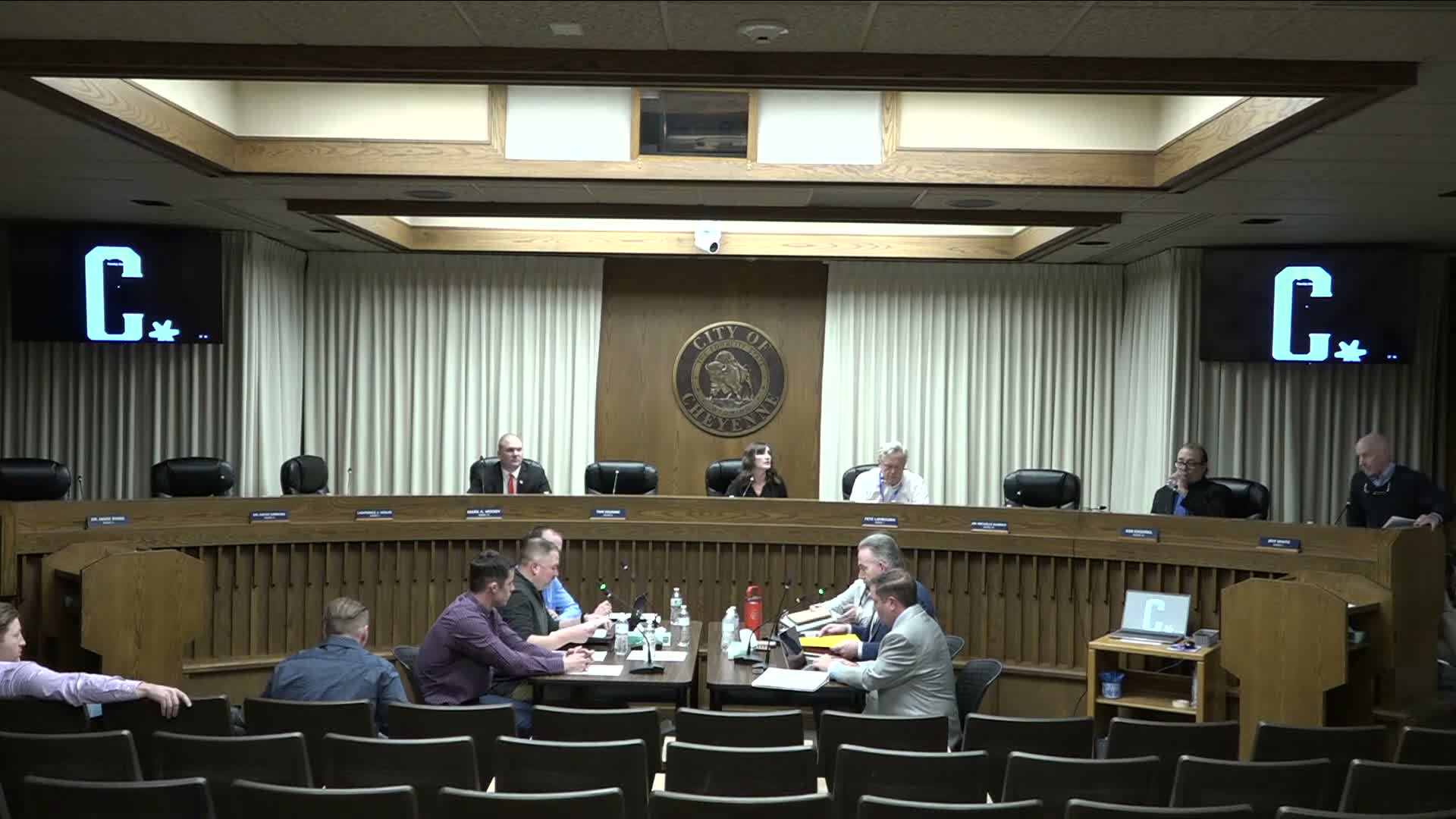
The Cheyenne Professional Firefighters, International Association of Firefighters Local 279, told the City Council at a special meeting that Cheyenne firefighters are “significantly behind the market,” calling the issue a “structural wage table problem” and urging the city to prioritize a market-alignment adjustment.
The union representative said wage‑comparison exhibits show Cheyenne firefighters are about 20.6% behind at year one and cited top‑of‑scale shortfalls around 34.4% for some ranks, and argued the city’s fiscal year 2024 general fund position (general fund balance ~$55.8 million; unreserved balance ~$54.4 million; fund balance equal to about 78.9% of annual expenditures) indicates the city can afford a phased correction. “This is not a city in financial distress. This is a city in strong fiscal condition,” the union representative said.
Council members pressed the union for details on which jurisdictions were used as peers and whether the comparisons used starting pay, topped‑out pay, or total compensation that includes longevity and specialty pays. The chair said he could not reconcile the union’s magnitude of gaps with the city’s calculations for Wyoming peers and told the union, “I just can't do the math and get there.”
The union defended including front‑range departments in its comparison, saying Cheyenne competes with those jurisdictions for lateral hires and that while Cheyenne may start some ranks ahead, the city falls behind at the top of the pay scale — an outcome it said harms retention and long‑term departmental stability. The union also said applicant pools have thinned compared with decades ago, reporting hiring lists of 20–30 candidates versus several hundred in the past.
Council and the union examined specific rank comparisons for probationary firefighters, engineers, lieutenants, captains and battalion chiefs and discussed whether the spreadsheets reflected COLA increases, specialty pays or longevity. Both sides acknowledged some spreadsheet figures needed confirmation and agreed to re‑check the data. The union offered to provide more detailed peer and funding‑source information.
A formal motion to move into an executive session for further labor negotiations was moved and seconded and carried on a voice vote; no substantive wage agreement was reached during the public portion of the meeting. Council members said they were open to proposals but that agreement on an appropriate peer group — and whether comparisons should use starting pay, topped‑out pay, or total compensation — was a prerequisite to settling on a remedy.
The meeting concluded with both sides agreeing to gather additional comparative and funding information before continuing negotiations. No final wage adjustments or binding actions were taken during the session.
The union representative said wage‑comparison exhibits show Cheyenne firefighters are about 20.6% behind at year one and cited top‑of‑scale shortfalls around 34.4% for some ranks, and argued the city’s fiscal year 2024 general fund position (general fund balance ~$55.8 million; unreserved balance ~$54.4 million; fund balance equal to about 78.9% of annual expenditures) indicates the city can afford a phased correction. “This is not a city in financial distress. This is a city in strong fiscal condition,” the union representative said.
Council members pressed the union for details on which jurisdictions were used as peers and whether the comparisons used starting pay, topped‑out pay, or total compensation that includes longevity and specialty pays. The chair said he could not reconcile the union’s magnitude of gaps with the city’s calculations for Wyoming peers and told the union, “I just can't do the math and get there.”
The union defended including front‑range departments in its comparison, saying Cheyenne competes with those jurisdictions for lateral hires and that while Cheyenne may start some ranks ahead, the city falls behind at the top of the pay scale — an outcome it said harms retention and long‑term departmental stability. The union also said applicant pools have thinned compared with decades ago, reporting hiring lists of 20–30 candidates versus several hundred in the past.
Council and the union examined specific rank comparisons for probationary firefighters, engineers, lieutenants, captains and battalion chiefs and discussed whether the spreadsheets reflected COLA increases, specialty pays or longevity. Both sides acknowledged some spreadsheet figures needed confirmation and agreed to re‑check the data. The union offered to provide more detailed peer and funding‑source information.
A formal motion to move into an executive session for further labor negotiations was moved and seconded and carried on a voice vote; no substantive wage agreement was reached during the public portion of the meeting. Council members said they were open to proposals but that agreement on an appropriate peer group — and whether comparisons should use starting pay, topped‑out pay, or total compensation — was a prerequisite to settling on a remedy.
The meeting concluded with both sides agreeing to gather additional comparative and funding information before continuing negotiations. No final wage adjustments or binding actions were taken during the session.
View the Full Meeting & All Its Details
This article offers just a summary. Unlock complete video, transcripts, and insights as a Founder Member.
✓
Watch full, unedited meeting videos
✓
Search every word spoken in unlimited transcripts
✓
AI summaries & real-time alerts (all government levels)
✓
Permanent access to expanding government content
30-day money-back guarantee
