North Kingstown weighs meal‑price increases and staffing plan as child‑nutrition costs rise
March 04, 2026 | North Kingstown, School Districts, Rhode Island
This article was created by AI summarizing key points discussed. AI makes mistakes, so for full details and context, please refer to the video of the full meeting. Please report any errors so we can fix them. Report an error »
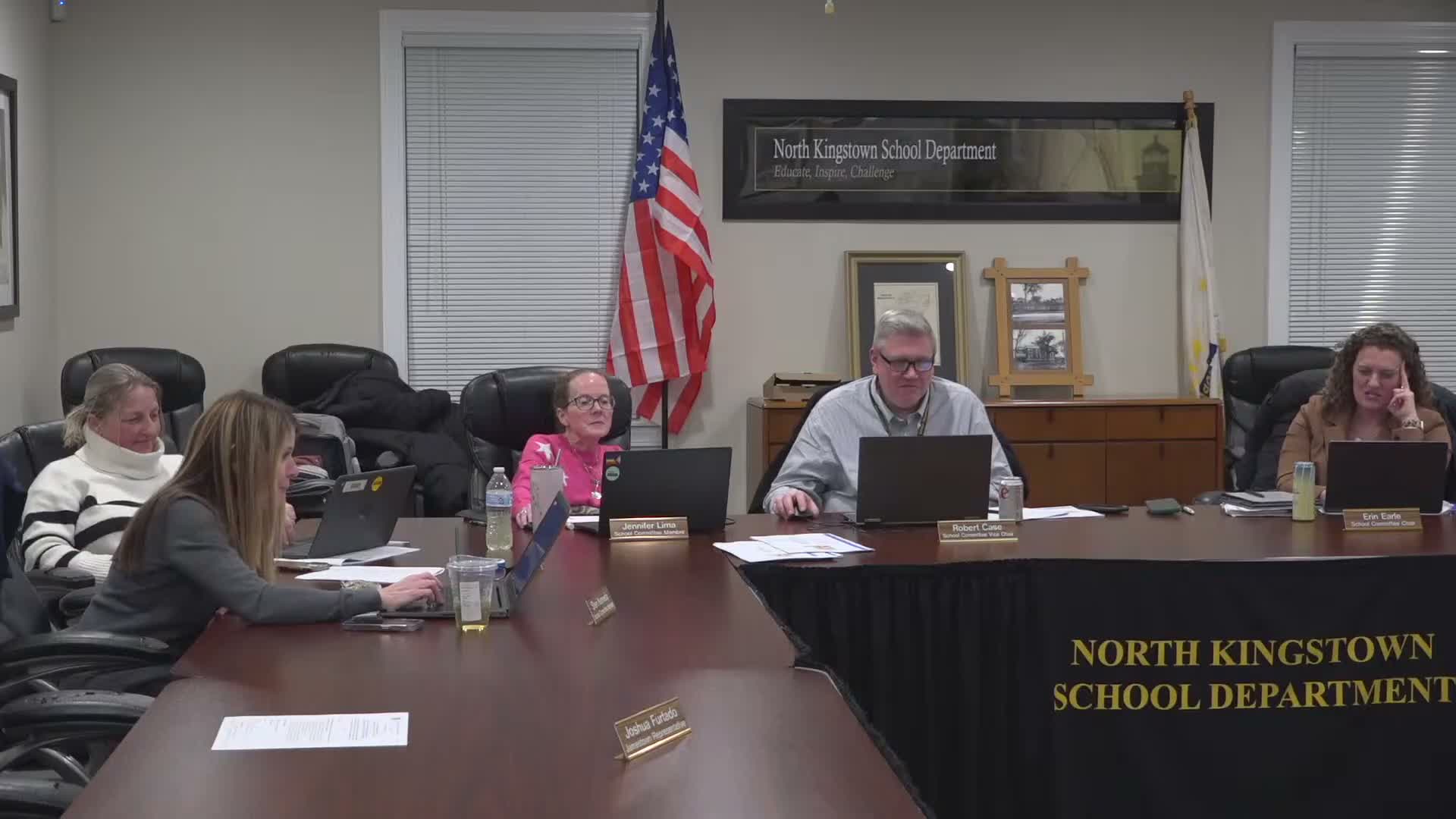
Child nutrition leaders and finance staff told the North Kingstown School Committee on March 3 that rising food costs and chronic understaffing are pressuring the district’s nutrition program and prompted a discussion of possible meal‑price changes and staffing proposals.
Patricia Cawley, the district’s child nutrition supervisor, said the program serves about 2,000 meals each day, runs life‑skills and environmental stewardship initiatives, and recently distributed thousands of meals during the blizzard. She told the committee the program has been understaffed for six years and that inflation and supply‑chain pressures have increased costs.
Leslie (district finance staff) and Cawley reviewed the FY27 enterprise‑budget assumptions and identified a $12,000 concession‑trailer placeholder in revenue and expense that the committee can remove without changing the bottom line. The budget presentation also showed a projected $35,000 increase in food costs compared with a $20,000 revenue increase; staff said multiple factors — not just concession revenue — explain that gap and offered to rework the line items into clearer scenarios for paid vs. free/reduced lunches.
On potential price changes, nutrition staff presented options that would close the gap while minimizing family impact: a $0.50 increase to breakfast or a $0.25 increase to lunch, with the district noting that a lunch increase would spread cost across more meals and families and therefore be less visible per household in some scenarios. "I think that the ultimate question is how we do that — the concept of keeping our budget the way it is, understanding that we need to increase those meal prices is just how we do that," a nutrition staffer said.
Committee members asked staff to model precise dollar impacts (paid‑meal counts vs. free/reduced) and to show family‑level effects (per year and per school). Members also pressed payroll and staffing questions: nutrition is part of the district ESP staffing structure and that complicates recruitment and retention; staff proposed a district‑wide assistant to the child‑nutrition supervisor to help reduce reliance on substitutes.
The committee did not vote on price changes; members asked the administration to return with concrete scenarios and math to support any recommendation and to separate concession revenue/expense lines for transparency.
Next steps: nutrition and finance staff will prepare scenarios that show revenue, costs and family impacts for different price changes and return to the committee with the numbers.
Patricia Cawley, the district’s child nutrition supervisor, said the program serves about 2,000 meals each day, runs life‑skills and environmental stewardship initiatives, and recently distributed thousands of meals during the blizzard. She told the committee the program has been understaffed for six years and that inflation and supply‑chain pressures have increased costs.
Leslie (district finance staff) and Cawley reviewed the FY27 enterprise‑budget assumptions and identified a $12,000 concession‑trailer placeholder in revenue and expense that the committee can remove without changing the bottom line. The budget presentation also showed a projected $35,000 increase in food costs compared with a $20,000 revenue increase; staff said multiple factors — not just concession revenue — explain that gap and offered to rework the line items into clearer scenarios for paid vs. free/reduced lunches.
On potential price changes, nutrition staff presented options that would close the gap while minimizing family impact: a $0.50 increase to breakfast or a $0.25 increase to lunch, with the district noting that a lunch increase would spread cost across more meals and families and therefore be less visible per household in some scenarios. "I think that the ultimate question is how we do that — the concept of keeping our budget the way it is, understanding that we need to increase those meal prices is just how we do that," a nutrition staffer said.
Committee members asked staff to model precise dollar impacts (paid‑meal counts vs. free/reduced) and to show family‑level effects (per year and per school). Members also pressed payroll and staffing questions: nutrition is part of the district ESP staffing structure and that complicates recruitment and retention; staff proposed a district‑wide assistant to the child‑nutrition supervisor to help reduce reliance on substitutes.
The committee did not vote on price changes; members asked the administration to return with concrete scenarios and math to support any recommendation and to separate concession revenue/expense lines for transparency.
Next steps: nutrition and finance staff will prepare scenarios that show revenue, costs and family impacts for different price changes and return to the committee with the numbers.
Don't Miss a Word: See the Full Meeting!
Go beyond summaries. Unlock every video, transcript, and key insight with a Founder Membership.
✓
Get instant access to full meeting videos
✓
Search and clip any phrase from complete transcripts
✓
Receive AI-powered summaries & custom alerts
✓
Enjoy lifetime, unrestricted access to government data
30-day money-back guarantee
