Mills staff outlines zoning-map cleanup, commissioners debate notice and property impacts
March 06, 2026 | Mills, Natrona, Wyoming
This article was created by AI summarizing key points discussed. AI makes mistakes, so for full details and context, please refer to the video of the full meeting. Please report any errors so we can fix them. Report an error »
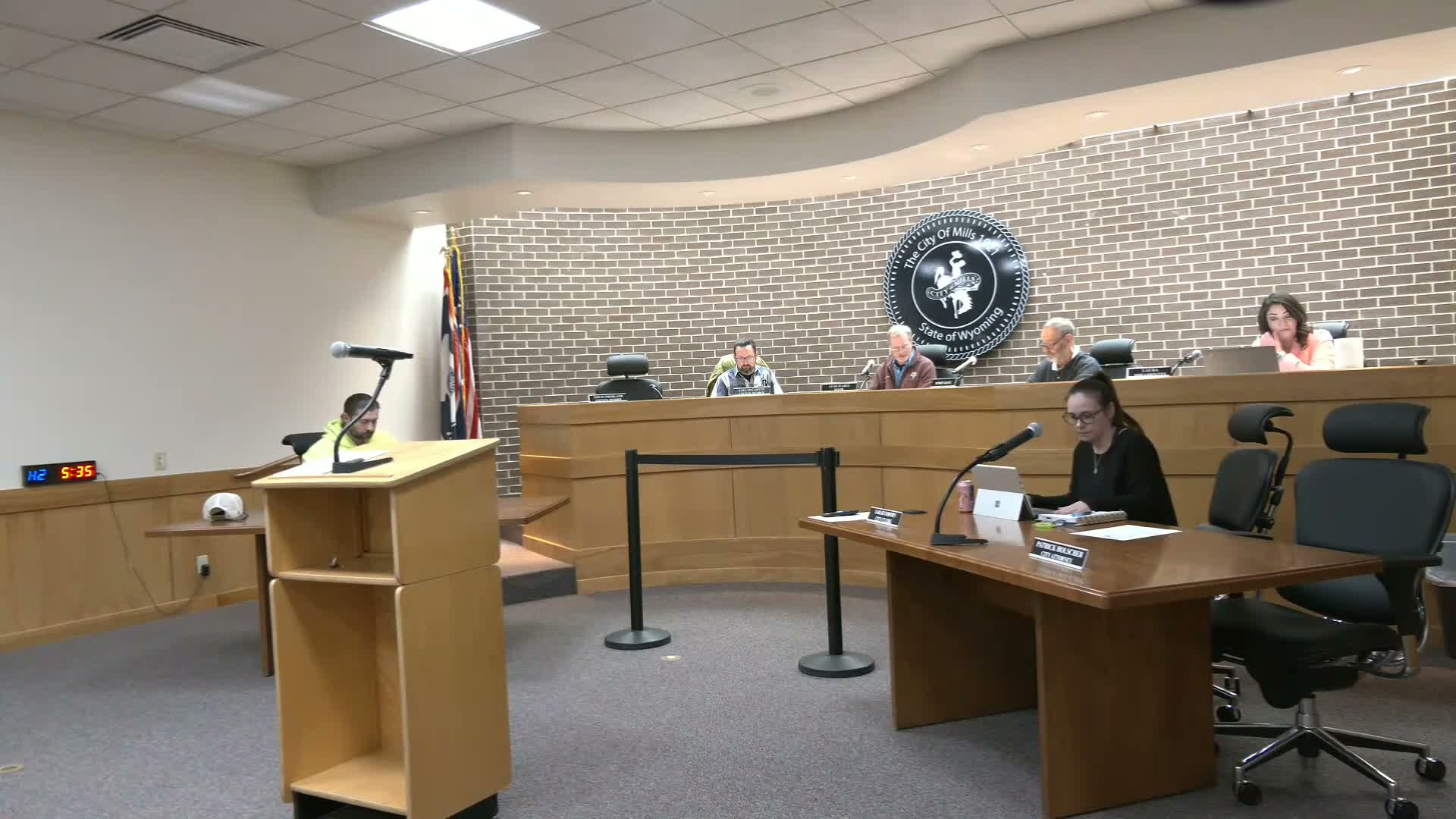
At a regular meeting of the Mills Planning and Zoning Commission, staff member Casey briefed commissioners on a proposed, townwide effort to clean up the zoning map and reduce spot zoning that currently leaves some lots inconsistent with surrounding uses. Casey said the effort would be a holistic update intended to avoid repeated, parcel-by-parcel rezonings and aimed for a more complete map by year’s end.
"So a rezone is a change to our official zoning map. It has to go through an ordinance change," Casey told the commission, outlining the multi-step process that includes staff review, a Planning & Zoning hearing and three council readings before a final decision. He described the cleanup as primarily resident-driven, with many requests coming from property owners who want their parcel zoning to match neighboring uses to improve financing or future development potential.
Casey described specific technical changes he expects to surface during the cleanup. He said Residential 1 (R1) is intended for single-family neighborhoods and now carries a 6,000-square-foot minimum lot size (up from 5,000 under an earlier draft), with allowable low-impact uses such as home child care and limited neighborhood-serving businesses. For Commercial 1 (C1), Casey said the category permits retail, offices, clinics and some multifamily uses, and that most C1 projects will require site-plan review so the city can evaluate parking, lighting, drainage and landscaping.
On design standards, Casey recited landscaping minimums tied to parcel size: 10% for lots under 20,000 square feet, 8% for 20,000 square feet to one acre, and 6% for parcels larger than one acre. He also told commissioners the city generally requires permanent surfaces—such as asphalt or concrete—for parking and will authorize interim surfacing (for example, rotomill) only in limited, temporary circumstances.
Casey flagged a change to the public-notice process that some commissioners pressed on: "We did reduce in the ordinance 8 23, the notification distance," he said, noting that the distance had been reduced to 140 feet for direct mail notice. Commissioners questioned whether the smaller notification radius would leave some neighbors unaware of proposed rezonings and discussed whether a larger radius (one commissioner said 300 feet) might be preferable.
Commissioners also asked about legal review and remedies. Casey said applications are screened for completeness and, when issues arise, are reviewed by city legal staff. He said members of the public may exhaust administrative remedies through hearings and, if they have legal standing, could pursue legal action afterward.
Chair called on commissioners to help identify problem areas on the current map and to scrutinize applications when they arrive. The commission noted that some owners in commercially zoned parcels currently housing mobile homes want rezoning to mobile-home or residential classifications to ease lending and future use. The commission set its next meeting for April 2 at 05:30PM and adjourned.
The meeting included a brief procedural vote approving the prior meeting minutes by voice vote; the transcript records verbal "ayes" but does not assign individual roll-call votes.
"So a rezone is a change to our official zoning map. It has to go through an ordinance change," Casey told the commission, outlining the multi-step process that includes staff review, a Planning & Zoning hearing and three council readings before a final decision. He described the cleanup as primarily resident-driven, with many requests coming from property owners who want their parcel zoning to match neighboring uses to improve financing or future development potential.
Casey described specific technical changes he expects to surface during the cleanup. He said Residential 1 (R1) is intended for single-family neighborhoods and now carries a 6,000-square-foot minimum lot size (up from 5,000 under an earlier draft), with allowable low-impact uses such as home child care and limited neighborhood-serving businesses. For Commercial 1 (C1), Casey said the category permits retail, offices, clinics and some multifamily uses, and that most C1 projects will require site-plan review so the city can evaluate parking, lighting, drainage and landscaping.
On design standards, Casey recited landscaping minimums tied to parcel size: 10% for lots under 20,000 square feet, 8% for 20,000 square feet to one acre, and 6% for parcels larger than one acre. He also told commissioners the city generally requires permanent surfaces—such as asphalt or concrete—for parking and will authorize interim surfacing (for example, rotomill) only in limited, temporary circumstances.
Casey flagged a change to the public-notice process that some commissioners pressed on: "We did reduce in the ordinance 8 23, the notification distance," he said, noting that the distance had been reduced to 140 feet for direct mail notice. Commissioners questioned whether the smaller notification radius would leave some neighbors unaware of proposed rezonings and discussed whether a larger radius (one commissioner said 300 feet) might be preferable.
Commissioners also asked about legal review and remedies. Casey said applications are screened for completeness and, when issues arise, are reviewed by city legal staff. He said members of the public may exhaust administrative remedies through hearings and, if they have legal standing, could pursue legal action afterward.
Chair called on commissioners to help identify problem areas on the current map and to scrutinize applications when they arrive. The commission noted that some owners in commercially zoned parcels currently housing mobile homes want rezoning to mobile-home or residential classifications to ease lending and future use. The commission set its next meeting for April 2 at 05:30PM and adjourned.
The meeting included a brief procedural vote approving the prior meeting minutes by voice vote; the transcript records verbal "ayes" but does not assign individual roll-call votes.
Don't Miss a Word: See the Full Meeting!
Go beyond summaries. Unlock every video, transcript, and key insight with a Founder Membership.
✓
Get instant access to full meeting videos
✓
Search and clip any phrase from complete transcripts
✓
Receive AI-powered summaries & custom alerts
✓
Enjoy lifetime, unrestricted access to government data
30-day money-back guarantee
