Charter review committee asks staff for options on minimum qualifications for city treasurer
March 06, 2026 | Glendale, Los Angeles County, California
This article was created by AI summarizing key points discussed. AI makes mistakes, so for full details and context, please refer to the video of the full meeting. Please report any errors so we can fix them. Report an error »
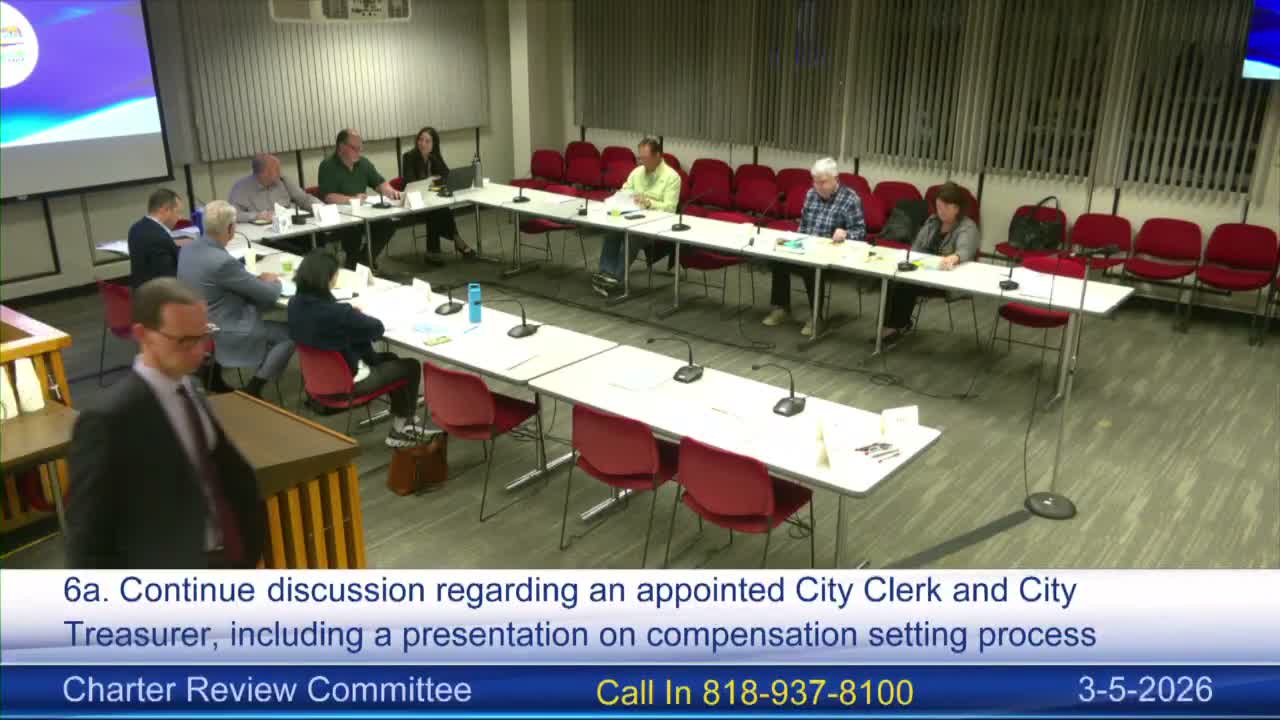
Staff presented a report and examples on March 5 showing varied approaches other agencies use to qualify candidates for city treasurer. Options ranged from a narrow, experience‑based requirement (three years in senior public financial management) to academic credentials (bachelor’s or graduate degree in finance, accounting or related fields) or professional credentials (active CPA, CFA, or municipal treasurer certification).
The committee discussed tradeoffs. Some members and public speakers argued for objective, verifiable qualifications such as an active CPA license or a CFA designation; others urged caution about creating subjective experience gates the city clerk would have to adjudicate when candidates file nomination papers. Staff explained mechanics: the clerk’s office would administratively verify documentary proof (degree transcripts or active license) at the time nomination papers are filed; challenges to eligibility could be litigated by writ in court.
Public commenters and several members noted the city’s $1 billion‑plus investment portfolio and the need to guard against mismanagement, citing historical county examples as justification for minimum financial safeguards. Committee members raised concerns about over‑broad or overly prescriptive language (for example, requiring specific years of prior public‑sector financial management) and asked staff to draft language that balances objectivity, enforceability, and voter oversight.
Next steps: staff will return with draft charter language and written descriptions of each credential (what a CPA or CFA requires, active vs. inactive licensing status, continuing education requirements), and will research case law or administrative practice related to enforcement and challenges so the committee can consider options at a future meeting.
The committee discussed tradeoffs. Some members and public speakers argued for objective, verifiable qualifications such as an active CPA license or a CFA designation; others urged caution about creating subjective experience gates the city clerk would have to adjudicate when candidates file nomination papers. Staff explained mechanics: the clerk’s office would administratively verify documentary proof (degree transcripts or active license) at the time nomination papers are filed; challenges to eligibility could be litigated by writ in court.
Public commenters and several members noted the city’s $1 billion‑plus investment portfolio and the need to guard against mismanagement, citing historical county examples as justification for minimum financial safeguards. Committee members raised concerns about over‑broad or overly prescriptive language (for example, requiring specific years of prior public‑sector financial management) and asked staff to draft language that balances objectivity, enforceability, and voter oversight.
Next steps: staff will return with draft charter language and written descriptions of each credential (what a CPA or CFA requires, active vs. inactive licensing status, continuing education requirements), and will research case law or administrative practice related to enforcement and challenges so the committee can consider options at a future meeting.
Don't Miss a Word: See the Full Meeting!
Go beyond summaries. Unlock every video, transcript, and key insight with a Founder Membership.
✓
Get instant access to full meeting videos
✓
Search and clip any phrase from complete transcripts
✓
Receive AI-powered summaries & custom alerts
✓
Enjoy lifetime, unrestricted access to government data
30-day money-back guarantee
