Town of Nashville residents press planners to reject conditional rezoning for 802 S. 1st St.
March 06, 2026 | Town of Nashville, Nash County, North Carolina
This article was created by AI summarizing key points discussed. AI makes mistakes, so for full details and context, please refer to the video of the full meeting. Please report any errors so we can fix them. Report an error »
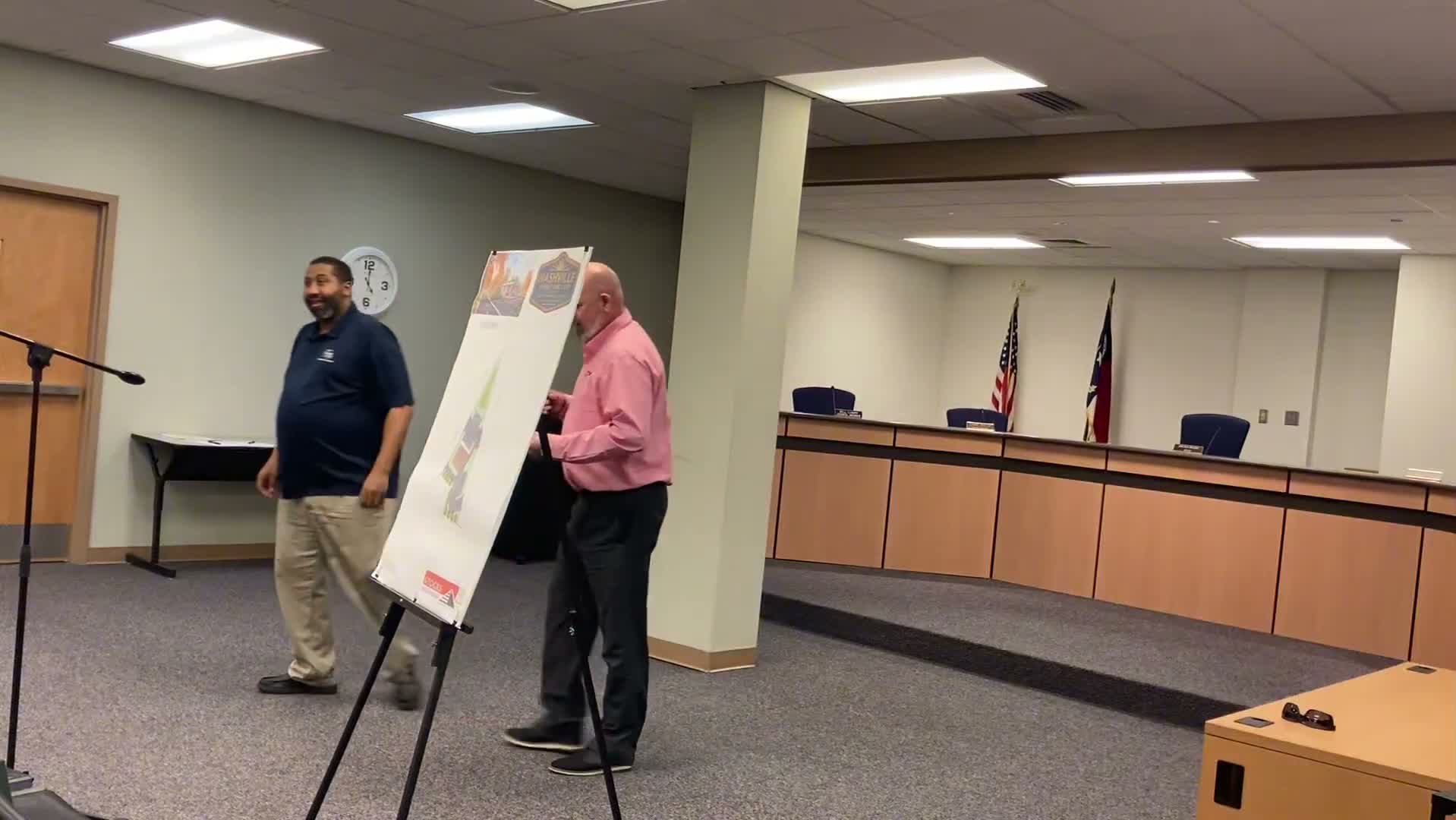
Sean Lucas, planning director for the Town of Nashville, opened a community meeting on a conditional rezoning request for 802 South 1st Street and said the application proposes to consolidate split zoning into B‑1 conditional use and rebuild the existing convenience store.
Kevin Barnell of Stocks Engineering told residents the plan would tear down the current structure, add a new building, increase parking, and include landscaping intended to fit neighborhood character; he said the N.C. Department of Transportation has reviewed the driveway layout and prefers the proposed configuration. "The plan proposes to tear down and rebuild the existing store," Barnell said, and he estimated construction could begin roughly 15 to 18 months if approvals proceed.
Many neighbors opposed the application in public comment. Richardson, who said he lives on Ward Street, challenged the project's community benefit and cited what he said were 70–80% markups on goods at the existing store. "I don't really see how this would be a community grocery store when the majority of residents in our community are on a fixed income," Richardson said. Kathy Austin Kearney, pastor of Galatia AME Church, said the store has declined under new owners and questioned why grocery operations were not added before seeking a rezone.
Several speakers tied the store to public‑safety concerns. Jane, a longtime nearby resident, recounted unsolved violent incidents near the site and said the store has contributed to neighborhood decline. Alexandria, who lives across the street, said people loiter and sometimes come through her yard and that "the police do nothing" when she reports trespassing. Gertrude Foster and others described litter and trash near the property.
Residents also raised traffic and drainage worries. Terry Barley Clark, who identified himself as an heir to adjacent properties, said exiting Baker Street is already hazardous and that nearby apartment development will increase traffic. Another resident urged caution about topography and runoff, warning that parking‑lot grading could cause erosion affecting neighboring houses. Barnell and Lucas said stormwater and erosion control must meet the Town of Nashville stormwater ordinance and that DOT will be involved because the site abuts state roads.
Several commenters asked about gambling and alcohol at the store. Residents said two gaming machines already operate on the premises; staff said conditions can be attached to a conditional rezoning to prohibit gaming machines or alcohol sales and that the town could enforce such conditions as zoning violations. "I can certainly ask if that was something they'd be willing to do," Barnell said about removing existing machines; Lucas added that enforcement would follow if conditions are included in an approved rezoning.
Lucas explained the procedural path: after the community meeting the application will go to the planning board (March 24) and then to the town council (May 5), and attendees should receive mailed notices with times and locations. He noted a prior application was withdrawn and described the local cooling‑off periods for denied or withdrawn applications.
No formal vote was taken at the meeting. Residents repeatedly asked planners to deny the application or to craft strict conditions if it advances. The planning board hearing is scheduled for March 24; the town council decision is scheduled for May 5.
Kevin Barnell of Stocks Engineering told residents the plan would tear down the current structure, add a new building, increase parking, and include landscaping intended to fit neighborhood character; he said the N.C. Department of Transportation has reviewed the driveway layout and prefers the proposed configuration. "The plan proposes to tear down and rebuild the existing store," Barnell said, and he estimated construction could begin roughly 15 to 18 months if approvals proceed.
Many neighbors opposed the application in public comment. Richardson, who said he lives on Ward Street, challenged the project's community benefit and cited what he said were 70–80% markups on goods at the existing store. "I don't really see how this would be a community grocery store when the majority of residents in our community are on a fixed income," Richardson said. Kathy Austin Kearney, pastor of Galatia AME Church, said the store has declined under new owners and questioned why grocery operations were not added before seeking a rezone.
Several speakers tied the store to public‑safety concerns. Jane, a longtime nearby resident, recounted unsolved violent incidents near the site and said the store has contributed to neighborhood decline. Alexandria, who lives across the street, said people loiter and sometimes come through her yard and that "the police do nothing" when she reports trespassing. Gertrude Foster and others described litter and trash near the property.
Residents also raised traffic and drainage worries. Terry Barley Clark, who identified himself as an heir to adjacent properties, said exiting Baker Street is already hazardous and that nearby apartment development will increase traffic. Another resident urged caution about topography and runoff, warning that parking‑lot grading could cause erosion affecting neighboring houses. Barnell and Lucas said stormwater and erosion control must meet the Town of Nashville stormwater ordinance and that DOT will be involved because the site abuts state roads.
Several commenters asked about gambling and alcohol at the store. Residents said two gaming machines already operate on the premises; staff said conditions can be attached to a conditional rezoning to prohibit gaming machines or alcohol sales and that the town could enforce such conditions as zoning violations. "I can certainly ask if that was something they'd be willing to do," Barnell said about removing existing machines; Lucas added that enforcement would follow if conditions are included in an approved rezoning.
Lucas explained the procedural path: after the community meeting the application will go to the planning board (March 24) and then to the town council (May 5), and attendees should receive mailed notices with times and locations. He noted a prior application was withdrawn and described the local cooling‑off periods for denied or withdrawn applications.
No formal vote was taken at the meeting. Residents repeatedly asked planners to deny the application or to craft strict conditions if it advances. The planning board hearing is scheduled for March 24; the town council decision is scheduled for May 5.
View the Full Meeting & All Its Details
This article offers just a summary. Unlock complete video, transcripts, and insights as a Founder Member.
✓
Watch full, unedited meeting videos
✓
Search every word spoken in unlimited transcripts
✓
AI summaries & real-time alerts (all government levels)
✓
Permanent access to expanding government content
30-day money-back guarantee
