Property-tax overhaul fails in House after heated debate over caps and school funding
March 06, 2026 | House of Representative, Committees, Legislative, Wyoming
This article was created by AI summarizing key points discussed. AI makes mistakes, so for full details and context, please refer to the video of the full meeting. Please report any errors so we can fix them. Report an error »
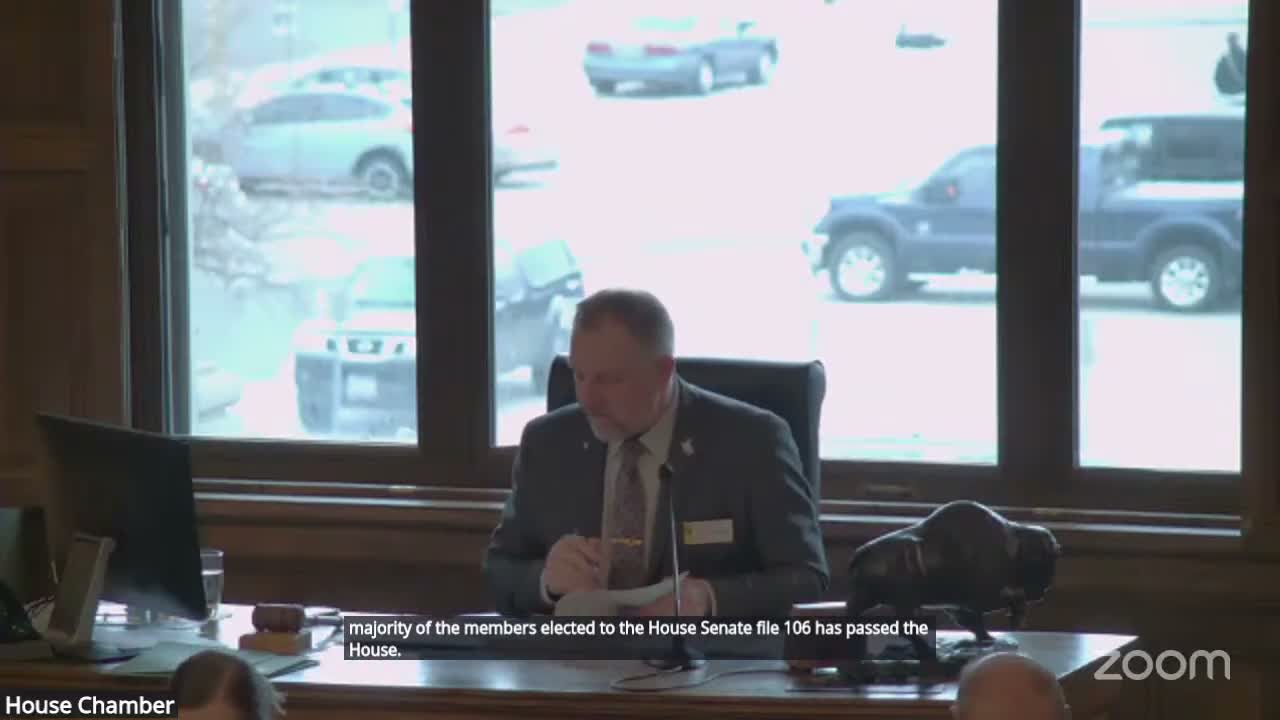
Senate File 110, a multi‑part proposal on residential property taxation, drew one of the longest debates on the floor. Lawmakers debated whether the bill represents meaningful reform or shifts costs between school districts, counties and the state.
Key amendments and points:
• Representative Storer (amendment #3) argued the bill could constitutionally enact Amendment A and repeal the 4% cap that has produced large exemptions (citing examples of multimillion‑dollar properties receiving large tax relief). He proposed phased exemptions to soften impacts for counties and schools.
• Representative Byron’s Amendment #4 increased the suggested owner‑occupied exemption from $1 million to $3 million to cover working homeowners in some districts; members divided on fairness and geographic distribution of benefits. Amendment #4 was adopted (voice/division reported on the floor).
• Opponents warned of long‑term fiscal cliffs for the School Foundation Program and LISRA (Legislative Stabilization Reserve Account). Representative Provenza and others warned that cumulative property tax cuts could require future cuts to health and social services or require the general fund to backfill school funding. Supporters argued tax relief was a voter priority and necessary relief for homeowners.
After multiple amendments and extended debate, the House called the roll on SF110. The closing tally was 30 ayes, 31 noes, and 1 excused; the Speaker announced that SF110 failed to pass the House.
Floor remarks included repeated references to county and school mill impacts, examples of property values and exemptions (including Teton County examples), and concerns about whether the changes would be constitutional under the equal and uniform taxation clause. Members on both sides urged consideration of long‑run fiscal planning before adopting broad tax shifts.
Key amendments and points:
• Representative Storer (amendment #3) argued the bill could constitutionally enact Amendment A and repeal the 4% cap that has produced large exemptions (citing examples of multimillion‑dollar properties receiving large tax relief). He proposed phased exemptions to soften impacts for counties and schools.
• Representative Byron’s Amendment #4 increased the suggested owner‑occupied exemption from $1 million to $3 million to cover working homeowners in some districts; members divided on fairness and geographic distribution of benefits. Amendment #4 was adopted (voice/division reported on the floor).
• Opponents warned of long‑term fiscal cliffs for the School Foundation Program and LISRA (Legislative Stabilization Reserve Account). Representative Provenza and others warned that cumulative property tax cuts could require future cuts to health and social services or require the general fund to backfill school funding. Supporters argued tax relief was a voter priority and necessary relief for homeowners.
After multiple amendments and extended debate, the House called the roll on SF110. The closing tally was 30 ayes, 31 noes, and 1 excused; the Speaker announced that SF110 failed to pass the House.
Floor remarks included repeated references to county and school mill impacts, examples of property values and exemptions (including Teton County examples), and concerns about whether the changes would be constitutional under the equal and uniform taxation clause. Members on both sides urged consideration of long‑run fiscal planning before adopting broad tax shifts.
View the Full Meeting & All Its Details
This article offers just a summary. Unlock complete video, transcripts, and insights as a Founder Member.
✓
Watch full, unedited meeting videos
✓
Search every word spoken in unlimited transcripts
✓
AI summaries & real-time alerts (all government levels)
✓
Permanent access to expanding government content
30-day money-back guarantee
