Senate adopts floor amendment to SB 12-75 that narrows diversion program to veterans; critics say it removes judge discretion
March 05, 2026 | 2026 Legislature Arizona, Arizona
This article was created by AI summarizing key points discussed. AI makes mistakes, so for full details and context, please refer to the video of the full meeting. Please report any errors so we can fix them. Report an error »
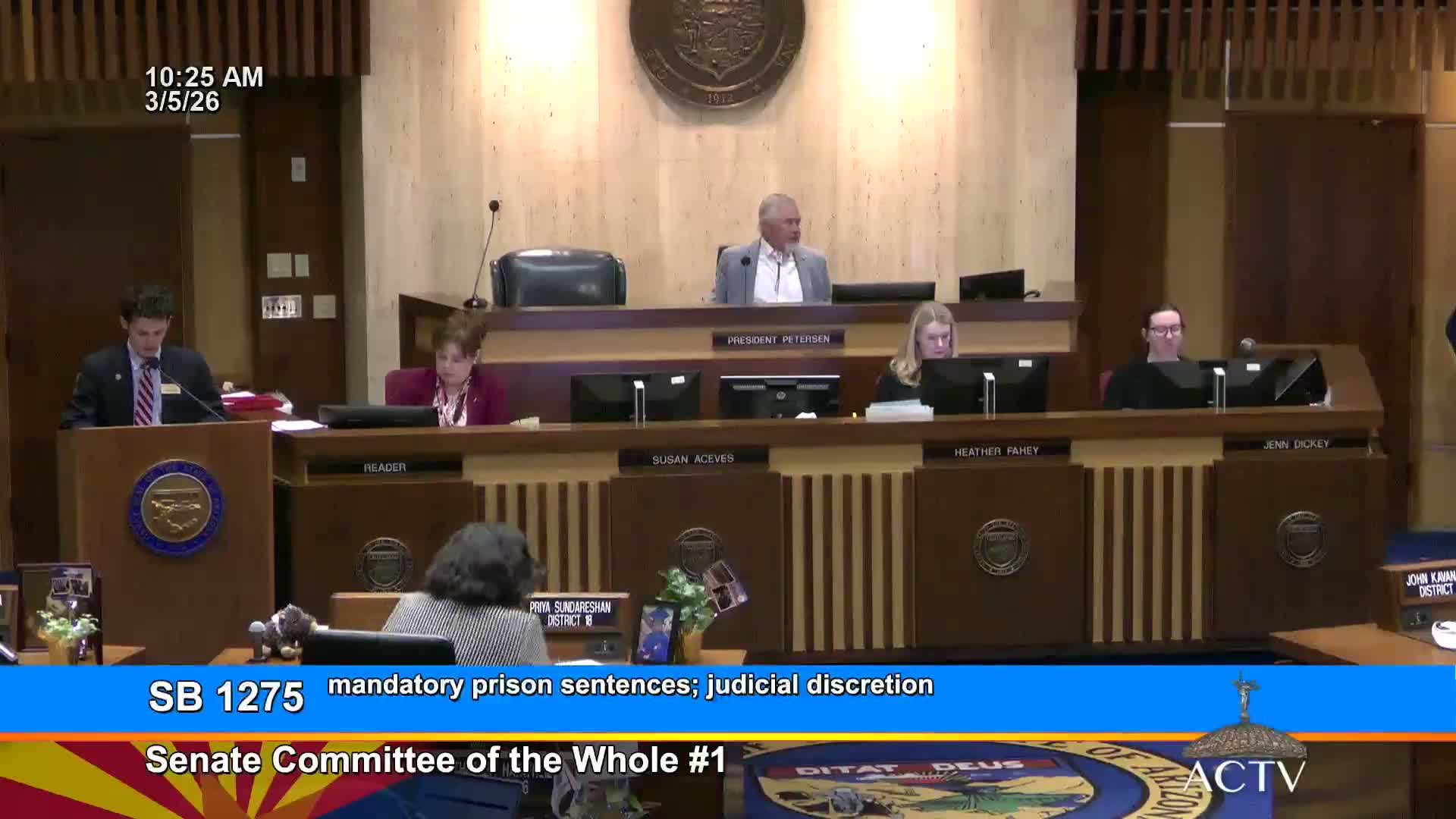
The Arizona Senate on the floor adopted a Gowen floor amendment to Senate Bill 12-75 that limits the measure to veterans diversion programs and, according to critics, removes a judge’s ability to impose or suspend a lesser prison sentence.
Senator Gowan, sponsor of the floor amendment, told colleagues the change "removes the first responders who didn't want to take part in this, and it leaves it to the veteran side," and said the amendment preserves an existing diversion program structure while allowing local negotiation on funding levels.
Senator Ortiz objected strongly on the floor, saying the amendment "more or less takes away everything that was good about SB 12-75" and arguing it "returns the full total discretion to the prosecutors, the most powerful actors in the criminal legal system." Ortiz said the original bill had aimed to give judges more discretion to suspend or reduce sentences and lamented that the floor amendment "quite literally guts the bill." "So this amendment to 12-75 will allow a county attorney to establish a veteran's diversion program," Ortiz said, "that's a great thing. However, they can already do that. They don't necessarily need the legislature to give them the authority..."
After a brief period of debate the chamber divided on the adoption of the Gowen floor amendment. The tally posted after the division was 15 ayes and 13 noes; the presiding officer announced the amendment adopted. The Committee of the Whole then rose and reported Senate Bill 12-75 as amended with a due-pass recommendation. The transcript shows the bill received the committee's endorsement as amended; a formal recorded roll-call tally for the final third-reading passage was not specified in the floor transcript provided.
Why it matters: The amendment changes who holds placement authority for diversion and limits judicial sentencing options in the bill's text—shifting implementation toward county attorneys. Supporters framed the change as refining the bill to focus on veterans; opponents said it curtailed judicial discretion and weakened broader criminal-justice reform aims.
Next steps: The Committee of the Whole reported the bill as amended and the Senate gave it a due-pass recommendation; the measure will be transmitted to the House if the journal and transmittal follow normal procedure.
Senator Gowan, sponsor of the floor amendment, told colleagues the change "removes the first responders who didn't want to take part in this, and it leaves it to the veteran side," and said the amendment preserves an existing diversion program structure while allowing local negotiation on funding levels.
Senator Ortiz objected strongly on the floor, saying the amendment "more or less takes away everything that was good about SB 12-75" and arguing it "returns the full total discretion to the prosecutors, the most powerful actors in the criminal legal system." Ortiz said the original bill had aimed to give judges more discretion to suspend or reduce sentences and lamented that the floor amendment "quite literally guts the bill." "So this amendment to 12-75 will allow a county attorney to establish a veteran's diversion program," Ortiz said, "that's a great thing. However, they can already do that. They don't necessarily need the legislature to give them the authority..."
After a brief period of debate the chamber divided on the adoption of the Gowen floor amendment. The tally posted after the division was 15 ayes and 13 noes; the presiding officer announced the amendment adopted. The Committee of the Whole then rose and reported Senate Bill 12-75 as amended with a due-pass recommendation. The transcript shows the bill received the committee's endorsement as amended; a formal recorded roll-call tally for the final third-reading passage was not specified in the floor transcript provided.
Why it matters: The amendment changes who holds placement authority for diversion and limits judicial sentencing options in the bill's text—shifting implementation toward county attorneys. Supporters framed the change as refining the bill to focus on veterans; opponents said it curtailed judicial discretion and weakened broader criminal-justice reform aims.
Next steps: The Committee of the Whole reported the bill as amended and the Senate gave it a due-pass recommendation; the measure will be transmitted to the House if the journal and transmittal follow normal procedure.
Don't Miss a Word: See the Full Meeting!
Go beyond summaries. Unlock every video, transcript, and key insight with a Founder Membership.
✓
Get instant access to full meeting videos
✓
Search and clip any phrase from complete transcripts
✓
Receive AI-powered summaries & custom alerts
✓
Enjoy lifetime, unrestricted access to government data
30-day money-back guarantee
