Senate subcommittee hears request for staffing and $26M to stand up transmission accelerator under Prop 4
March 05, 2026 | California State Senate, Senate, Legislative, California
This article was created by AI summarizing key points discussed. AI makes mistakes, so for full details and context, please refer to the video of the full meeting. Please report any errors so we can fix them. Report an error »
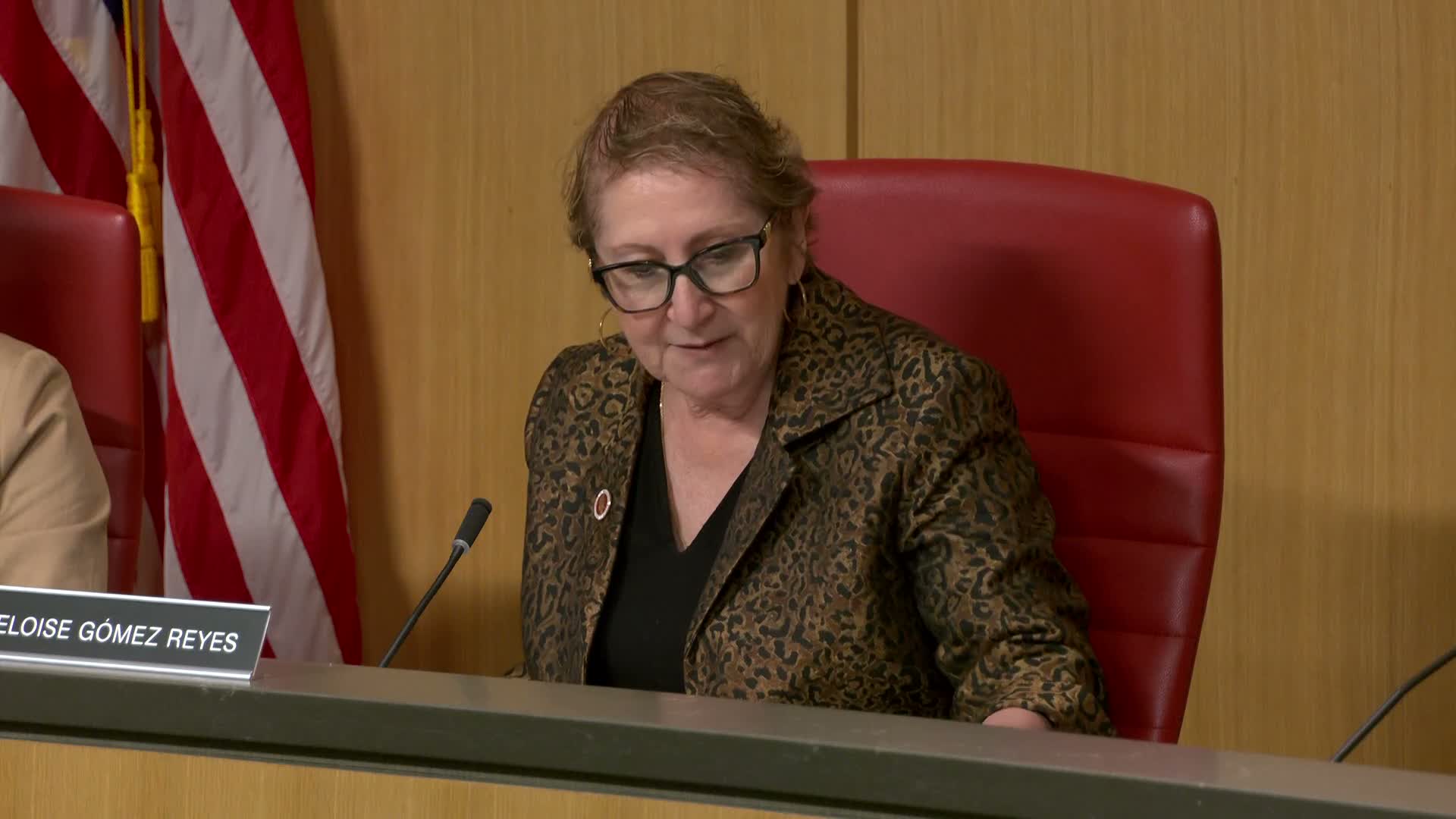
Lauren Greenwood, the senior deputy for legislative and external affairs at GoBiz, opened the subcommittee’s first discussion item and laid out the administration’s plan to implement SB 254 and a California Transmission Accelerator Revolving Fund funded by Proposition 4.
"Our BCP before you includes a request for staffing and resources, nearly $26,000,000 in total over program administration over five years," Greenwood told the committee, asking for 10 limited‑term positions to evaluate projects, manage incoming Prop 4 funds and support loan servicing.
The administration said the I‑Bank will evaluate projects for financial viability and monitor and service any loans for the life of the debt. Andrew Morris of the Department of Finance said state financing is intended to be seed capital that can be leveraged in capital markets: "This is essentially seed money to be able to catalyze a larger borrowing." He added the statute bars project sponsors from seeking a rate of return on the portion financed by the state so they cannot recoup that portion in customer rates.
Helen Kirsty of the Legislative Analyst’s Office said the proposal is broadly consistent with Prop 4 and the implementing legislation but stressed its scale: "This is a very significant size new program — I think the largest single appropriation for a new program in this year’s Prop 4 budget." LAO urged the Legislature to consider providing statutory direction on program operations if it wants a specific approach rather than leaving decisions entirely to the administration.
Committee members pressed officials on safeguards for state funds, asking how the I‑Bank would protect revolving‑fund capital if projects were delayed or cancelled. I‑Bank and Finance staff pointed to standard trustee drawdown mechanisms, counterparty financial analyses and syndication strategies that would limit up‑front transfers to developers.
Why it matters: SB 254 and Proposition 4 created a new financing tool aimed at accelerating high‑cost transmission needed for California’s clean‑energy transition. The subcommittee’s questions reflected concern about protecting public funds, ensuring accountability, and whether the financing will actually lower costs for ratepayers.
The subcommittee held the item open; no vote was taken. Staff said more implementation detail and consultant analysis will be necessary before the Legislature decides whether to add statutory direction or adjust the request.
"Our BCP before you includes a request for staffing and resources, nearly $26,000,000 in total over program administration over five years," Greenwood told the committee, asking for 10 limited‑term positions to evaluate projects, manage incoming Prop 4 funds and support loan servicing.
The administration said the I‑Bank will evaluate projects for financial viability and monitor and service any loans for the life of the debt. Andrew Morris of the Department of Finance said state financing is intended to be seed capital that can be leveraged in capital markets: "This is essentially seed money to be able to catalyze a larger borrowing." He added the statute bars project sponsors from seeking a rate of return on the portion financed by the state so they cannot recoup that portion in customer rates.
Helen Kirsty of the Legislative Analyst’s Office said the proposal is broadly consistent with Prop 4 and the implementing legislation but stressed its scale: "This is a very significant size new program — I think the largest single appropriation for a new program in this year’s Prop 4 budget." LAO urged the Legislature to consider providing statutory direction on program operations if it wants a specific approach rather than leaving decisions entirely to the administration.
Committee members pressed officials on safeguards for state funds, asking how the I‑Bank would protect revolving‑fund capital if projects were delayed or cancelled. I‑Bank and Finance staff pointed to standard trustee drawdown mechanisms, counterparty financial analyses and syndication strategies that would limit up‑front transfers to developers.
Why it matters: SB 254 and Proposition 4 created a new financing tool aimed at accelerating high‑cost transmission needed for California’s clean‑energy transition. The subcommittee’s questions reflected concern about protecting public funds, ensuring accountability, and whether the financing will actually lower costs for ratepayers.
The subcommittee held the item open; no vote was taken. Staff said more implementation detail and consultant analysis will be necessary before the Legislature decides whether to add statutory direction or adjust the request.
Don't Miss a Word: See the Full Meeting!
Go beyond summaries. Unlock every video, transcript, and key insight with a Founder Membership.
✓
Get instant access to full meeting videos
✓
Search and clip any phrase from complete transcripts
✓
Receive AI-powered summaries & custom alerts
✓
Enjoy lifetime, unrestricted access to government data
30-day money-back guarantee
