Marshfield tells court MBTA Communities law forced costly compliance; Commonwealth calls costs incidental
March 06, 2026 | Judicial - Supreme Court, Judicial, Massachusetts
This article was created by AI summarizing key points discussed. AI makes mistakes, so for full details and context, please refer to the video of the full meeting. Please report any errors so we can fix them. Report an error »
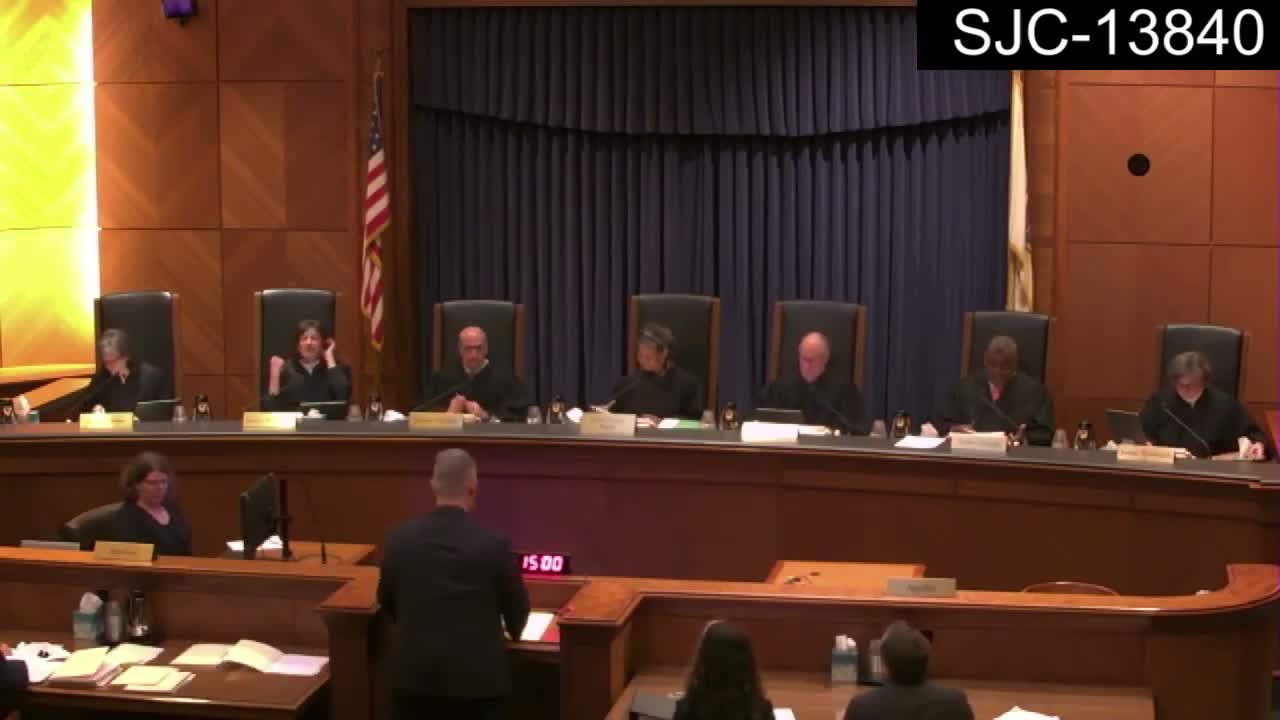
Attorney Robert Galvin told the Massachusetts Supreme Judicial Court that the MBTA Communities Act compelled the Town of Marshfield to adopt a multifamily housing district and that implementing the statute and its implementing guidelines imposed substantial, non-incidental costs on the town.
"There were 22 pages of guidelines promulgated," Galvin said, explaining Marshfield hired an additional planner, developed technical modeling, and engaged repeatedly with the state’s housing and livable communities staff to identify feasible locations, sizes and densities for a compliant district. "We had to incur expense associated with that," he said.
The Commonwealth disagreed. "As a matter of law, the MBTA Communities Act does not impose anything beyond an incidental administration expense on Marshfield or any other community," Esme Caramelo, counsel for the Commonwealth, told the court. Caramelo said the statute requires communities to have zoning that permits multifamily housing as of right and that the steps to establish a compliant zone are generally limited and administrative.
Why the case matters: the court must decide whether the statute creates a direct, compensable local cost under the state’s unfunded-mandates framework or whether the burdens Marshfield described fall within the incidental-administration exception. That distinction affects whether towns may pursue relief or recovery for expenses tied to implementing state zoning mandates.
At argument Galvin said Marshfield could not simply "adopt a blanket" allowance for multifamily housing because, he said, the statute required the development of a district meeting particular size, density and locational guidelines and that following the guidelines required technical modeling and exclusions of unsuitable parcels. He said the town had "no experience" applying the regulations and thus hired staff and consultants to produce the modeling and draft the bylaw presented to town meeting.
Multiple justices questioned that account by pointing to less costly compliance options. One justice asked why Marshfield could not comply by allowing multifamily housing in every district — a one-sentence change the bench described as a viable alternative — and whether choosing a more elaborate compliance path could be treated as a voluntary municipal policy choice rather than a statutorily imposed cost. "Forcing you to make difficult choices is not a mandate," one justice observed.
Galvin countered that the statute and the implementing guidance together required something more than a simple code change and that prior decisions recognizing voluntary municipal choices did not resolve the question before the court. He also told the court the complaint incorporated determinations by the Division of Local Mandates and attached an affidavit describing technical expenses and "hundreds of hours" spent drafting the bylaw.
The bench pressed procedural and evidentiary questions as well: several justices emphasized that this appeal is from a motion to dismiss and asked Galvin to point to specific paragraphs in the complaint alleging the detailed costs he described. The justices questioned whether DLM determinations about other towns — and DLM letters that, according to the Commonwealth, contain no line-item calculations — could substitute for Marshfield’s own pleaded facts.
Caramelo responded that the Worcester and related precedents establish the question whether a statute imposes a mandate is one of law for the court, and that the statutory framework contemplates a narrow direct-cost obligation with an incidental-administration exception. She characterized many of the activities Marshfield described as optional policy choices towns may make to tailor a zone (for example, adding affordability requirements or avoiding particular neighborhoods) rather than mandatory elements the State imposed. She also told the court that the guidance-compliance process is largely a checklist submission — downloading state mapping, marking parcels and submitting an auto-calculated form — and said the DLM letters relied on by Marshfield contained no calculations to incorporate by reference.
The Commonwealth also flagged a separate, shorter argument about the town-meeting voting-rights claim and standing under the statutes cited by Marshfield; that argument was raised toward the close of the proceedings.
The court heard argument on both the statutory/unfunded-mandate issue and the procedural pleading questions; no ruling was announced at argument. The case will await the court’s decision on whether the MBTA Communities Act imposes a compensable direct cost or whether Marshfield’s alleged expenses fall within the incidental-administration exception and whether Marshfield’s complaint pleaded sufficient, specific factual allegations to survive a Rule 12 motion to dismiss.
"There were 22 pages of guidelines promulgated," Galvin said, explaining Marshfield hired an additional planner, developed technical modeling, and engaged repeatedly with the state’s housing and livable communities staff to identify feasible locations, sizes and densities for a compliant district. "We had to incur expense associated with that," he said.
The Commonwealth disagreed. "As a matter of law, the MBTA Communities Act does not impose anything beyond an incidental administration expense on Marshfield or any other community," Esme Caramelo, counsel for the Commonwealth, told the court. Caramelo said the statute requires communities to have zoning that permits multifamily housing as of right and that the steps to establish a compliant zone are generally limited and administrative.
Why the case matters: the court must decide whether the statute creates a direct, compensable local cost under the state’s unfunded-mandates framework or whether the burdens Marshfield described fall within the incidental-administration exception. That distinction affects whether towns may pursue relief or recovery for expenses tied to implementing state zoning mandates.
At argument Galvin said Marshfield could not simply "adopt a blanket" allowance for multifamily housing because, he said, the statute required the development of a district meeting particular size, density and locational guidelines and that following the guidelines required technical modeling and exclusions of unsuitable parcels. He said the town had "no experience" applying the regulations and thus hired staff and consultants to produce the modeling and draft the bylaw presented to town meeting.
Multiple justices questioned that account by pointing to less costly compliance options. One justice asked why Marshfield could not comply by allowing multifamily housing in every district — a one-sentence change the bench described as a viable alternative — and whether choosing a more elaborate compliance path could be treated as a voluntary municipal policy choice rather than a statutorily imposed cost. "Forcing you to make difficult choices is not a mandate," one justice observed.
Galvin countered that the statute and the implementing guidance together required something more than a simple code change and that prior decisions recognizing voluntary municipal choices did not resolve the question before the court. He also told the court the complaint incorporated determinations by the Division of Local Mandates and attached an affidavit describing technical expenses and "hundreds of hours" spent drafting the bylaw.
The bench pressed procedural and evidentiary questions as well: several justices emphasized that this appeal is from a motion to dismiss and asked Galvin to point to specific paragraphs in the complaint alleging the detailed costs he described. The justices questioned whether DLM determinations about other towns — and DLM letters that, according to the Commonwealth, contain no line-item calculations — could substitute for Marshfield’s own pleaded facts.
Caramelo responded that the Worcester and related precedents establish the question whether a statute imposes a mandate is one of law for the court, and that the statutory framework contemplates a narrow direct-cost obligation with an incidental-administration exception. She characterized many of the activities Marshfield described as optional policy choices towns may make to tailor a zone (for example, adding affordability requirements or avoiding particular neighborhoods) rather than mandatory elements the State imposed. She also told the court that the guidance-compliance process is largely a checklist submission — downloading state mapping, marking parcels and submitting an auto-calculated form — and said the DLM letters relied on by Marshfield contained no calculations to incorporate by reference.
The Commonwealth also flagged a separate, shorter argument about the town-meeting voting-rights claim and standing under the statutes cited by Marshfield; that argument was raised toward the close of the proceedings.
The court heard argument on both the statutory/unfunded-mandate issue and the procedural pleading questions; no ruling was announced at argument. The case will await the court’s decision on whether the MBTA Communities Act imposes a compensable direct cost or whether Marshfield’s alleged expenses fall within the incidental-administration exception and whether Marshfield’s complaint pleaded sufficient, specific factual allegations to survive a Rule 12 motion to dismiss.
View the Full Meeting & All Its Details
This article offers just a summary. Unlock complete video, transcripts, and insights as a Founder Member.
✓
Watch full, unedited meeting videos
✓
Search every word spoken in unlimited transcripts
✓
AI summaries & real-time alerts (all government levels)
✓
Permanent access to expanding government content
30-day money-back guarantee
