House panel presses Pentagon on speeding munitions production, multiyear contracts to shore up industrial base
March 05, 2026 | Armed Services: House Committee, Standing Committees - House & Senate, Congressional Hearings Compilation, Legislative, Federal
This article was created by AI summarizing key points discussed. AI makes mistakes, so for full details and context, please refer to the video of the full meeting. Please report any errors so we can fix them. Report an error »
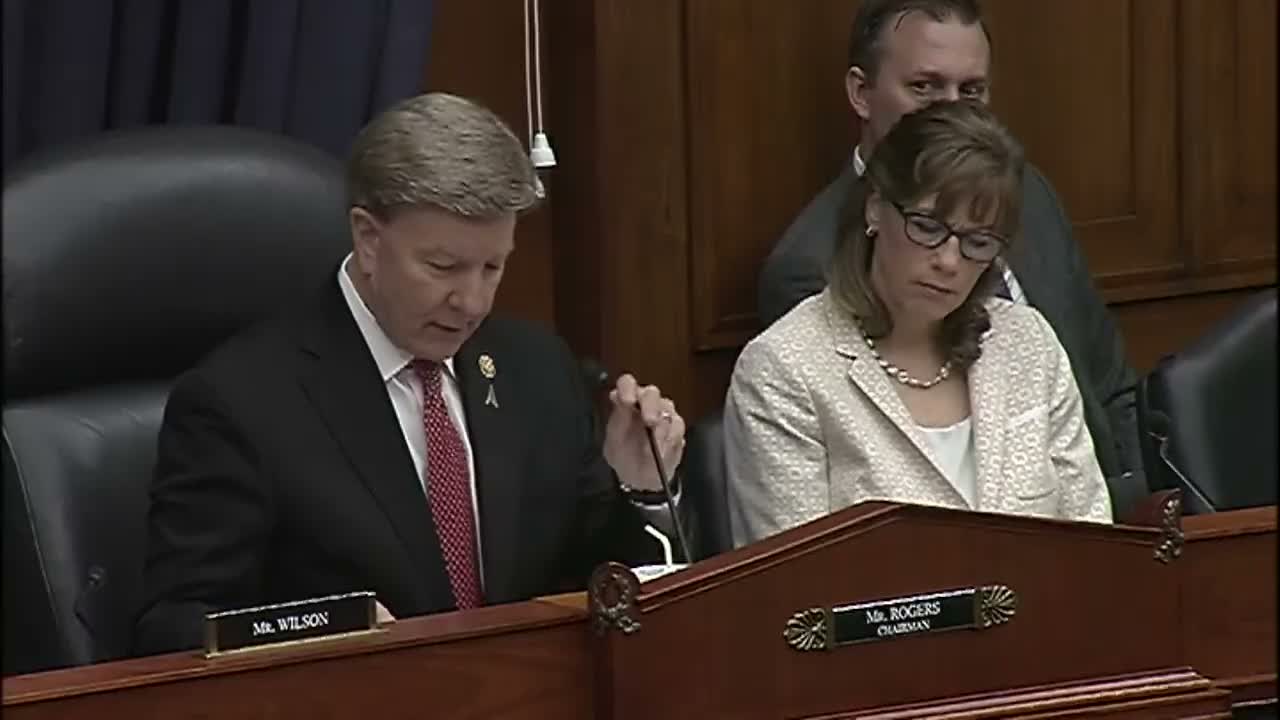
Chairman Mike Rogers opened the hearing by calling revitalizing the nation's defense industrial base the committee's top priority, saying U.S. capacity had been allowed to 'atrophy' since the Cold War and that multiyear procurement and domestic reindustrialization are needed to support service members.
Undersecretary of Defense for Acquisition and Sustainment Michael Duffy told the committee the department is using multiyear authorities and targeted investments to send stable demand signals to industry. 'Funding is absolutely critical,' he said, adding the department has negotiated framework agreements that will expand production: 'we've announced framework agreements with Lockheed Martin to more than triple PAC-3 production and quadruple THAAD production, and with RTX to expand Tomahawk, AMRAAM and Standard Missile series production.'
Duffy said the department also made a landmark $1 billion investment in L3 Harris to expand domestic solid rocket motor capacity and has directed roughly $23 billion to critical-mineral efforts in the last year to secure domestic sources for gallium, scandium and germanium. He described equity investments as a tool that can 'crowd in private capital' and return value to taxpayers, and said the Industrial Base Assessment and Sustainment (IBAS) fund and the Defense Production Act are being used to address acute choke points.
Members pressed for details and accountability. Ranking Member Smith and others pressed whether equity stakes could distort markets and asked what regulatory red tape the department had identified; Duffy said the department would follow up with specifics and emphasized that many of the shortfalls stem from demand instability rather than a single regulation. Rep. Courtney and other members urged rapid action on Block 6 submarine multiyear procurement, which Duffy said is 'very close' and that the department is working with the Navy to conclude.
Lawmakers repeatedly raised workforce gaps. Rep. Norcross and others noted some 400,000 open manufacturing jobs within the defense industrial base. Duffy pointed to regional programs, K–12 partnerships, and pilots such as accelerated training and the Defense Production Act-funded projects designed to transition to stable workforce initiatives.
On sustainment, members highlighted readiness shortfalls such as F-35 availability and amphibious ship readiness. Duffy said sustainment accounts for the bulk of lifecycle cost and praised modular open systems architecture (MOSA) as a way to make platforms more upgradable and resilient.
Several members demanded concrete monitoring and milestones for the department's equity investments. Duffy said the deals include milestones and company counter-investments that can be tracked and that the department is treating its equity holdings as an economic stake without seeking control.
The hearing produced no formal votes. Members asked for additional follow-ups, including an accounting of equity deals; Duffy agreed to provide requested materials. The committee adjourned with multiple follow-ups expected on timelines, contract specifics and workforce road maps.
The committee indicated it will press the department for written details on when multiyear contracts will be executed, how equity-investment milestones will be monitored, and how workforce pilots will be transitioned to stable programs.
Undersecretary of Defense for Acquisition and Sustainment Michael Duffy told the committee the department is using multiyear authorities and targeted investments to send stable demand signals to industry. 'Funding is absolutely critical,' he said, adding the department has negotiated framework agreements that will expand production: 'we've announced framework agreements with Lockheed Martin to more than triple PAC-3 production and quadruple THAAD production, and with RTX to expand Tomahawk, AMRAAM and Standard Missile series production.'
Duffy said the department also made a landmark $1 billion investment in L3 Harris to expand domestic solid rocket motor capacity and has directed roughly $23 billion to critical-mineral efforts in the last year to secure domestic sources for gallium, scandium and germanium. He described equity investments as a tool that can 'crowd in private capital' and return value to taxpayers, and said the Industrial Base Assessment and Sustainment (IBAS) fund and the Defense Production Act are being used to address acute choke points.
Members pressed for details and accountability. Ranking Member Smith and others pressed whether equity stakes could distort markets and asked what regulatory red tape the department had identified; Duffy said the department would follow up with specifics and emphasized that many of the shortfalls stem from demand instability rather than a single regulation. Rep. Courtney and other members urged rapid action on Block 6 submarine multiyear procurement, which Duffy said is 'very close' and that the department is working with the Navy to conclude.
Lawmakers repeatedly raised workforce gaps. Rep. Norcross and others noted some 400,000 open manufacturing jobs within the defense industrial base. Duffy pointed to regional programs, K–12 partnerships, and pilots such as accelerated training and the Defense Production Act-funded projects designed to transition to stable workforce initiatives.
On sustainment, members highlighted readiness shortfalls such as F-35 availability and amphibious ship readiness. Duffy said sustainment accounts for the bulk of lifecycle cost and praised modular open systems architecture (MOSA) as a way to make platforms more upgradable and resilient.
Several members demanded concrete monitoring and milestones for the department's equity investments. Duffy said the deals include milestones and company counter-investments that can be tracked and that the department is treating its equity holdings as an economic stake without seeking control.
The hearing produced no formal votes. Members asked for additional follow-ups, including an accounting of equity deals; Duffy agreed to provide requested materials. The committee adjourned with multiple follow-ups expected on timelines, contract specifics and workforce road maps.
The committee indicated it will press the department for written details on when multiyear contracts will be executed, how equity-investment milestones will be monitored, and how workforce pilots will be transitioned to stable programs.
Don't Miss a Word: See the Full Meeting!
Go beyond summaries. Unlock every video, transcript, and key insight with a Founder Membership.
✓
Get instant access to full meeting videos
✓
Search and clip any phrase from complete transcripts
✓
Receive AI-powered summaries & custom alerts
✓
Enjoy lifetime, unrestricted access to government data
30-day money-back guarantee
