Supporters say constitutional environmental-rights amendment would give residents stronger tools; industry warns of litigation risk
March 05, 2026 | Government Administration and Elections, House of Representatives, Committees, Legislative, Connecticut
This article was created by AI summarizing key points discussed. AI makes mistakes, so for full details and context, please refer to the video of the full meeting. Please report any errors so we can fix them. Report an error »
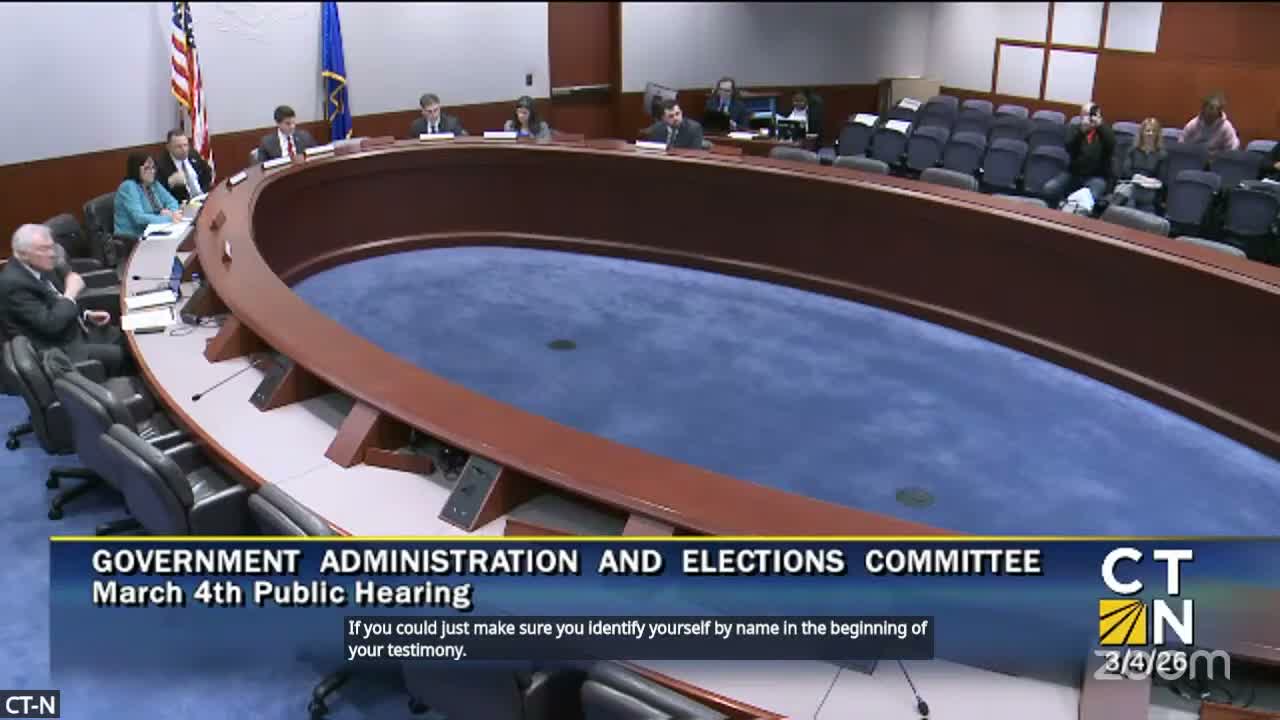
A broad swath of environmental and civic groups told the Government Administration and Elections Committee they back SJ 37, a proposed constitutional amendment that would recognize a right to a clean and healthy environment and a safe and stable climate.
Maya Van Rossum, an environmental attorney and national advocate for constitutional green amendments, said similar provisions in New York, Pennsylvania and Montana have helped communities enforce environmental protections and hold government accountable. “The amendment cannot be used in lawsuits between neighbors or between private parties,” she said, adding that the provision focuses on government action and agency decision-making.
Supporters said the amendment is a necessary backstop as federal protections weaken. Mike Ungaro, chair of the Connecticut Sierra Club, told the committee the amendment would strengthen enforcement where state action is falling short and would not lead to a flood of frivolous cases. Community witnesses emphasized environmental-justice impacts and cited permitting processes where residents struggled to win adjudicatory hearings.
Industry speakers strongly opposed SJ 37. Chris Herb, representing 600 family-owned Connecticut energy marketers, said the amendment’s language could expose small local businesses to lawsuits and would undermine investment and service continuity. Steve Sack, a fuel distributor, warned the proposal would be a “candy store” for litigants and could cost taxpayers billions.
Lawmakers probed both sides on legal scope. Proponents said case law from other states shows courts focus challenges on government action, not private–party disputes; opponents said the amendment could shift policy decisions from legislators to judges and create a patchwork of court-driven rulings. Several witnesses recommended careful drafting to limit unintended private litigation and to clarify the amendment’s government-focused application.
The committee heard a steady stream of supporters urging a public vote, while industry groups urged rejection or careful revision to avoid expansive litigation exposure.
Maya Van Rossum, an environmental attorney and national advocate for constitutional green amendments, said similar provisions in New York, Pennsylvania and Montana have helped communities enforce environmental protections and hold government accountable. “The amendment cannot be used in lawsuits between neighbors or between private parties,” she said, adding that the provision focuses on government action and agency decision-making.
Supporters said the amendment is a necessary backstop as federal protections weaken. Mike Ungaro, chair of the Connecticut Sierra Club, told the committee the amendment would strengthen enforcement where state action is falling short and would not lead to a flood of frivolous cases. Community witnesses emphasized environmental-justice impacts and cited permitting processes where residents struggled to win adjudicatory hearings.
Industry speakers strongly opposed SJ 37. Chris Herb, representing 600 family-owned Connecticut energy marketers, said the amendment’s language could expose small local businesses to lawsuits and would undermine investment and service continuity. Steve Sack, a fuel distributor, warned the proposal would be a “candy store” for litigants and could cost taxpayers billions.
Lawmakers probed both sides on legal scope. Proponents said case law from other states shows courts focus challenges on government action, not private–party disputes; opponents said the amendment could shift policy decisions from legislators to judges and create a patchwork of court-driven rulings. Several witnesses recommended careful drafting to limit unintended private litigation and to clarify the amendment’s government-focused application.
The committee heard a steady stream of supporters urging a public vote, while industry groups urged rejection or careful revision to avoid expansive litigation exposure.
Don't Miss a Word: See the Full Meeting!
Go beyond summaries. Unlock every video, transcript, and key insight with a Founder Membership.
✓
Get instant access to full meeting videos
✓
Search and clip any phrase from complete transcripts
✓
Receive AI-powered summaries & custom alerts
✓
Enjoy lifetime, unrestricted access to government data
30-day money-back guarantee
