SEEC urges law change to let complex election investigations continue past one‑year deadline
March 04, 2026 | Government Oversight, House of Representatives, Committees, Legislative, Connecticut
This article was created by AI summarizing key points discussed. AI makes mistakes, so for full details and context, please refer to the video of the full meeting. Please report any errors so we can fix them. Report an error »
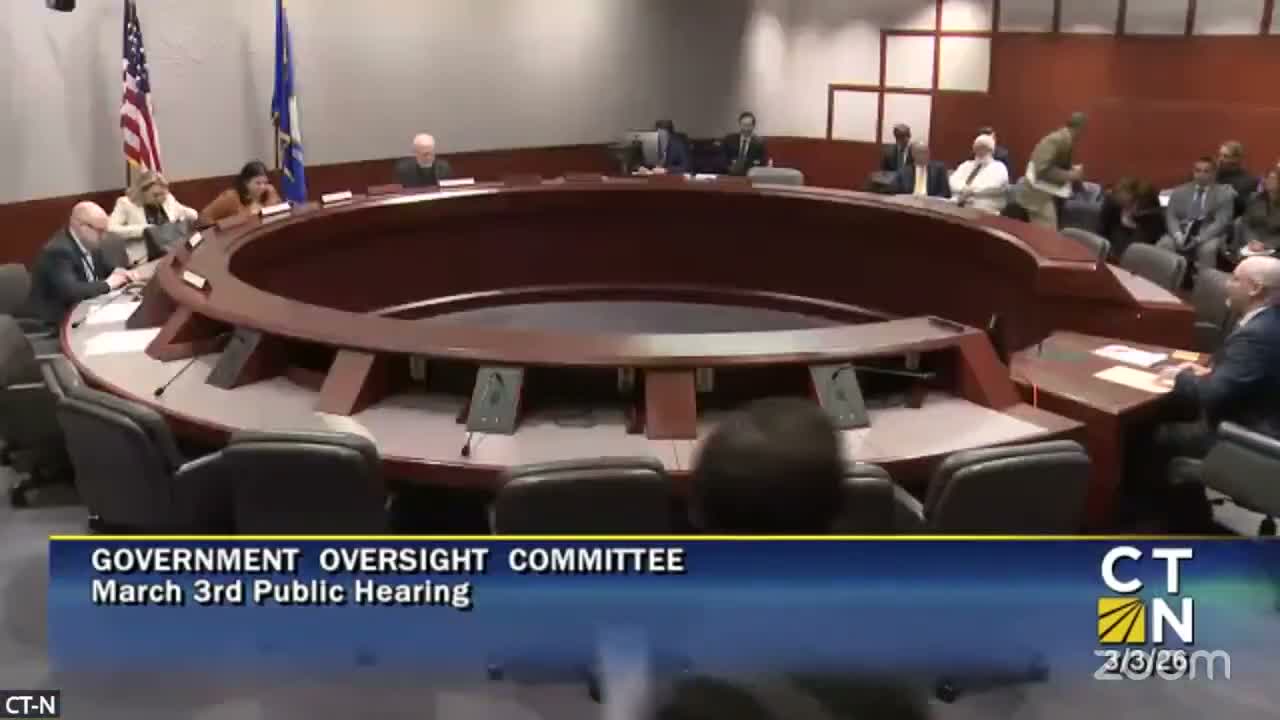
Ryan Burns, executive director and general counsel of the State Elections Enforcement Commission, told the Government Oversight Committee on March 3 that the agency supports House Bill 55 53 52 because it would let the SEEC complete complex investigations that may not finish within the current one‑year administrative deadline.
Burns said the bill does two principal things: it preserves the agency’s ability to continue probes of the most egregious election‑law violations beyond the one‑year administrative hearing limit, and it clarifies a recent change to section 9‑706 so the SEEC can investigate and disqualify fraud in the Citizens’ Election Program. He emphasized that the one‑year limit on campaign‑finance investigations remains in place for other matters.
The SEEC official described the resource‑ and evidence‑intensive nature of some investigations: cases may include tens of thousands of documents, weeks of field work, dozens of witness interviews and depositions, and security footage that can take hundreds of hours to review. He said the bill is not an agency funding request; rather, it asks that the agency be given the authority to complete investigations that begin under the present statutory scheme.
Burns gave a concrete example of a red‑flag pattern the agency has seen in the Citizens’ Election Program: stacks of contributor certification cards bearing similar handwriting, different names, same date and small cash amounts that, when aggregated, can materially affect grant eligibility. Under current statutory changes, some of those patterns may be harder to disqualify; the proposed amendment would restore the agency’s ability to follow leads and, when warranted, disqualify fraudulent contributions so public funds are not awarded on false representations of support.
Committee members pressed Burns to clarify the difference between classic voter‑fraud concerns at polling places and tampering that occurs outside polling places (for example, absentee‑ballot handling and unauthorized collection). Burns told the committee that in‑person voter impersonation is rarely the subject of SEEC investigation, while absentee‑ballot interference and improper collection or completion of ballots have become more common and are treated seriously.
On resources, Burns said auditors and investigators already manage many tasks, and the bill does not include a direct request for additional staff. He acknowledged the agency likely needs more resources to handle its full workload but deferred that discussion to a different process.
The committee did not take a vote. Members asked Burns to provide follow‑up details about audit procedures, triggers for inquiry and examples of the patterns the SEEC looks for in certification cards.
Burns said the bill does two principal things: it preserves the agency’s ability to continue probes of the most egregious election‑law violations beyond the one‑year administrative hearing limit, and it clarifies a recent change to section 9‑706 so the SEEC can investigate and disqualify fraud in the Citizens’ Election Program. He emphasized that the one‑year limit on campaign‑finance investigations remains in place for other matters.
The SEEC official described the resource‑ and evidence‑intensive nature of some investigations: cases may include tens of thousands of documents, weeks of field work, dozens of witness interviews and depositions, and security footage that can take hundreds of hours to review. He said the bill is not an agency funding request; rather, it asks that the agency be given the authority to complete investigations that begin under the present statutory scheme.
Burns gave a concrete example of a red‑flag pattern the agency has seen in the Citizens’ Election Program: stacks of contributor certification cards bearing similar handwriting, different names, same date and small cash amounts that, when aggregated, can materially affect grant eligibility. Under current statutory changes, some of those patterns may be harder to disqualify; the proposed amendment would restore the agency’s ability to follow leads and, when warranted, disqualify fraudulent contributions so public funds are not awarded on false representations of support.
Committee members pressed Burns to clarify the difference between classic voter‑fraud concerns at polling places and tampering that occurs outside polling places (for example, absentee‑ballot handling and unauthorized collection). Burns told the committee that in‑person voter impersonation is rarely the subject of SEEC investigation, while absentee‑ballot interference and improper collection or completion of ballots have become more common and are treated seriously.
On resources, Burns said auditors and investigators already manage many tasks, and the bill does not include a direct request for additional staff. He acknowledged the agency likely needs more resources to handle its full workload but deferred that discussion to a different process.
The committee did not take a vote. Members asked Burns to provide follow‑up details about audit procedures, triggers for inquiry and examples of the patterns the SEEC looks for in certification cards.
Don't Miss a Word: See the Full Meeting!
Go beyond summaries. Unlock every video, transcript, and key insight with a Founder Membership.
✓
Get instant access to full meeting videos
✓
Search and clip any phrase from complete transcripts
✓
Receive AI-powered summaries & custom alerts
✓
Enjoy lifetime, unrestricted access to government data
30-day money-back guarantee
