Lodi council hears progress report on Access Center as construction delays raise costs and schedule
March 05, 2026 | Lodi City, San Joaquin County, California
This article was created by AI summarizing key points discussed. AI makes mistakes, so for full details and context, please refer to the video of the full meeting. Please report any errors so we can fix them. Report an error »
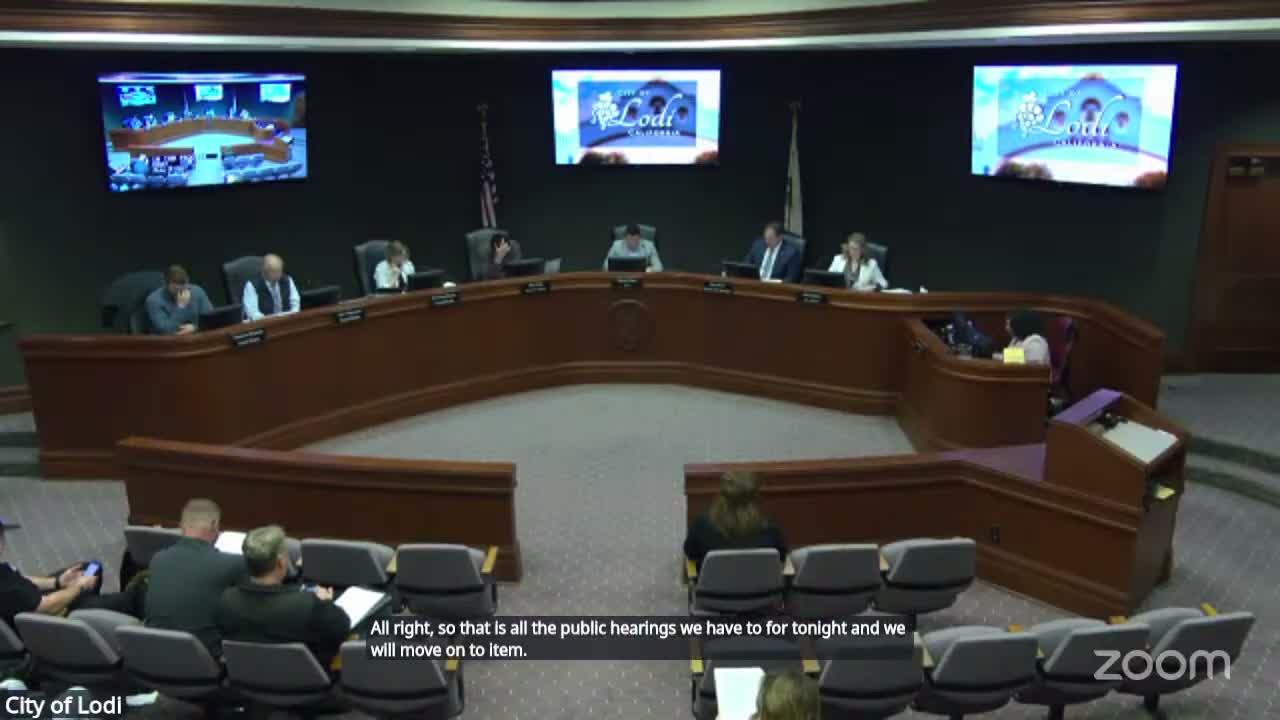
City staff and the nonprofit operator of Lodi’s temporary access center briefed the Lodi City Council on March 4 about construction, budget status and program outcomes as the city builds a permanent facility.
Economic development and community development staff said the original construction contract was just under $9.9 million and that environmental issues and subsequent change orders have increased the project’s cost and pushed the anticipated completion date to Sept. 30, 2026. Staff reported a recent executed change order of $1,448,927.50 with remaining change order authority of $551,072.50 and said they are monitoring schedule and budget closely. The city’s presentation noted the original change‑order authority and additional authority approved to date but cautioned that unforeseen conditions could affect the timeline.
Outreach Ministries International (OMI), which operates the temporary access center, told council it had completed 174 successful transitions to housing in the program’s first 12 months and 225 transitions through 15 months of operation — an average of more than 14 people per month. OMI reported that 61 clients have gained employment since the operator took over services and that 43% of clients are age 55 or older. The operator also said follow‑up tracking shows a roughly 66% rate of continued engagement for participants who enter program services and an 84.3% follow‑up success rate for those who were housed.
Council members pressed staff on data‑tracking, follow‑up methodology and costs. One council member who reviewed the numbers said, based on the presentation, the city’s per‑person investment was “about $5,000 per person” (as presented by staff and discussed in the meeting) for the city’s portion of the program, and contrasted that with county and state averages cited during the discussion. The presenter said Lodi’s average lengths of stay were lower than county and national averages and noted the city is tracking unique individuals to avoid double‑counting.
Staff also presented year‑one operator budget figures. The operating contract budget was $1,100,000 for the year; staff reported the operator expended approximately $1,000,032.07 through the reporting period, a modest savings compared with the approved budget, and noted an average monthly invoice of about $83,000 through Jan. 31, 2026. Staff explained that some contract components — such as the Salvation Army meal and laundry contract — were separate line items and that salaries and meals were major cost categories.
On construction, city staff said work began in April 2025, that crews recently installed roof components and that multiple trades will be sequenced as the structure is enclosed. The city acknowledged schedule slippage related to environmental remediation and said change orders were approved to address those issues; staff offered to continue presenting construction update slides at quarterly meetings.
Council members and the operator discussed long‑term tracking and recidivism, with OMI describing how the operator follows up with clients and the limits of follow‑up coverage. Staff reiterated that the access center receives referrals primarily via warm handoffs from partner agencies, and does not accept undifferentiated walk‑ins from outside the service area. Mayor Ramon Yapes and council members thanked staff and the operator for the work and data shared and asked staff to continue refining measurable outcomes.
Next steps: staff said they will continue monitoring construction, return with updates if the project experiences significant changes, and maintain quarterly reporting on operations.
Economic development and community development staff said the original construction contract was just under $9.9 million and that environmental issues and subsequent change orders have increased the project’s cost and pushed the anticipated completion date to Sept. 30, 2026. Staff reported a recent executed change order of $1,448,927.50 with remaining change order authority of $551,072.50 and said they are monitoring schedule and budget closely. The city’s presentation noted the original change‑order authority and additional authority approved to date but cautioned that unforeseen conditions could affect the timeline.
Outreach Ministries International (OMI), which operates the temporary access center, told council it had completed 174 successful transitions to housing in the program’s first 12 months and 225 transitions through 15 months of operation — an average of more than 14 people per month. OMI reported that 61 clients have gained employment since the operator took over services and that 43% of clients are age 55 or older. The operator also said follow‑up tracking shows a roughly 66% rate of continued engagement for participants who enter program services and an 84.3% follow‑up success rate for those who were housed.
Council members pressed staff on data‑tracking, follow‑up methodology and costs. One council member who reviewed the numbers said, based on the presentation, the city’s per‑person investment was “about $5,000 per person” (as presented by staff and discussed in the meeting) for the city’s portion of the program, and contrasted that with county and state averages cited during the discussion. The presenter said Lodi’s average lengths of stay were lower than county and national averages and noted the city is tracking unique individuals to avoid double‑counting.
Staff also presented year‑one operator budget figures. The operating contract budget was $1,100,000 for the year; staff reported the operator expended approximately $1,000,032.07 through the reporting period, a modest savings compared with the approved budget, and noted an average monthly invoice of about $83,000 through Jan. 31, 2026. Staff explained that some contract components — such as the Salvation Army meal and laundry contract — were separate line items and that salaries and meals were major cost categories.
On construction, city staff said work began in April 2025, that crews recently installed roof components and that multiple trades will be sequenced as the structure is enclosed. The city acknowledged schedule slippage related to environmental remediation and said change orders were approved to address those issues; staff offered to continue presenting construction update slides at quarterly meetings.
Council members and the operator discussed long‑term tracking and recidivism, with OMI describing how the operator follows up with clients and the limits of follow‑up coverage. Staff reiterated that the access center receives referrals primarily via warm handoffs from partner agencies, and does not accept undifferentiated walk‑ins from outside the service area. Mayor Ramon Yapes and council members thanked staff and the operator for the work and data shared and asked staff to continue refining measurable outcomes.
Next steps: staff said they will continue monitoring construction, return with updates if the project experiences significant changes, and maintain quarterly reporting on operations.
Don't Miss a Word: See the Full Meeting!
Go beyond summaries. Unlock every video, transcript, and key insight with a Founder Membership.
✓
Get instant access to full meeting videos
✓
Search and clip any phrase from complete transcripts
✓
Receive AI-powered summaries & custom alerts
✓
Enjoy lifetime, unrestricted access to government data
30-day money-back guarantee
