IRS CEO says filing season running smoothly as lawmakers press on data disclosures, refunds and modernization
March 05, 2026 | Ways and Means: House Committee, Standing Committees - House & Senate, Congressional Hearings Compilation, Legislative, Federal
This article was created by AI summarizing key points discussed. AI makes mistakes, so for full details and context, please refer to the video of the full meeting. Please report any errors so we can fix them. Report an error »
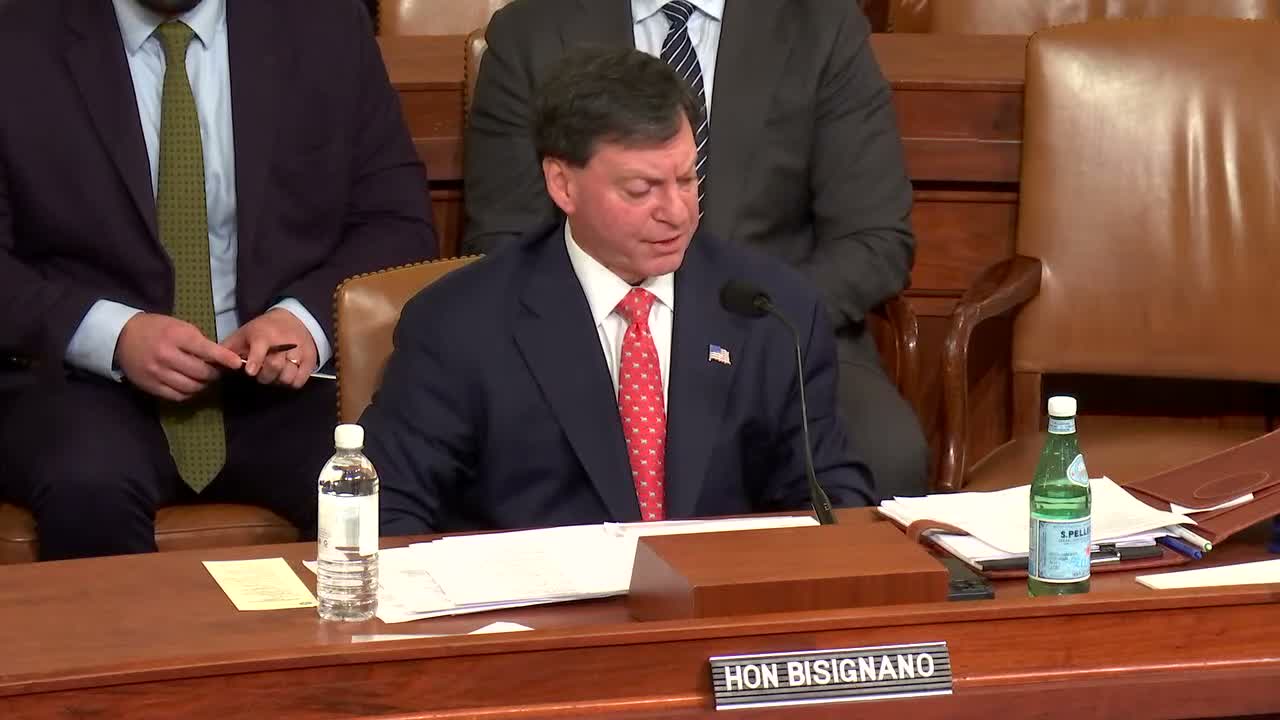
The House Ways and Means Committee on March 2 heard from Frank Bizignano, the Internal Revenue Service’s chief executive officer, who told lawmakers the 2026 filing season opened on schedule and that the agency has received more than 55 million individual returns and issued roughly 37 million refunds totaling about $137 billion through March 2.
Bizignano said the IRS is seeing heavier use of online services — "visits to irs.gov increased 43% over last year" — and credited new technology and organizational changes for faster processing and shorter wait times. "Bigger refunds, quicker refunds, and an easier IRS to operate through," he told the committee, saying amended-return processing that once took about 16 weeks is on track to be reduced to single-digit days.
The committee’s Democratic members used the hearing to demand answers about court findings and injunctions that the IRS unlawfully shared taxpayer information with the Department of Homeland Security and ICE. Multiple members repeatedly cited a federal finding that roughly 42,695 disclosures were unlawful and asked whether the agency continued to share data and what accountability steps have been taken.
Bizignano declined to comment on pending litigation, saying several matters are the subject of ongoing court proceedings. He added that a new risk-management function reporting to senior leadership and outside reviews are under way to safeguard taxpayer data. "Risk management’s a primary job," he said, adding that the IRS is conducting a "thorough review of all cyber" matters and has instituted weekly risk-management meetings.
On implementation of the Working Families Tax Cuts, Bizignano highlighted a series of provisions he said are driving the increase in average refunds — including the no-tax-on-tips and no-tax-on-overtime provisions and a new senior deduction. He told the panel that returns with Schedule 1A — a form tied to those provisions — are generating an average refund increase of about $775 so far and that the agency’s analytics project that figure will trend toward the $1,000 the administration cited.
The CEO also announced a specific implementation step for the adoption tax credit: for tax year 2025, carryforward amounts of the adoption credit for prior years are refundable up to $5,000 per qualifying child and the IRS would publish additional information soon.
Republican members emphasized modernization and service improvements. Several asked Bizignano how his private-sector technology and payments experience is being used at the IRS. He pointed to organizational streamlining, a stronger CIO, and automation efforts intended to support "straight-through processing" of returns.
Members on both sides pressed the agency on audits, enforcement and the "tax gap" — the difference between taxes owed and taxes collected. Bizignano said the IRS is studying the addressable portion of the tax gap and plans follow-up briefings for members once research is complete. He also said the agency has redirected resources and reduced the ERTC (Employee Retention Tax Credit) backlog from over 1,000,000 items to fewer than 29,000 items currently in compliance review.
Several members raised constituent issues, including delays for filers who did not provide bank-account information, the status of taxpayer assistance centers, design and outreach for the new Trump accounts (an automatic-seeding child investment account program), and challenges for gig workers and disaster-affected filers. Bizignano said the IRS has issued hundreds of pieces of guidance this year and pledged to work with members' offices on outstanding implementation problems.
The committee made no formal votes in the hearing. Chairman Smith closed the session after advising members that written follow-up questions are due within two weeks.
What’s next: Members requested additional documents and state-by-state data on delayed refunds and sought briefings on specific implementation issues; the IRS committed to follow up in writing and in future staff briefings.
Sources: Testimony and Q&A under oath before the House Ways and Means Committee. Direct quotes are attributed to speakers who are part of the committee record.
Bizignano said the IRS is seeing heavier use of online services — "visits to irs.gov increased 43% over last year" — and credited new technology and organizational changes for faster processing and shorter wait times. "Bigger refunds, quicker refunds, and an easier IRS to operate through," he told the committee, saying amended-return processing that once took about 16 weeks is on track to be reduced to single-digit days.
The committee’s Democratic members used the hearing to demand answers about court findings and injunctions that the IRS unlawfully shared taxpayer information with the Department of Homeland Security and ICE. Multiple members repeatedly cited a federal finding that roughly 42,695 disclosures were unlawful and asked whether the agency continued to share data and what accountability steps have been taken.
Bizignano declined to comment on pending litigation, saying several matters are the subject of ongoing court proceedings. He added that a new risk-management function reporting to senior leadership and outside reviews are under way to safeguard taxpayer data. "Risk management’s a primary job," he said, adding that the IRS is conducting a "thorough review of all cyber" matters and has instituted weekly risk-management meetings.
On implementation of the Working Families Tax Cuts, Bizignano highlighted a series of provisions he said are driving the increase in average refunds — including the no-tax-on-tips and no-tax-on-overtime provisions and a new senior deduction. He told the panel that returns with Schedule 1A — a form tied to those provisions — are generating an average refund increase of about $775 so far and that the agency’s analytics project that figure will trend toward the $1,000 the administration cited.
The CEO also announced a specific implementation step for the adoption tax credit: for tax year 2025, carryforward amounts of the adoption credit for prior years are refundable up to $5,000 per qualifying child and the IRS would publish additional information soon.
Republican members emphasized modernization and service improvements. Several asked Bizignano how his private-sector technology and payments experience is being used at the IRS. He pointed to organizational streamlining, a stronger CIO, and automation efforts intended to support "straight-through processing" of returns.
Members on both sides pressed the agency on audits, enforcement and the "tax gap" — the difference between taxes owed and taxes collected. Bizignano said the IRS is studying the addressable portion of the tax gap and plans follow-up briefings for members once research is complete. He also said the agency has redirected resources and reduced the ERTC (Employee Retention Tax Credit) backlog from over 1,000,000 items to fewer than 29,000 items currently in compliance review.
Several members raised constituent issues, including delays for filers who did not provide bank-account information, the status of taxpayer assistance centers, design and outreach for the new Trump accounts (an automatic-seeding child investment account program), and challenges for gig workers and disaster-affected filers. Bizignano said the IRS has issued hundreds of pieces of guidance this year and pledged to work with members' offices on outstanding implementation problems.
The committee made no formal votes in the hearing. Chairman Smith closed the session after advising members that written follow-up questions are due within two weeks.
What’s next: Members requested additional documents and state-by-state data on delayed refunds and sought briefings on specific implementation issues; the IRS committed to follow up in writing and in future staff briefings.
Sources: Testimony and Q&A under oath before the House Ways and Means Committee. Direct quotes are attributed to speakers who are part of the committee record.
View the Full Meeting & All Its Details
This article offers just a summary. Unlock complete video, transcripts, and insights as a Founder Member.
✓
Watch full, unedited meeting videos
✓
Search every word spoken in unlimited transcripts
✓
AI summaries & real-time alerts (all government levels)
✓
Permanent access to expanding government content
30-day money-back guarantee
