Agency official urges multilateral action to curb illicit trade in critical minerals
March 06, 2026 | United Nations, International
This article was created by AI summarizing key points discussed. AI makes mistakes, so for full details and context, please refer to the video of the full meeting. Please report any errors so we can fix them. Report an error »
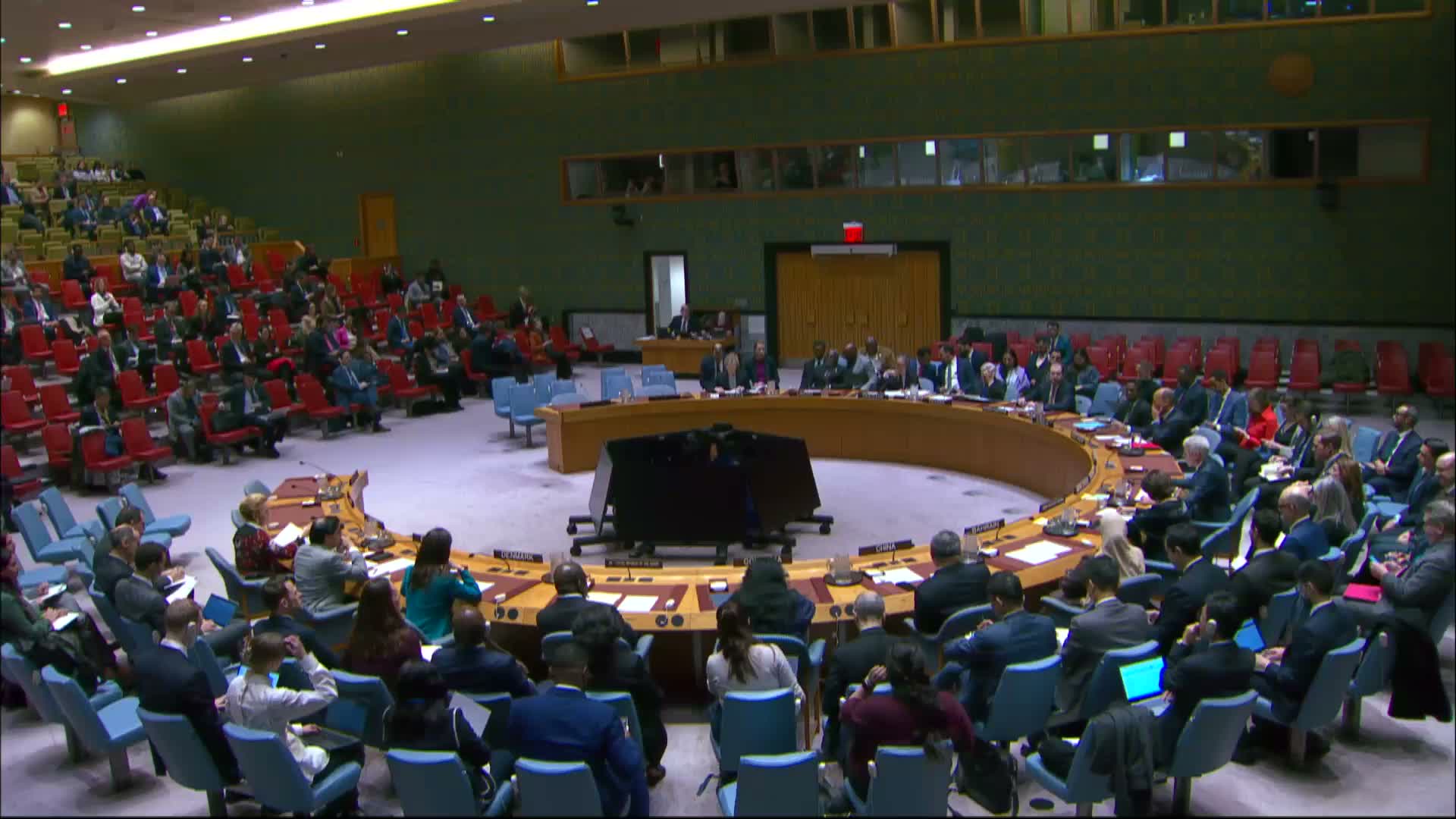
An agency official told the Security Council that critical minerals such as lithium, cobalt and nickel are central to the 21st-century economy and to technologies from smartphones to electric vehicles and medical devices.
"In 2023 alone, the trade in raw and semi processed minerals reached approximately $2,500,000,000,000," the agency official said, adding that this represented more than 10% of global trade and that demand could triple by 2030 and quadruple by 2040.
The official warned that, while the surge in demand offers an opportunity to create jobs and diversify economies, it also fuels geopolitical competition, environmental degradation and human-rights abuses in producing countries. They said mining in conflict-affected settings can weaken governance, spur illicit economies and finance armed and criminal groups.
Highlighting geographic concentration, the speaker said more than 70% of global cobalt extraction occurs in the Democratic Republic of the Congo and noted that Myanmar and Ukraine hold significant supplies of rare earths and titanium and lithium, respectively. The official cited expert panels and Security Council measures that have helped trace violations and strengthen implementation of sanctions in contexts including the Democratic Republic of the Congo and Libya and noted restrictions imposed on Al Shabaab.
Pointing to the Great Lakes region and eastern Democratic Republic of the Congo, the speaker said a named coalition has reportedly earned more than $1,000,000 a month from illicit mining and smuggling, and described UN peacekeepers working with Congolese authorities to disrupt those flows.
To address the problem, the official proposed three priorities: first, ensure extraction delivers just and equitable outcomes by helping national authorities strengthen institutions, regulatory frameworks and domestic processing capacity; second, pursue multilateral and regional action to improve traceability and build resilient supply chains in dialogue with producing and consuming countries, industry and regional organizations; and third, deploy peacemaking instruments so mediators factor resource issues into peace talks and identify mechanisms for benefit sharing.
"The fair and responsible harnessing of critical minerals can help lift hundreds of millions of people out of poverty, and it can help promote peace," the speaker said, urging concerted action by member states, the private sector, civil society and the United Nations. The speaker then thanked Rosemary DeCarlo for her remarks and yielded the floor.
"In 2023 alone, the trade in raw and semi processed minerals reached approximately $2,500,000,000,000," the agency official said, adding that this represented more than 10% of global trade and that demand could triple by 2030 and quadruple by 2040.
The official warned that, while the surge in demand offers an opportunity to create jobs and diversify economies, it also fuels geopolitical competition, environmental degradation and human-rights abuses in producing countries. They said mining in conflict-affected settings can weaken governance, spur illicit economies and finance armed and criminal groups.
Highlighting geographic concentration, the speaker said more than 70% of global cobalt extraction occurs in the Democratic Republic of the Congo and noted that Myanmar and Ukraine hold significant supplies of rare earths and titanium and lithium, respectively. The official cited expert panels and Security Council measures that have helped trace violations and strengthen implementation of sanctions in contexts including the Democratic Republic of the Congo and Libya and noted restrictions imposed on Al Shabaab.
Pointing to the Great Lakes region and eastern Democratic Republic of the Congo, the speaker said a named coalition has reportedly earned more than $1,000,000 a month from illicit mining and smuggling, and described UN peacekeepers working with Congolese authorities to disrupt those flows.
To address the problem, the official proposed three priorities: first, ensure extraction delivers just and equitable outcomes by helping national authorities strengthen institutions, regulatory frameworks and domestic processing capacity; second, pursue multilateral and regional action to improve traceability and build resilient supply chains in dialogue with producing and consuming countries, industry and regional organizations; and third, deploy peacemaking instruments so mediators factor resource issues into peace talks and identify mechanisms for benefit sharing.
"The fair and responsible harnessing of critical minerals can help lift hundreds of millions of people out of poverty, and it can help promote peace," the speaker said, urging concerted action by member states, the private sector, civil society and the United Nations. The speaker then thanked Rosemary DeCarlo for her remarks and yielded the floor.
View the Full Meeting & All Its Details
This article offers just a summary. Unlock complete video, transcripts, and insights as a Founder Member.
✓
Watch full, unedited meeting videos
✓
Search every word spoken in unlimited transcripts
✓
AI summaries & real-time alerts (all government levels)
✓
Permanent access to expanding government content
30-day money-back guarantee
