South Dakota funding model presented; N.D. lawmakers debate levies, tiers and regional level-D options
March 04, 2026 | 2026 Legislature MA, Massachusetts
This article was created by AI summarizing key points discussed. AI makes mistakes, so for full details and context, please refer to the video of the full meeting. Please report any errors so we can fix them. Report an error »
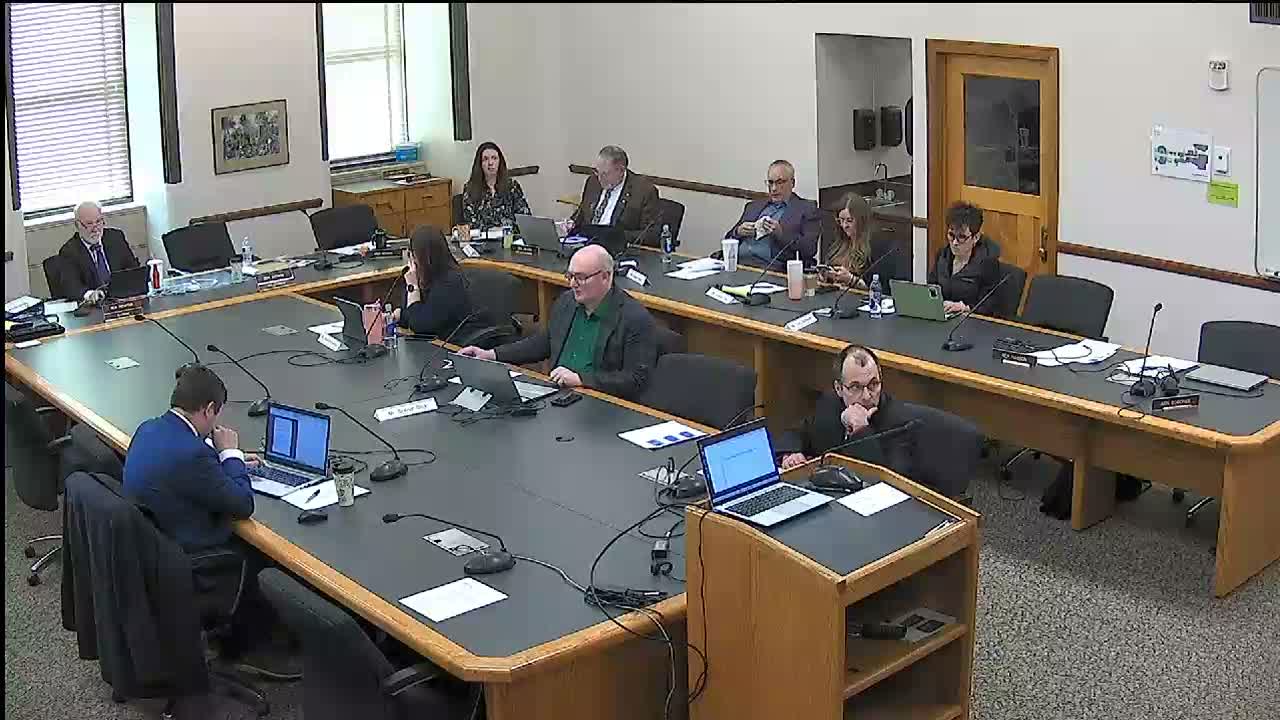
Cody Stoser, division director for finance management at the South Dakota Department of Education, presented a high-level overview of South Dakota's special education funding to the Special Education Funding Committee. Stoser described three primary revenue sources—property tax levies, state aid and federal funds—and said the state provides roughly 39.3% of special education funding while districts supply the remainder via local levies.
Stoser and his team explained South Dakota's approach to per-student allocations by disability level and the state's extraordinary-cost fund (ECF), which districts may apply to when a student or program produces extraordinary expense. The ECF is funded at a set annual level with limited carryover; Stoser said roughly 20+ districts apply to the ECF each year and that reimbursements have risen in recent years as out-of-district placements and high-cost services have become more expensive.
Lawmakers and committee members followed with questions about accountability and reporting. Several members asked whether the state tracks how extraordinary-cost reimbursements are spent and how the per-student levels are set. South Dakota officials said per-student allocations are recalculated every two years from prior-year expenditures and that they collect annual financial reports from districts to monitor special-education fund balances and expenditures.
Committee members discussed policy choices North Dakota could consider, including a separate special-education levy (as in South Dakota), a tiered categorical payment system based on disability or service intensity, and expansion of regional level-D programs for students who need more intensive, specialized settings. Some members warned that categorical tiers must be evidence-based and narrowly defined to avoid perverse incentives or inequitable impacts on small rural districts.
Representative Murphy and others noted that categorical payments tied to service needs could better reflect real costs than a flat percentage of average daily membership. Business managers and district directors on the committee emphasized the need for detailed data and pointed out that North Dakota already operates a robust high-cost reimbursement program: the committee was told North Dakota's high-cost program is larger in dollar terms than the South Dakota fund described in the presentation.
The committee asked staff to provide additional information: a deeper breakdown of the state's high-cost reimbursements, clarification of how vision and deaf-services budgets interact with district funding, and options for regional level-D facilities and their funding mechanisms. No immediate legislative changes were made; the committee scheduled follow-up work sessions.
Stoser and his team explained South Dakota's approach to per-student allocations by disability level and the state's extraordinary-cost fund (ECF), which districts may apply to when a student or program produces extraordinary expense. The ECF is funded at a set annual level with limited carryover; Stoser said roughly 20+ districts apply to the ECF each year and that reimbursements have risen in recent years as out-of-district placements and high-cost services have become more expensive.
Lawmakers and committee members followed with questions about accountability and reporting. Several members asked whether the state tracks how extraordinary-cost reimbursements are spent and how the per-student levels are set. South Dakota officials said per-student allocations are recalculated every two years from prior-year expenditures and that they collect annual financial reports from districts to monitor special-education fund balances and expenditures.
Committee members discussed policy choices North Dakota could consider, including a separate special-education levy (as in South Dakota), a tiered categorical payment system based on disability or service intensity, and expansion of regional level-D programs for students who need more intensive, specialized settings. Some members warned that categorical tiers must be evidence-based and narrowly defined to avoid perverse incentives or inequitable impacts on small rural districts.
Representative Murphy and others noted that categorical payments tied to service needs could better reflect real costs than a flat percentage of average daily membership. Business managers and district directors on the committee emphasized the need for detailed data and pointed out that North Dakota already operates a robust high-cost reimbursement program: the committee was told North Dakota's high-cost program is larger in dollar terms than the South Dakota fund described in the presentation.
The committee asked staff to provide additional information: a deeper breakdown of the state's high-cost reimbursements, clarification of how vision and deaf-services budgets interact with district funding, and options for regional level-D facilities and their funding mechanisms. No immediate legislative changes were made; the committee scheduled follow-up work sessions.
Don't Miss a Word: See the Full Meeting!
Go beyond summaries. Unlock every video, transcript, and key insight with a Founder Membership.
✓
Get instant access to full meeting videos
✓
Search and clip any phrase from complete transcripts
✓
Receive AI-powered summaries & custom alerts
✓
Enjoy lifetime, unrestricted access to government data
30-day money-back guarantee
