Researchers tell Senate committee gun‑violence exposure drives long-term anxiety among students and staff
March 04, 2026 | 2026 Legislature MN, Minnesota
This article was created by AI summarizing key points discussed. AI makes mistakes, so for full details and context, please refer to the video of the full meeting. Please report any errors so we can fix them. Report an error »
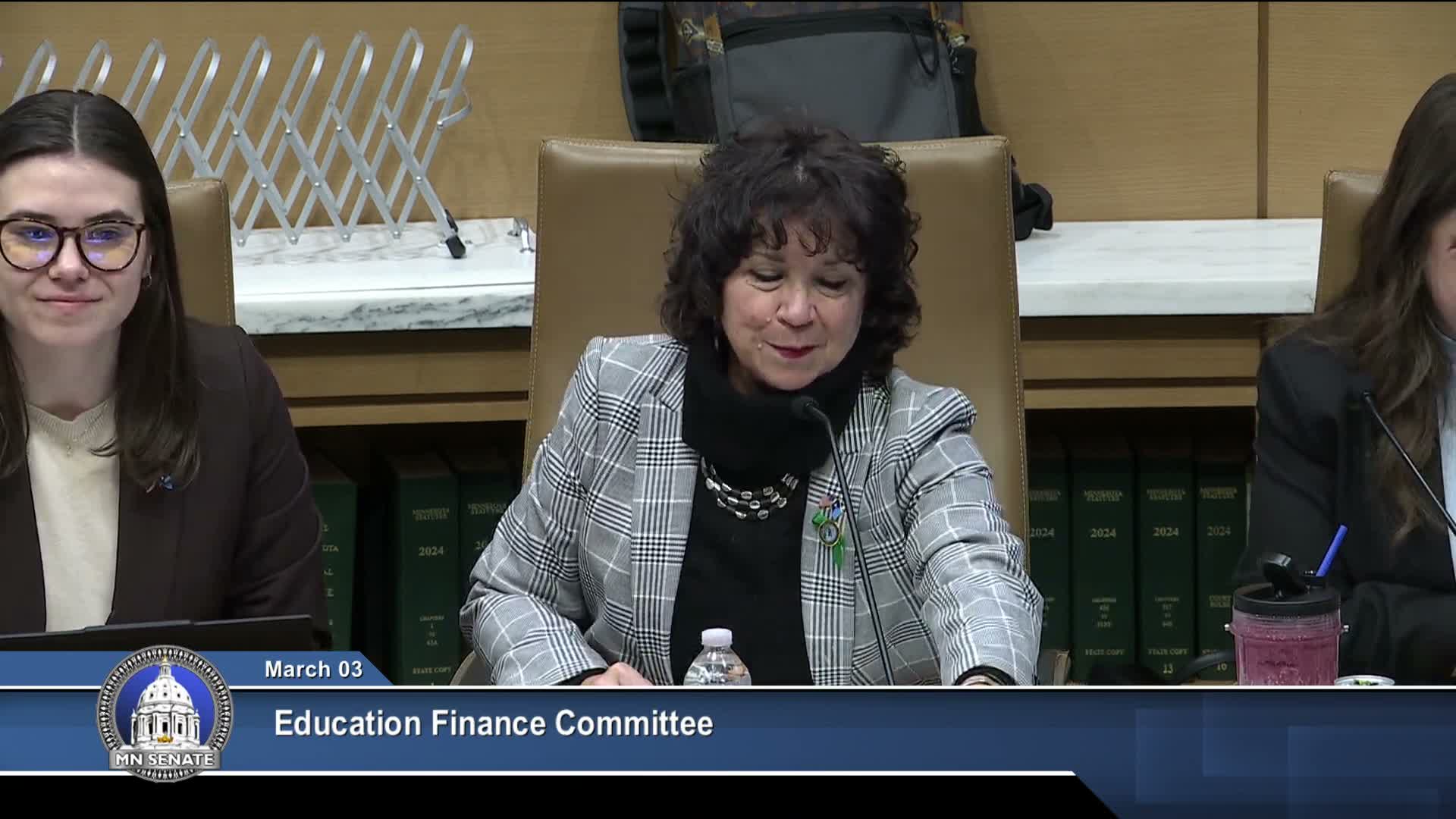
Dr. Jillian Peterson of the Violence Prevention Project told the Senate Education Finance Committee that gun‑violence exposure and the fear of it are taking a persistent toll on students, teachers and families. "Seven percent of Americans report being on the scene of a mass shooting where four or more people were shot," Peterson said, and younger people reported higher exposure.
Peterson said her team's surveys and databases link that exposure to elevated rates of anxiety and depression and, in many cases, symptoms that last a year or longer. "People exposed to gun violence... 48 to 58 percent say they had experienced anxiety afterwards," she said, adding that 35 to 74 percent reported depression. She also said survey results show 75 percent of teenagers report some worry about gun violence in school and about 41 percent of parents say they fear for their children's safety.
Dr. James Densley, Peterson's co‑presenter, emphasized that the perpetrators of many school shootings tend to be insiders — current or former students — and often are in a time‑limited suicidal crisis. "When we look at mass shooters in schools... these perpetrators tend to be insiders," Densley said, arguing that recognition of warning signs and improved information‑sharing are vital to prevention.
Both presenters pointed to online radicalization and ‘‘leakage’’ — when an individual telegraphs violent intent — as accelerants that can move a person from crisis toward action. They described a Saint Paul Public Schools pilot that rebranded behavioral threat assessment into district‑ and school‑level 'care teams' to improve communication, referral and upstream intervention.
Senators pressed presenters on the data: Peterson said the Violence Prevention Project has a U.S. K–12 database going back to 1966 and a separate set of active‑shooter cases (15 shootings, 17 perpetrators under the 4+ killed definition). On outcomes for perpetrators, Peterson summarized roughly one‑third killed themselves, one‑third were killed by others and one‑third were apprehended, though she said trends show some perpetrators are now more intent on surviving to achieve notoriety.
Committee members raised concerns about the psychological effects of active‑shooter drills; Peterson said evidence is mixed — drills can aid rapid protective action but also increase students' anxiety — and recommended balancing preparedness with mental‑health considerations.
The presenters offered to share detailed datasets and to return for follow‑up briefings on care teams and other preventive strategies. The committee then moved on to bill hearings.
Peterson said her team's surveys and databases link that exposure to elevated rates of anxiety and depression and, in many cases, symptoms that last a year or longer. "People exposed to gun violence... 48 to 58 percent say they had experienced anxiety afterwards," she said, adding that 35 to 74 percent reported depression. She also said survey results show 75 percent of teenagers report some worry about gun violence in school and about 41 percent of parents say they fear for their children's safety.
Dr. James Densley, Peterson's co‑presenter, emphasized that the perpetrators of many school shootings tend to be insiders — current or former students — and often are in a time‑limited suicidal crisis. "When we look at mass shooters in schools... these perpetrators tend to be insiders," Densley said, arguing that recognition of warning signs and improved information‑sharing are vital to prevention.
Both presenters pointed to online radicalization and ‘‘leakage’’ — when an individual telegraphs violent intent — as accelerants that can move a person from crisis toward action. They described a Saint Paul Public Schools pilot that rebranded behavioral threat assessment into district‑ and school‑level 'care teams' to improve communication, referral and upstream intervention.
Senators pressed presenters on the data: Peterson said the Violence Prevention Project has a U.S. K–12 database going back to 1966 and a separate set of active‑shooter cases (15 shootings, 17 perpetrators under the 4+ killed definition). On outcomes for perpetrators, Peterson summarized roughly one‑third killed themselves, one‑third were killed by others and one‑third were apprehended, though she said trends show some perpetrators are now more intent on surviving to achieve notoriety.
Committee members raised concerns about the psychological effects of active‑shooter drills; Peterson said evidence is mixed — drills can aid rapid protective action but also increase students' anxiety — and recommended balancing preparedness with mental‑health considerations.
The presenters offered to share detailed datasets and to return for follow‑up briefings on care teams and other preventive strategies. The committee then moved on to bill hearings.
Don't Miss a Word: See the Full Meeting!
Go beyond summaries. Unlock every video, transcript, and key insight with a Founder Membership.
✓
Get instant access to full meeting videos
✓
Search and clip any phrase from complete transcripts
✓
Receive AI-powered summaries & custom alerts
✓
Enjoy lifetime, unrestricted access to government data
30-day money-back guarantee
