Senate approves switch to instructional hours over 180‑day calendar amid fierce debate
February 21, 2026 | 2026 Legislature WV, West Virginia
This article was created by AI summarizing key points discussed. AI makes mistakes, so for full details and context, please refer to the video of the full meeting. Please report any errors so we can fix them. Report an error »
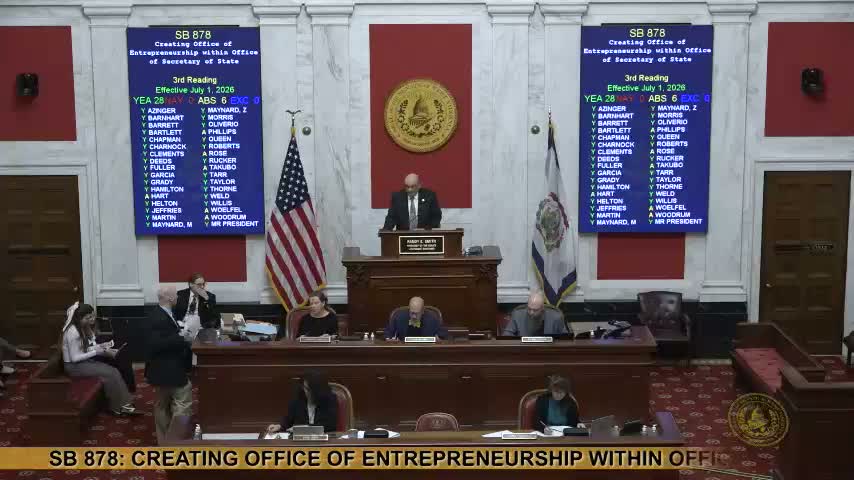
The West Virginia Senate on Feb. 23, 2026 approved Senate Bill 890, changing the minimum public‑school requirement from a 180‑day school year to a minimum of 900 instructional hours, after extended floor debate and a final Senate vote of 23 yays, 5 nays and 6 absent.
Sponsors and supporters framed the change as a shift that gives counties scheduling flexibility. The senator from Mason, the bill’s lead sponsor, said the measure is permissive: "It doesn't say that any county school board has to change what they are currently doing. They can elect to continue with as many days the same calendars they're doing the same number of hours they are using right now." He urged the Senate to allow counties and teachers latitude to structure time to students' needs.
Opponents warned the bill reduces total instructional minutes and could harm students who rely on school services. The senior senator from the thirteenth, arguing against passage, ran the arithmetic on current daily minutes and said, "This bill takes that 1035 down to 900," and warned that equated to about 23 fewer days of instruction for some students. He also said reduced days could mean fewer days of school‑provided meals and disrupted routines for students with special needs.
Other senators who spoke emphasized local control and educator discretion. The junior senator from the fifth said teachers and counties should be trusted to design schedules that best meet student needs and noted anecdotal support from teachers who favor flexibility.
The Senate debated details including conversions of employment terms to hours, the calculation of personal leave on an eight‑hour day, and provisions allowing nonpublic schools to count certain alternative instruction hours. The senator from Raleigh argued there is no scientific basis for 180 days and said the bill enables counties to innovate.
After passage on the floor vote, the senator from Lewis moved to set the bill’s effective date for July 1, 2027. The Senate recorded 28 yays, 0 nays and 6 absent on that motion—meeting the two‑thirds threshold required to declare that effective date.
What happens next: The Clerk will communicate the Senate action to the House. If the House agrees or the bill is enrolled and delivered, the effective date set by the Senate will take effect on July 1, 2027 unless otherwise changed.
Sources: Floor debate and roll calls during the Feb. 23 Senate floor session; direct floor quotations attributed to senators speaking on the record.
Sponsors and supporters framed the change as a shift that gives counties scheduling flexibility. The senator from Mason, the bill’s lead sponsor, said the measure is permissive: "It doesn't say that any county school board has to change what they are currently doing. They can elect to continue with as many days the same calendars they're doing the same number of hours they are using right now." He urged the Senate to allow counties and teachers latitude to structure time to students' needs.
Opponents warned the bill reduces total instructional minutes and could harm students who rely on school services. The senior senator from the thirteenth, arguing against passage, ran the arithmetic on current daily minutes and said, "This bill takes that 1035 down to 900," and warned that equated to about 23 fewer days of instruction for some students. He also said reduced days could mean fewer days of school‑provided meals and disrupted routines for students with special needs.
Other senators who spoke emphasized local control and educator discretion. The junior senator from the fifth said teachers and counties should be trusted to design schedules that best meet student needs and noted anecdotal support from teachers who favor flexibility.
The Senate debated details including conversions of employment terms to hours, the calculation of personal leave on an eight‑hour day, and provisions allowing nonpublic schools to count certain alternative instruction hours. The senator from Raleigh argued there is no scientific basis for 180 days and said the bill enables counties to innovate.
After passage on the floor vote, the senator from Lewis moved to set the bill’s effective date for July 1, 2027. The Senate recorded 28 yays, 0 nays and 6 absent on that motion—meeting the two‑thirds threshold required to declare that effective date.
What happens next: The Clerk will communicate the Senate action to the House. If the House agrees or the bill is enrolled and delivered, the effective date set by the Senate will take effect on July 1, 2027 unless otherwise changed.
Sources: Floor debate and roll calls during the Feb. 23 Senate floor session; direct floor quotations attributed to senators speaking on the record.
View the Full Meeting & All Its Details
This article offers just a summary. Unlock complete video, transcripts, and insights as a Founder Member.
✓
Watch full, unedited meeting videos
✓
Search every word spoken in unlimited transcripts
✓
AI summaries & real-time alerts (all government levels)
✓
Permanent access to expanding government content
30-day money-back guarantee
