Boston City Council panel seeks smoother coordination of services for families with complex care needs
March 04, 2026 | Boston City, Suffolk County, Massachusetts
This article was created by AI summarizing key points discussed. AI makes mistakes, so for full details and context, please refer to the video of the full meeting. Please report any errors so we can fix them. Report an error »
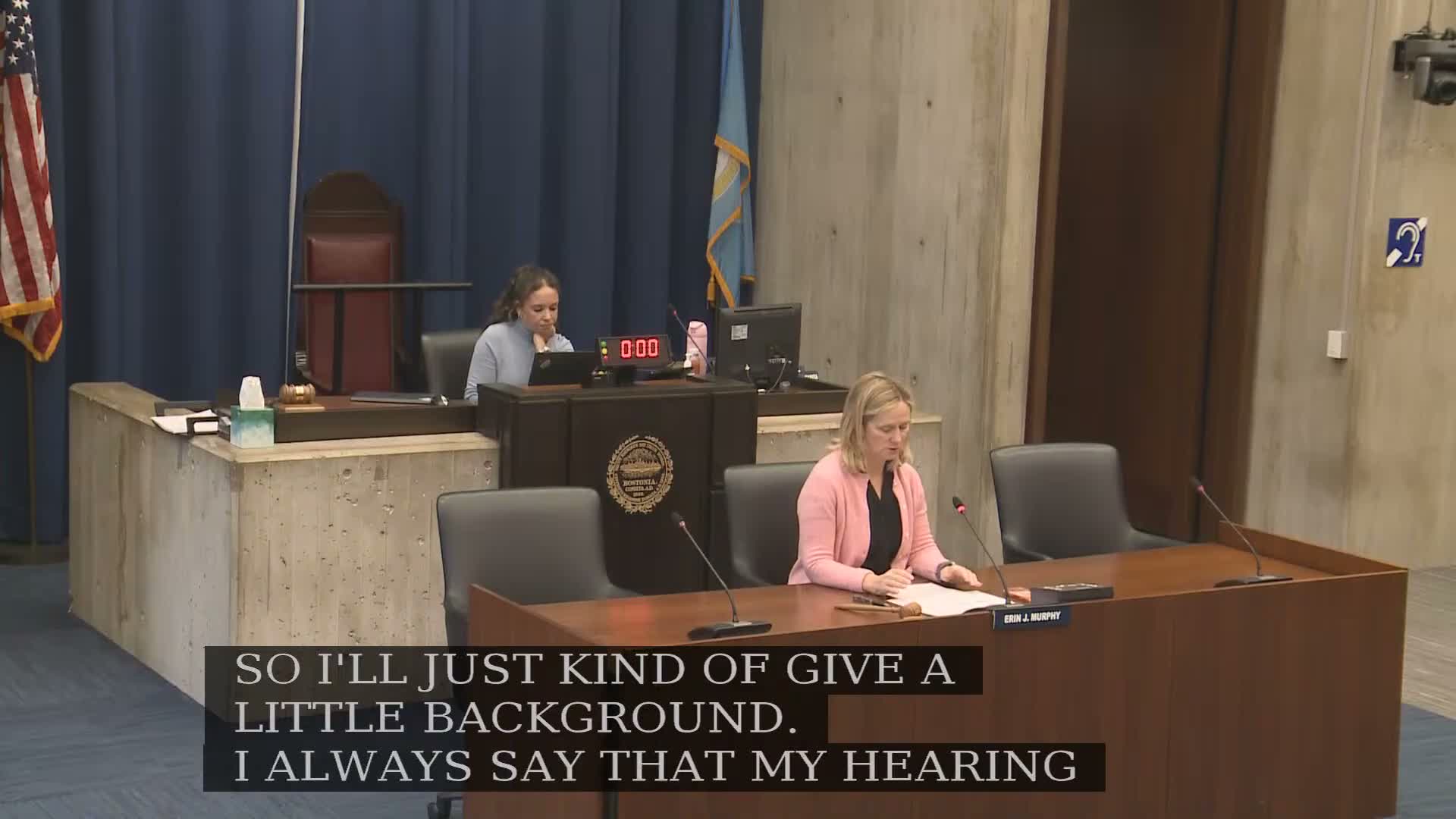
Councilor Erin Murphy, at-large city councilor and chair of the Boston City Council Committee on Human Services, convened a March 3 hearing to examine how residents with complex family and caregiver needs navigate city services, saying a lack of centralized coordination leaves families—particularly those with adult children who need ongoing care—vulnerable when caregivers age or die.
Murphy introduced docket 0285, sponsored by herself and Councilor Flynn and referred to the committee on Feb. 4, 2026, and described the hearing’s origin: a call from a retired Allston firefighter who said he struggled to connect his adult son with special needs to multiple city services. "If there's an easier way for him to kind of connect those services," Murphy said, "that would help families plan for what happens when parents are no longer able to provide care."
Jose Maso, chief of human services for the City of Boston, described the city’s human services cabinet—an interdepartmental group that includes Boston Public Libraries, Boston Centers for Youth and Families, veteran services, the Office of Returning Citizens and others—and urged collaboration. "As I like to say, our cabinet is where the people are," Maso said, and he asked for feedback the city can use to better support families.
Christine Travisoni, senior adviser to the superintendent for specialized services at Boston Public Schools, described district transition programming, including a new "Next" transition program aimed at helping students move from school-based supports. "The biggest concern is they're so well taken care of until they're 22 years old, and then it really moves to state agencies," Travisoni said, underscoring a common gap families face when school-based services end.
A Boston Housing Authority representative, speaking as Lydia Argo, chief of engagement, opened the BHA portion of the panel presentation by emphasizing a resident-centered approach: "We are people, not buildings," she said, and discussed BHA’s role as the city’s largest housing provider while presenting the agency’s materials on resident supports and engagement.
The committee did not take formal votes. Murphy said written comments would be made part of the record (committee email: ccc.hs@boston.gov) and reiterated that public testimony would be taken at the end of the hearing, with two minutes per speaker for those who signed up in person or who registered via the staff liaison (meagan.corugedo@boston.gov). Panelists and councilors indicated they will collect feedback and follow up with next steps to improve cross-agency navigation of services.
The hearing continued into presentations; no policy decisions or referrals beyond the docket’s existing referral were recorded during the portion of the hearing in the record.
Murphy introduced docket 0285, sponsored by herself and Councilor Flynn and referred to the committee on Feb. 4, 2026, and described the hearing’s origin: a call from a retired Allston firefighter who said he struggled to connect his adult son with special needs to multiple city services. "If there's an easier way for him to kind of connect those services," Murphy said, "that would help families plan for what happens when parents are no longer able to provide care."
Jose Maso, chief of human services for the City of Boston, described the city’s human services cabinet—an interdepartmental group that includes Boston Public Libraries, Boston Centers for Youth and Families, veteran services, the Office of Returning Citizens and others—and urged collaboration. "As I like to say, our cabinet is where the people are," Maso said, and he asked for feedback the city can use to better support families.
Christine Travisoni, senior adviser to the superintendent for specialized services at Boston Public Schools, described district transition programming, including a new "Next" transition program aimed at helping students move from school-based supports. "The biggest concern is they're so well taken care of until they're 22 years old, and then it really moves to state agencies," Travisoni said, underscoring a common gap families face when school-based services end.
A Boston Housing Authority representative, speaking as Lydia Argo, chief of engagement, opened the BHA portion of the panel presentation by emphasizing a resident-centered approach: "We are people, not buildings," she said, and discussed BHA’s role as the city’s largest housing provider while presenting the agency’s materials on resident supports and engagement.
The committee did not take formal votes. Murphy said written comments would be made part of the record (committee email: ccc.hs@boston.gov) and reiterated that public testimony would be taken at the end of the hearing, with two minutes per speaker for those who signed up in person or who registered via the staff liaison (meagan.corugedo@boston.gov). Panelists and councilors indicated they will collect feedback and follow up with next steps to improve cross-agency navigation of services.
The hearing continued into presentations; no policy decisions or referrals beyond the docket’s existing referral were recorded during the portion of the hearing in the record.
Don't Miss a Word: See the Full Meeting!
Go beyond summaries. Unlock every video, transcript, and key insight with a Founder Membership.
✓
Get instant access to full meeting videos
✓
Search and clip any phrase from complete transcripts
✓
Receive AI-powered summaries & custom alerts
✓
Enjoy lifetime, unrestricted access to government data
30-day money-back guarantee
